
Nurses Strike Affects Hospitals as Union Insists 90 Percent of Demands Cost Nothing

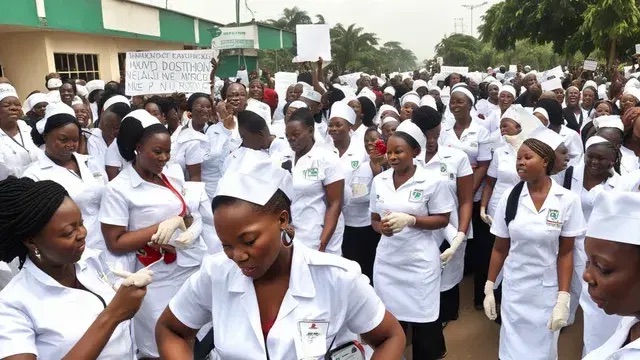
Hospitals across Nigeria remain overwhelmed as the nationwide strike by nurses enters its third day, with union leaders urging the Federal Government to act swiftly—insisting that most of their demands require no financial commitment.

Sponsored Ads
The strike, led by the National Association of Nigerian Nurses and Midwives (NANNM), began on July 30 after a 15-day ultimatum expired without government response. Patients have been left stranded nationwide, with nurses withdrawing from duties in both federal and state hospitals.

LIST OF APPLICATIONS FOR REGULARISATION OF AREA COUNCIL LAND DOCUMENTS NULLIFIED/CANCELLED BY THE HONOURABLE MINISTER OF FCT
In Cross River, state chairperson Josephine Bassey said nearly all the union’s demands revolve around policy implementation and administrative action rather than funding. These include the long-delayed gazetting of the Nursing Scheme of Service approved in 2016, creation of a Department of Nursing in the Federal Ministry of Health, centralisation of internship placements, and appointments of nurses to health institution boards.
LIST OF APPLICATIONS FOR REGULARISATION OF AREA COUNCIL LAND DOCUMENTS NULLIFIED/CANCELLED BY THE HONOURABLE MINISTER OF FCT
She also cited severe manpower shortages, calling for urgent employment of new nurses. Bassey warned that any nurse who violates the strike directive risks sanctions from the national body.
“We feel the pain of patients, but they must also speak out for us. This struggle is for better care,” she said.
In Lagos, the state secretary of NANNM, Oloruntoba Odumosu, said government officials were scheduled to meet union leaders last night. He noted that some of the demands date back over four decades.
“This is the first time NANNM is going on strike in over 20 years. Yet, our concerns remain ignored while government engages other unions,” he said.
At the National Ear Care Centre in Kaduna, patients voiced frustration as medical care stalled. One woman battling acute sinusitis broke down in tears, describing her suffering and the lack of basic nursing support like cannula replacements.
RELATED STORIES
Related Posts
Staff confirmed a full withdrawal of nursing services, with only emergency cases considered—and even those, they said, have been minimal. Head of Department, Abbas Daura, said the system’s collapse is due to years of neglect.
“Our nurses are well-trained, but they’re leaving this country in droves. They can’t work in these conditions,” he said.
In FMC Owo, nurses refused to resume work regardless of case severity. Local chapter secretary, Coker Oluwasegun, criticised the government’s long-standing neglect, saying uniform allowances have remained N20,000 for over 20 years. He blamed the lack of basic equipment for the poor perception of nurses by the public.
“If our 12-point demands are ignored, we’ll give another 21-day ultimatum before an indefinite strike begins,” he said.
In Kebbi, NANNM chairman Kilani AbdulWaliyu apologised to Nigerians but said the strike was unavoidable. He called for divine intervention and urged leaders to act.
“Nurses understand the life-and-death consequences of this strike more than anyone. But the government has failed us for too long,” he said.
AbdulWaliyu noted that the government’s recent circular on health workers’ allowances failed to meet expectations and criticised the lack of a substantive Director of Nursing Services in the health ministry.
He said the union remains open to dialogue but warned that their patience is running out.
Hospitals nationwide remain without nursing staff, as pressure mounts on the Federal Government to respond and restore order in the health sector.

Comments are closed.