

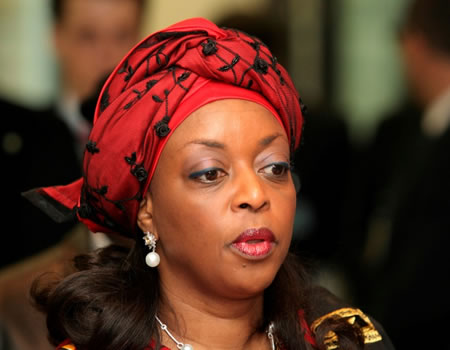
The Economic and Financial Crimes Commission has opposed former Minister of Petroleum Resources Diezani Alison-Madueke’s request to present evidence of her acquittal by a United Kingdom court in her ongoing case over forfeited assets.
Sponsored Ads
The EFCC, in a further counter-affidavit filed before Justice Inyang Ekwo of the Federal High Court in Abuja, asked the court to reject Diezani’s application, arguing that the UK proceedings were unrelated to the issues before the Nigerian court.
Sponsored Ads
The former minister had sought permission to file a further affidavit informing the court of her June 17, 2026 acquittal by the Southwark Crown Court in London over bribery allegations.
Her application was previously granted after EFCC counsel did not oppose the request when it was initially presented before the court.
Diezani is challenging the forfeiture and proposed sale of assets linked to her in a suit against the EFCC. In her amended originating motion, she is seeking to contest, among other issues, the commission’s public notice concerning the auction or sale of properties and personal effects allegedly connected to her.
Following the filing of Diezani’s supplementary affidavit, the EFCC filed a further counter-affidavit through Oyakhilome Ekienabor, a litigation officer in the law firm representing the commission.
The EFCC maintained that the proceedings before the Southwark Crown Court and the subsequent acquittal had no bearing on the substantive issues before the Federal High Court. It argued that the UK case was not being prosecuted before a Nigerian court and therefore should not be introduced into the current proceedings.
The commission also disputed the relevance of Diezani’s claims concerning the properties listed for sale, arguing that the public sale notice did not establish that the properties belonged to her.
RELATED STORIES
Related Posts
It further contended that the forfeiture order referred specifically to jewellery and did not extend to other categories of assets or properties.
The EFCC consequently asked the court to disregard Diezani’s supplementary affidavit, arguing that it introduced matters that could divert attention from the issues the court was required to determine.
Diezani’s legal team, led by Professor Mike Ozekhome, had argued that her acquittal in the UK was a subsequent development that occurred after she filed her amended originating motion in February 2025 and could therefore not have been included in her earlier processes.
The defence maintained that the development was relevant to issues including the absence of a conviction, fair hearing, due process and the legality of permanently depriving her of property without complying with applicable statutory safeguards.
Ozekhome also argued that Diezani was not asking the Federal High Court to sit on appeal over the UK judgment or automatically treat the foreign decision as conclusive in the Nigerian proceedings. Rather, he said the information was being presented as a subsequent material fact that could assist the court in reaching a just determination.
When the matter came up on Tuesday, Diezani’s lawyer, Queen-Ubokutom Uwe, informed the court that the EFCC had served them with its further counter-affidavit shortly before the hearing.
Counsel for the EFCC, Paul Mgbeoma, indicated that the commission was ready to proceed with the case.
Justice Ekwo subsequently adjourned the matter until November 11 for the hearing of the pending motions.

Comments are closed.