

Opposition political parties have agreed to begin negotiations on a four-year single-term government as part of efforts to build a coalition capable of defeating President Bola Tinubu and the All Progressives Congress (APC) in the 2027 presidential election.
Sponsored Ads
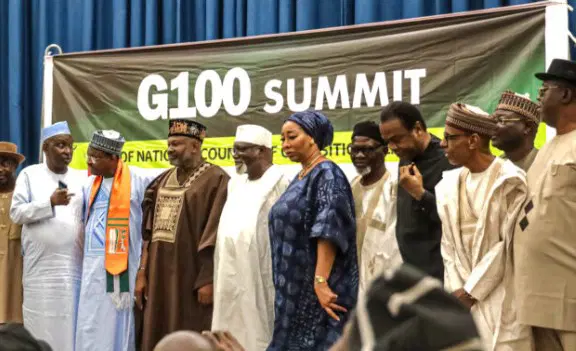
The proposal was presented at an opposition summit organised by the G-100 in Abuja, where representatives of six opposition parties discussed ways to work together ahead of the election.
Sponsored Ads
The African Democratic Congress (ADC), Nigeria Democratic Congress (NDC), Allied Peoples Movement (APM), Peoples Redemption Party (PRP), Social Democratic Party (SDP) and a faction of the Peoples Democratic Party (PDP) were represented at the meeting.
However, some of the major figures linked to the opposition coalition were absent. ADC presidential candidate Atiku Abubakar, NDC presidential candidate Peter Obi and Oyo State Governor Seyi Makinde did not attend the summit.
The G-100, led by former Director-General of the Progressives Governors Forum, Salihu Lukman, proposed the establishment of a Government of National Competence (GNC) to run for a single four-year term.
Lukman said the proposal would require participating parties to sign an enforceable transition charter to ensure that whoever emerges as the coalition’s presidential candidate would be bound by the agreement.
He said the objective was not to force any political party to dissolve or abandon its identity, nor was the summit designed to compel any presidential candidate to withdraw immediately.
Instead, the organisers want opposition parties to first establish a framework for cooperation before deciding on the structure and candidate for the 2027 election.
Lukman argued that the opposition’s experience in previous elections showed the danger of contesting separately. He pointed to the 2023 presidential election, when votes were divided among major opposition candidates while the eventual winner secured the presidency with fewer votes than the combined total of the leading opposition candidates.
He said the lesson from the 2023 election was that opposition parties needed to coordinate their strategies if they wanted to defeat an incumbent government.
The G-100 proposed three main committees to manage the coalition process. They include a Central Leadership Committee made up of national chairmen, national secretaries and presidential and vice-presidential candidates; a publicity and communication committee; and a legal committee.
Five additional working groups are expected to prepare proposals on democratic renewal, the single-term transition arrangement, a national reform programme, opposition unity and the selection of a common presidential candidate.
The working groups are expected to submit their reports within four weeks for consideration at a second opposition summit.
Minority Leader of the House of Representatives, Fred Agbedi, who led members of the opposition caucus to the meeting, urged the parties to put aside individual ambitions and work towards a common goal.
RELATED STORIES
Related Posts
He said the opposition needed to learn from the 2015 election, when several parties came together under the APC to defeat the then-ruling PDP.
PRP presidential candidate Donald Duke also said he was prepared to withdraw his personal ambition if the opposition parties agreed on another candidate.
He argued that political leaders must be willing to sacrifice their individual interests if the coalition was to succeed.
Representatives of the participating parties expressed support for the proposed coalition process.
ADC National Vice Chairman for the South-South, Usani Uguru Usani, warned opposition politicians against attacking one another, saying internal disagreements could weaken the coalition.
APM National Chairman Yusuf Mamman Dantalle described the gathering as an important development, while a representative of the PDP faction led by Tanimu Turaki called for the coalition discussions to be extended to the state and local government levels.
PRP National Chairman Hakeem Baba-Ahmed said the opposition parties were facing major political and legal challenges but remained determined to continue with the coalition plan.
The SDP National Chairman, Sadiq Gombe, also backed the initiative and said Nigerian voters had shown that they could reject ruling parties when they were dissatisfied with their performance.
NDC National Chairman Moses Cleopas Zuwoghe equally expressed support for the coalition, describing the initiative as an attempt to create a pathway for rescuing the country.
At the end of the meeting, the six parties adopted a joint communiqué committing them to negotiations on a structured opposition alliance ahead of the 2027 election.
They formally established the three committees and agreed to set up the five working groups that will prepare the proposed documents for the next summit.
The parties also resolved to communicate with the ECOWAS Commission on issues raised during the meeting and maintained that the G-100 would remain a facilitator and observer rather than take control of the political parties.
Meanwhile, Atiku’s aide, Phrank Shaibu, said the former vice-president did not deliberately boycott the summit.
He explained that Atiku’s absence was unavoidable and said the ADC presidential candidate remained committed to building a united opposition capable of challenging the APC in 2027.
The coalition discussions are expected to continue as opposition parties attempt to overcome differences over presidential ambitions, party structures and the choice of a common candidate before the 2027 general election.

Comments are closed.