

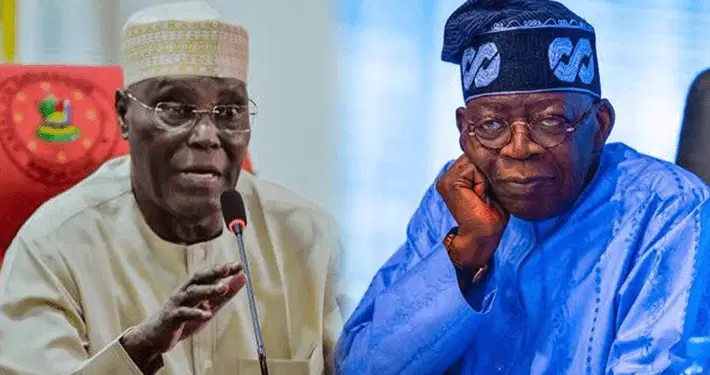
Presidential candidate of the African Democratic Congress (ADC), Atiku Abubakar, has rejected the Federal Government’s defence of President Bola Tinubu’s economic policies, arguing that the administration’s claims do not reflect the realities facing Nigerians.
Sponsored Ads
Atiku made his position known in a statement issued on Sunday by his Senior Special Assistant on Public Communication, Phrank Shaibu, in response to recent comments by the Chairman of the Presidential Committee on Fiscal Policy and Tax Reforms, Taiwo Oyedele.
Sponsored Ads
The former vice president said attempts to defend the administration’s economic performance ignored publicly available facts relating to public debt, subsidy removal, debt servicing and workers’ welfare.
He argued that the government’s claims of improving workers’ welfare were inconsistent with the continued delay in the full implementation of the new national minimum wage.
According to Atiku, the Federal Government is yet to fully implement the revised wage structure, while the 40 per cent peculiar allowance linked to the adjustment has also not been paid despite an earlier directive that it should take effect from May 1, 2026.
He maintained that these complaints have been repeatedly raised by organised labour and cannot be dismissed as political criticism.
On the issue of public debt, Atiku referred to figures released by the Central Bank of Nigeria (CBN), stating that the Federal Government’s indebtedness to the apex bank has increased since President Tinubu assumed office in May 2023.
He said the government’s obligations to the CBN stood at about ₦26.9 trillion at the beginning of the administration and have now risen above ₦40 trillion.
RELATED STORIES
Related Posts
The ADC presidential candidate also referred to comments by CBN Governor Olayemi Cardoso, who disclosed that the bank’s credit to the Federal Government increased from ₦22.99 trillion in May 2025 to ₦40.38 trillion in May 2026.
Atiku argued that the government had not reduced its liabilities but had merely converted existing obligations into Treasury Bills and bonds while continuing to accumulate fresh debts.
He also questioned the government’s explanation regarding the funding of the Nigerian Education Loan Fund (NELFUND).
According to him, officials had previously stated that the student loan scheme received ₦50 billion from funds recovered by the Economic and Financial Crimes Commission (EFCC), making the latest claim that subsidy savings financed the programme inconsistent.
The former vice president further criticised the government’s explanation for rising debt servicing costs, saying excessive borrowing under the current administration has placed greater pressure on public finances.
He argued that increased government borrowing has limited access to credit for businesses while raising the overall cost of debt servicing.
Atiku added that the economic conditions experienced by Nigerians, including rising food prices, persistent inflation, business closures, unemployment, the depreciation of the naira and increasing poverty, present a different picture from the one being projected by government officials.
He called on the administration to focus on addressing the country’s economic challenges rather than defending its policies through public statements.

Comments are closed.