

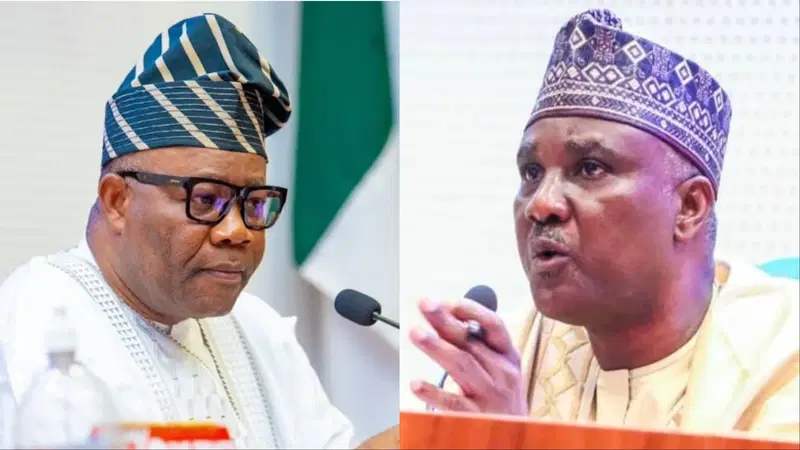
The Socio-Economic Rights and Accountability Project has raised the alarm over allegations that lawmakers in the National Assembly pay up to ₦3 million to present motions, bills, and petitions.
Sponsored Ads
The group has asked Senate President Godswill Akpabio and House Speaker Tajudeen Abbas to hand the matter to the EFCC and ICPC for full investigation.
Sponsored Ads
The claims came from Ibrahim Auyo, a lawmaker from Jigawa State, who said the process of presenting bills has been turned into a costly affair. According to him, legislators are often required to pay between ₦1 million and ₦3 million before their proposals can be considered. His disclosure has stirred fresh concerns over corruption in Nigeria’s legislative chambers.
SERAP reacted by sending an open letter dated August 16, calling on the leadership of the Senate and House of Representatives to take immediate action. The organisation asked them to reveal the names of those involved, ensure that any money collected through bribery is recovered, and guarantee protection for Auyo as a whistleblower.
RELATED STORIES
Related Posts
The group stressed that bribery in lawmaking erodes public trust and violates the oath of office taken by lawmakers. It warned that such practices deny Nigerians their democratic rights, turning the National Assembly into a space where legislative duties are influenced by money instead of public interest.
SERAP also reminded the leadership that the Nigerian Constitution requires public institutions to stamp out corrupt practices and abuse of power. It pointed out that Nigeria has obligations under international treaties such as the UN Convention against Corruption, which demand that the country prevent and punish bribery.
The organisation has given the National Assembly seven days to act or face legal action compelling its leaders to refer the case to anti-graft agencies. It noted that doing so would help rebuild trust in the legislature, show accountability, and prove that the Assembly is capable of cleaning up its own ranks.
This development has drawn national attention, raising concerns about how widespread the practice may be within the Senate and House of Representatives. Many Nigerians are now watching closely to see if the leadership of the National Assembly will confront the bribery scandal head-on or allow it to fade into another unresolved case of corruption.

Comments are closed.