

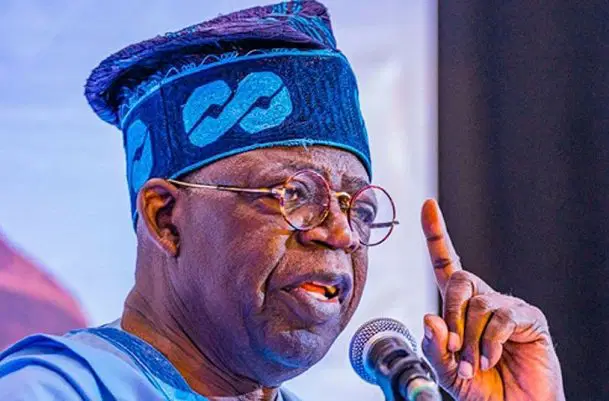
President Bola Tinubu has pledged that no region of Nigeria will be excluded from development, responding to rising complaints from northern leaders about alleged neglect.
Sponsored Ads
The President’s message was delivered in Kaduna at a two-day forum organized by the Sir Ahmadu Bello Memorial Foundation, where government officials and regional stakeholders gathered to assess federal performance.
Sponsored Ads
The event served as a platform for the government to address concerns over regional development and to present data and progress reports. Representing President Tinubu, Secretary to the Government of the Federation, George Akume, outlined projects and reforms meant to demonstrate commitment to the North. He cited rail projects, expressway construction, refinery rehabilitation, and security upgrades as signs of federal attention to the region.

LIST OF APPLICATIONS FOR REGULARISATION OF AREA COUNCIL LAND DOCUMENTS NULLIFIED/CANCELLED BY THE HONOURABLE MINISTER OF FCT
Ministers and northern governors used the opportunity to defend the current administration’s track record. They pointed to ongoing road and rail works, agricultural interventions, and education reforms as evidence that the North is not being sidelined. National Security Adviser Nuhu Ribadu also gave a detailed report on security gains, claiming a steep drop in terror attacks and banditry since Tinubu took office. According to Ribadu, thousands of hostages have been rescued, and key criminal figures have been neutralized.
Yet, not everyone agreed. Prominent voices from the region, including former Secretary to the Government of the Federation Babachir Lawal and Arewa Consultative Forum Chairman Alhaji Bashir Dalhatu, pushed back hard. They argued that the North remains underrepresented in federal infrastructure plans, budget allocations, and ministerial appointments. Lawal claimed that no visible federal projects are underway in the region, accusing the government of delivering little beyond promises. Dalhatu pointed to major road networks and power projects left unattended, especially in the North-East.
RELATED STORIES
Related Posts
Their frustration extended to neglected oil and steel projects like Kolmani and Ajaokuta, with Dalhatu warning that public-private partnerships may not deliver the industrial gains the region was promised. He also called for more direct communication between the federal government and northern stakeholders and proposed a standing committee to ensure ongoing engagement.
Governor Muhammadu Yahaya of Gombe State, who chairs the Northern Governors Forum, offered a more positive view. He said the Tinubu government had made tangible progress in northern states. He highlighted federal work on major roads, gas infrastructure, and oil exploration, asserting that northern support for Tinubu in the 2023 election is beginning to pay off. However, he urged patience and cooperation among regional leaders to help strengthen development efforts.
Outside the North, other regions added their voices to the conversation. The Pan-Niger-Delta Forum (PANDEF) raised complaints about unequal ministerial representation and poor infrastructure in the oil-producing South-South. They highlighted the absence of railway links, federal road neglect, and lack of employment opportunities for youths from the region in federal parastatals.
Similarly, the Middle Belt Forum expressed doubts about Tinubu’s promise of fairness across regions. The group’s president, Dr. Bitrus Pogu, said such promises often surface around election seasons and questioned whether the country’s current economic conditions could sustain the President’s vision.
Meanwhile, the Ohanaeze Ndigbo called for deeper structural reforms, insisting that real development must be built on a restructured federal system. They said too many states are dependent on Abuja and that only true federalism can encourage economic independence and regional prosperity.
As debates continue, President Tinubu’s administration faces a test of both delivery and trust. While some regions see progress, others feel forgotten. The government’s ability to balance competing demands while managing a struggling economy may shape both its legacy and its political future.

Comments are closed.