

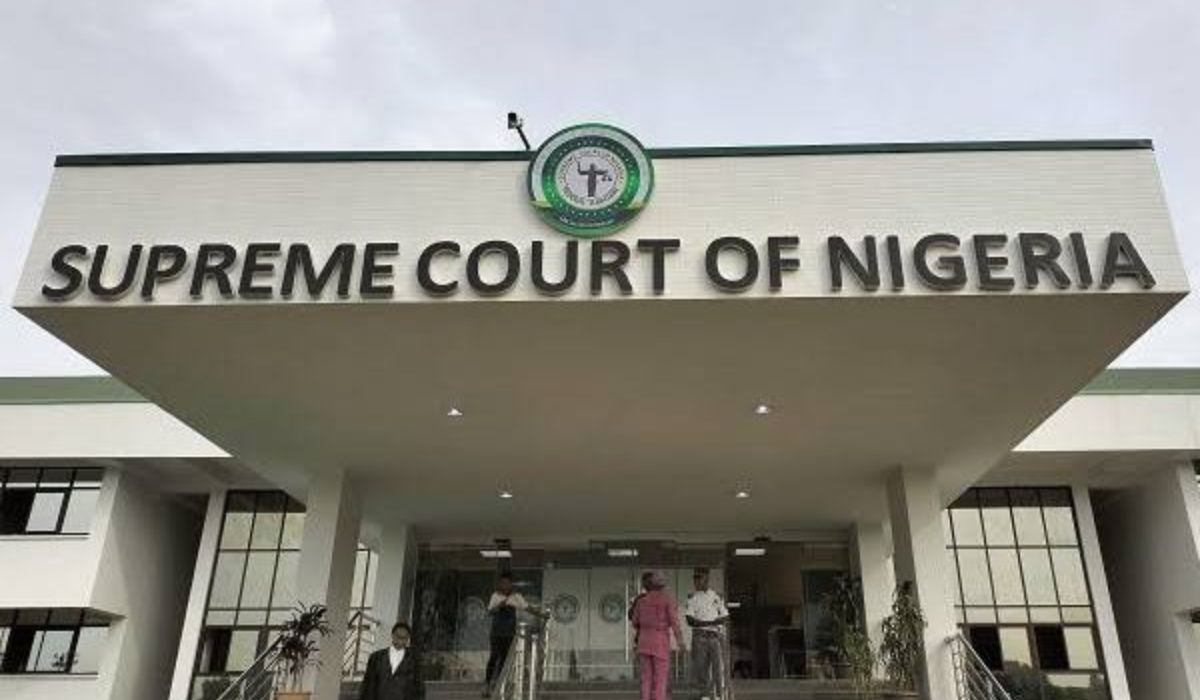
Fresh legal disputes could arise over political party primaries ahead of the 2027 elections following the Supreme Court’s decision to restore provisions of the Electoral Act 2026 dealing with party membership registers and the nomination of candidates.
Sponsored Ads
The development followed a unanimous judgment delivered by a seven-member panel of the Supreme Court, led by Justice Adamu Jauro, which restored Sections 77(5), 77(6), 77(7) and 84(2) of the Electoral Act.
Sponsored Ads
The judgment did not directly disqualify candidates whose nominations had already been completed. However, questions remain over how the restored provisions will apply to existing primaries and individual candidates, leaving the Independent National Electoral Commission (INEC) with issues to resolve.
The affected provisions require political parties to submit their membership registers to INEC within the required period and use the registers during their primary elections. Section 84(2) also provides for direct primaries or consensus in the process of selecting candidates.
The Supreme Court decision overturned an earlier judgment of the Court of Appeal delivered on July 16, which had declared the disputed provisions unconstitutional.
The apex court had heard INEC’s appeal on September 16 after the Federal High Court dismissed a case brought by the Zenith Labour Party.
The ruling has since generated questions about the status of primaries that have already taken place, particularly where politicians moved from one political party to another before securing tickets.
Some of the politicians whose nomination processes could face scrutiny include former Inspector-General of Police Mohammed Adamu, who became the Social Democratic Party governorship candidate in Nasarawa State through a substitution primary; former House of Representatives Minority Leader Kingsley Chinda, who emerged as the All Progressives Congress governorship candidate in Rivers State; and Senator Saliu Mustapha, who moved from the APC to the Peoples Democratic Party before securing the PDP ticket for Kwara Central.
Former Minister of Communications and Digital Economy Isa Pantami is also involved in a separate legal dispute after a Federal High Court in Gombe nullified the PDP primary that produced him and ordered the party to conduct another exercise.
However, none of these candidates was specifically disqualified by the Supreme Court judgment.
The PDP has scheduled September 29 for a fresh governorship primary in Gombe State after the Federal High Court sitting in Gombe nullified the party’s May 26, 2026 primary.
The court, in its September 24 judgment, cancelled the earlier exercise that produced Pantami and directed the PDP to conduct another primary within 30 days.
Pantami had emerged through a voice affirmation after leaving the APC for the PDP. His emergence was challenged by another PDP governorship aspirant, Usman Garry.
The PDP Public Relations Officer in Gombe State, Abdulkadir Dukku, said eligible delegates had been directed to assemble at their respective wards for the fresh exercise.
The party also appealed to its members and supporters to cooperate with the arrangements and maintain peace and order throughout the process.
The September 29 exercise is expected to determine the PDP candidate for the Gombe State governorship election.
Senator Olubiyi Fadeyi, who represents Osun East in the Senate, has rejected claims that the Supreme Court judgment had ended his bid to return to the Senate in 2027.
Fadeyi, in a statement issued in Osogbo, maintained that the process through which he became the PDP candidate for the Osun Central Senatorial District complied with the Constitution, electoral laws and the party’s rules.
RELATED STORIES
Related Posts
He dismissed reports suggesting that the Supreme Court judgment had disqualified him, describing the claims as speculation.
The senator said his nomination was properly conducted and approved by the relevant PDP structures.
He also maintained that the matter concerning his candidacy remained an internal issue of the PDP and that the party had recognised him as its candidate.
Senior Advocate of Nigeria and former Kwara State Attorney-General, Salman Jawondo, said the Supreme Court judgment did not invalidate nominations that had already been concluded.
Jawondo said the ruling was a general interpretation of the law and could not, on its own, give INEC grounds to remove previously nominated candidates from the ballot.
He argued that a person seeking to challenge an existing nomination would need to approach the court within the applicable legal period and have the necessary standing to bring the case.
Another SAN, Bolaji Ayorinde, also said the judgment did not create a new basis for automatically disqualifying candidates or disrupting political parties’ preparations for the 2027 elections.
Ayorinde said the Supreme Court had reaffirmed the legal framework surrounding candidate eligibility and argued that constitutional requirements remained the primary basis for determining whether a person could contest an election.
He urged INEC to implement the judgment without disenfranchising candidates or political parties.
The Chairman of the Nigerian Bar Association, Ikirun Branch, Osun State, Abdulkareem Azeez, however, said the ruling could still require individual cases to be examined based on the circumstances of each candidate.
Azeez said the Supreme Court had only affirmed the constitutional validity of Sections 77(5), 77(6), 77(7) and 84(2) and had not made specific findings about the party membership status, conduct of primaries or defection timelines of individual politicians.
He said candidates such as Pantami and Adamu were not parties to the Supreme Court case and that the court did not determine whether they were listed on the relevant party membership registers within the required period.
According to him, INEC would need to consider the restored provisions when examining individual cases, while disputes could eventually be taken before the courts.
Among the issues that could arise are whether a candidate’s name appeared on the relevant party register at least 21 days before a primary, whether the primary complied with applicable legal requirements and whether a candidate participated in more than one party’s nomination process.
Azeez also said questions surrounding whether the restored provisions could apply retrospectively would depend on the circumstances of individual cases.
Attempts to obtain a response from INEC were unsuccessful.
Calls to the Chief Press Secretary to the INEC Chairman, Adedayo Oketola, did not connect, while the commission’s Director of Voter Education and Publicity, Victoria Eta-Messi, said she would respond but had not done so as of press time.

Comments are closed.