

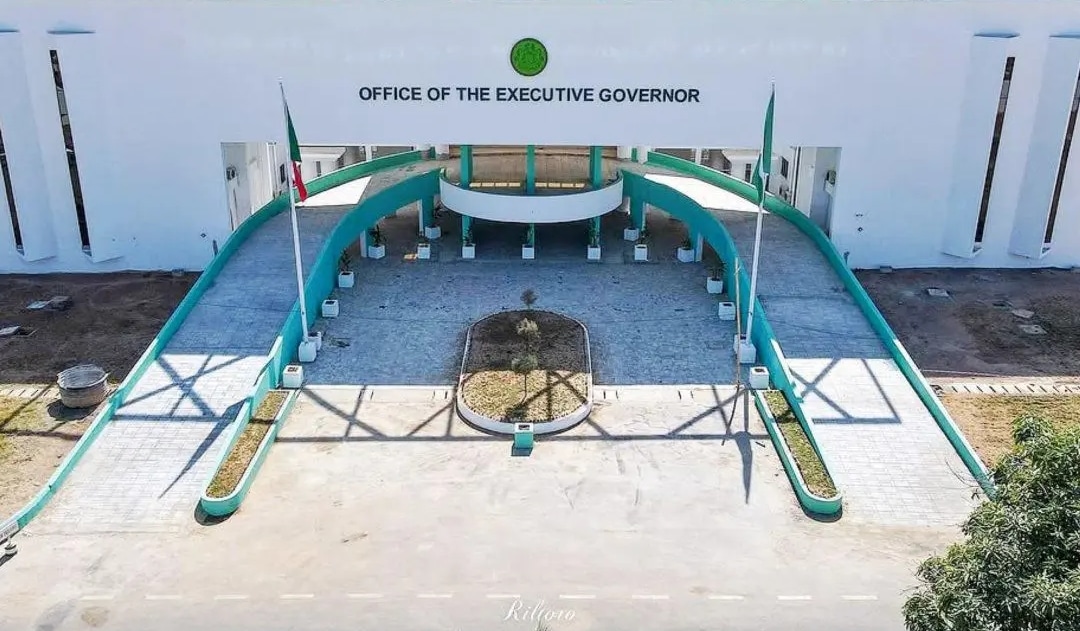
The Kaduna State Government says it has cleared N18 billion out of the pension and gratuity arrears inherited by Governor Uba Sani’s administration, following improved revenue from the Federation Account.
The state Commissioner for Information and Culture, Ahmed Maiyaki, disclosed this in an interview, saying higher allocations had also allowed the government to increase spending on infrastructure, agriculture, education, healthcare, transportation, security and employment programmes.
Maiyaki said the administration inherited about N24 billion in outstanding pension and gratuity liabilities when it assumed office, alongside domestic and foreign debts.
He said the financial obligations placed pressure on the state’s resources, but the government had gradually reduced the burden by settling about N18 billion of the inherited pension and gratuity liabilities.
According to the commissioner, the additional revenue available to the state has also supported an expansion of infrastructure projects.
He said 115 road projects were currently being implemented across Kaduna’s 23 local government areas, with more than half already completed.
The projects cover more than 1,400 kilometres of roads across urban and rural communities, with the government also focusing on routes connecting farming areas to markets and essential services.
Maiyaki said some communities that previously had little or no government road infrastructure were now benefiting from the ongoing projects.
He cited a 35-kilometre road connecting about 76 communities as one of the projects designed to improve movement for farmers and residents.
The commissioner said the road projects were intended to make it easier for farmers to transport their produce to markets, improve access to hospitals and other public facilities and assist security agencies in reaching rural areas.
Agriculture has also received a major increase in funding under the state administration.
Maiyaki said the annual agricultural allocation rose from N1.4 billion in 2023 to more than N100 billion in 2026.
He said agriculture contributes about 42 per cent of Kaduna’s Gross Domestic Product and accounts for roughly 60 per cent of employment in the state.
The increased funding, according to him, has been used to support farmers through the provision of fertiliser, irrigation facilities, mechanised farming and extension services.
RELATED STORIES
Related Posts
The state distributed 400 trucks of NPK and urea fertiliser to farmers in 2024 and increased the distribution to 500 trucks in 2025.
For 2026, the government is targeting about 150,000 smallholder farmers for fertiliser support.
Maiyaki said the interventions had helped strengthen Kaduna’s position in the country’s agricultural sector, particularly in the production of maize, tomatoes, soybeans and ginger.
Education has also remained a major area of government spending, with the commissioner saying the state has maintained an allocation above the 25 per cent benchmark recommended by UNESCO.
He disclosed that more than N264 billion was provided for education in the 2026 state budget.
The funds, he said, are being used for the construction and renovation of schools, recruitment of teachers and improvement of facilities in tertiary institutions.
More than 75 secondary schools have been constructed, while thousands of classrooms have also undergone renovation across the state.
Maiyaki said the administration’s education interventions had coincided with a reduction in the estimated number of out-of-school children in Kaduna from about 550,000 in 2023 to roughly 187,000 in 2026.
The state has also expanded its public transportation programme through the deployment of 100 compressed natural gas buses.
According to the commissioner, the buses provide free transportation for civil servants, students, traders, artisans and other residents.
He said the buses carried about four million passengers within one year, with beneficiaries estimated to have saved about N4 billion in transportation costs.
On security, Maiyaki linked the government’s road projects and social programmes, together with its Kaduna Peace Model, to improved movement and security across the state.
He also claimed that Kaduna had not experienced a religious conflict in the three years since the current administration took office.
The commissioner said the government would continue to use the additional resources available to the state to address inherited financial obligations while funding projects and programmes aimed at improving living conditions across Kaduna.

Comments are closed.