

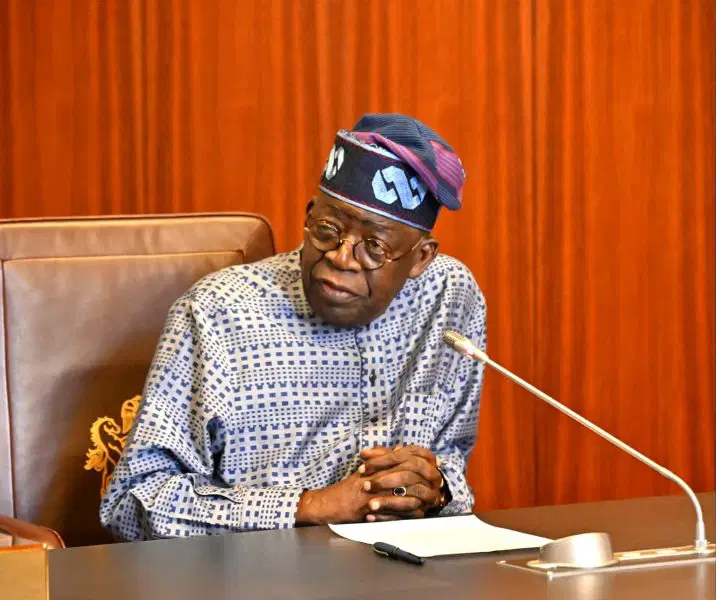
President Bola Tinubu has inaugurated a presidential working group to prepare the legal framework needed for the implementation of state police across Nigeria.
Sponsored Ads
The inauguration took place on Tuesday at the Presidential Villa in Abuja, with the President represented by his Chief of Staff, Femi Gbajabiamila.
Sponsored Ads
The move follows the Senate’s approval of the Constitution Alteration (State Police) Bill, 2026, which proposes a dual policing system made up of the Nigeria Police Force and separate police services for the 36 states.
According to the President, while the constitutional amendment provides the basis for the creation of state police, another law is required to guide how the system will operate in practice.
He explained that the proposed National Policing Bill will cover key areas such as minimum policing standards, conditions for states to establish police services, cooperation between federal and state authorities, accountability, protection of human rights, funding arrangements and the transition of personnel.
Tinubu said the committee has been tasked with producing a draft National Policing Bill that will be ready for submission to the National Assembly immediately after the constitutional amendment process is completed.
He added that the panel would also recommend any additional legal instruments needed to ensure the smooth implementation of the new policing structure.
The President said work on the bill should begin without waiting for the constitutional amendment process to be fully concluded.
Gbajabiamila will chair the committee, while members include the Attorney-General of the Federation, the National Security Adviser, the Inspector-General of Police, the President of the Nigerian Bar Association, the Chairman of the Nigeria Governors’ Forum, the Chairman of the NGF Committee on State Police and the committee’s secretariat.
Speaking on behalf of the Nigeria Governors’ Forum, Ogun State Governor Dapo Abiodun assured the Federal Government of the governors’ support for the reform.
RELATED STORIES
Related Posts
He said governors were prepared to fast-track the process by ensuring that once the bill reaches their various state Houses of Assembly, it would receive prompt consideration.
Abiodun described the state police initiative as a response to long-standing calls by Nigerians for community-based policing and greater decentralisation of security responsibilities.
He also said the proposal recognised the contribution of regional security outfits such as Amotekun in improving security in the South-West.
According to the governor, the establishment of state police would greatly increase the number of security personnel across the country, adding that if every state recruits about 6,000 officers, nearly 200,000 additional personnel would support the existing federal police force.
He also praised the President for beginning preparations for implementation before the constitutional amendment process is completed.
Attorney-General of the Federation and Minister of Justice, Lateef Fagbemi, described the initiative as timely in view of the country’s security challenges.
He called on state governors to ensure the constitutional amendment receives quick approval in their respective state legislatures to speed up the implementation process.
The President of the Nigerian Bar Association, Afam Osigwe, also backed the creation of state police, saying Nigeria’s growing security needs require more than a single national police structure.
However, he warned that the legal framework must contain adequate safeguards to prevent abuse of state police powers and protect the rights of citizens.
Osigwe assured the committee of the NBA’s support in developing legislation that would strengthen security while promoting accountability and respect for the rule of law.

Comments are closed.