

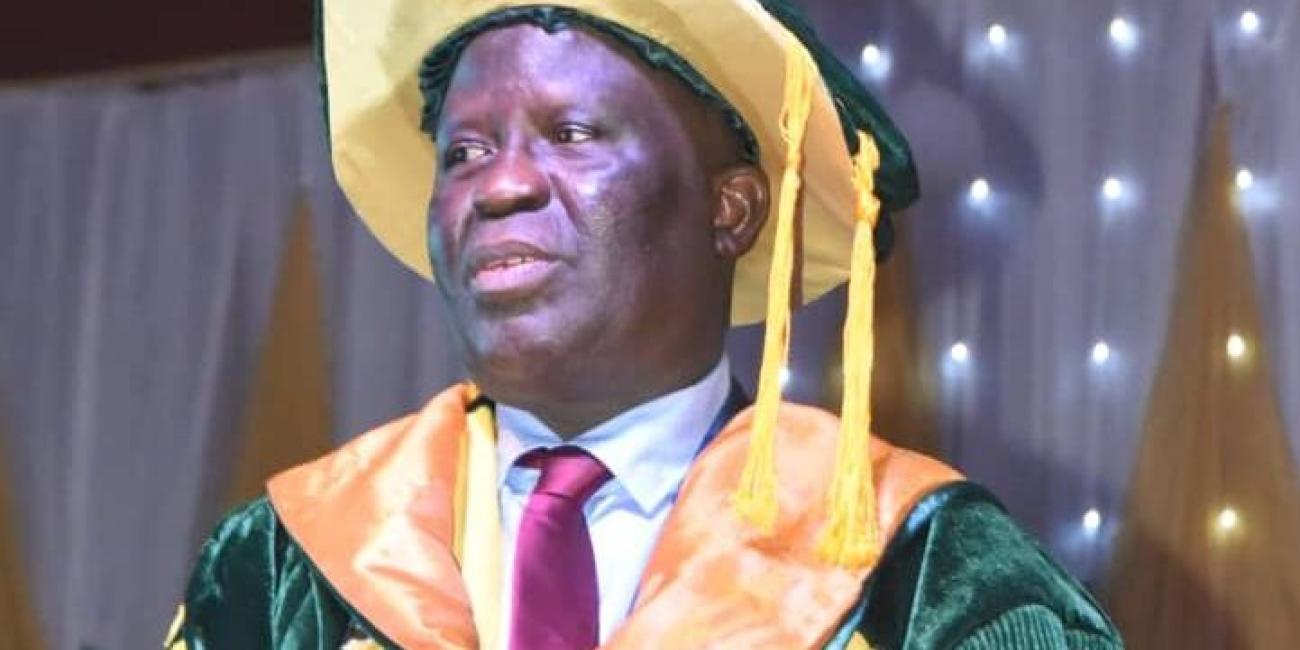
An internal audit has uncovered alleged financial irregularities amounting to about ₦387 million at the Institute of Part-Time Studies of the Federal University Oye-Ekiti, during the tenure of the suspended Vice Chancellor, Professor Abayomi Sunday Fasina.

Sponsored Ads
The findings came from a 34-page report prepared by a four-member committee set up by the university management to review the institute’s financial operations between 2021 and 2024. The committee spent four weeks examining account records, payment receipts, and expenditure reports to assess the true financial condition of the part-time programme.
Sponsored Ads
The investigation revealed that student enrollment grew rapidly within the period under review. Records showed 3,196 students in the 2021/2022 academic session, 4,210 in 2022/2023, and 5,501 in 2023/2024. The increase led to a total revenue of ₦2.19 billion generated across the three sessions, while recorded expenses stood at ₦297.8 million.

LIST OF APPLICATIONS FOR REGULARISATION OF AREA COUNCIL LAND DOCUMENTS NULLIFIED/CANCELLED BY THE HONOURABLE MINISTER OF FCT
Despite the steady flow of income, auditors discovered major financial gaps. Several student payments were found missing or unrecorded in the official reports, amounting to ₦387.5 million. The unaccounted funds included administrative and portal maintenance charges, screening fees, handbook and orientation payments, as well as medical insurance contributions. Additional discrepancies included unreported student debts and under-declared tuition fees, which painted a troubling picture of the institute’s financial accountability.
The committee’s findings revealed weak internal control systems and poor record management. Payments made by students through online platforms were not properly reconciled with the official financial statements. In some cases, receipts were incomplete, and expenditure documents lacked proper approval. These irregularities created doubts about whether the omissions were a result of negligence or deliberate concealment.
RELATED STORIES
Related Posts
Auditors warned that the missing funds deprived the institution of resources needed for critical development, staff welfare, and infrastructure improvements. They described the lapses as a breach of public trust, urging the university to take urgent steps to restore transparency and accountability in its financial processes.
To address the gaps, the committee proposed a total overhaul of the Institute of Part-Time Studies’ financial system. It recommended that the accountant gain full access to all online payment records and reconcile them with the Integrated Central Control platform. The audit also advised that annual budgets be presented to the IPTS Board at the beginning of every academic year, with copies circulated to relevant departments for oversight.
Further recommendations included the preparation of a financial operations manual aligned with federal financial regulations, clearer job descriptions for bursary staff, and closer collaboration between auditors and accountants to ensure all transactions are properly verified. The committee also called for proper documentation of student records, including matriculation lists and departmental registers, to prevent data manipulation.
The report urged the university to train staff on modern accounting procedures, introduce stricter checks and balances, and maintain facilities to create a better learning environment. It also advised that all part-time programmes comply fully with the National Universities Commission’s regulations to avoid sanctions.
The revelation followed earlier petitions sent to the Economic and Financial Crimes Commission and the Independent Corrupt Practices Commission, calling for a probe into alleged large-scale corruption at the university. The petitions, submitted by the Campus Concern Network and copied to President Bola Tinubu, the Minister of Education, and the National Universities Commission, accused Professor Fasina and some officials of financial misconduct, misuse of funds, and abuse of office.
The audit findings have deepened concerns over transparency in Nigeria’s higher institutions and renewed calls for stronger oversight of university finances to protect public resources.

Comments are closed.