

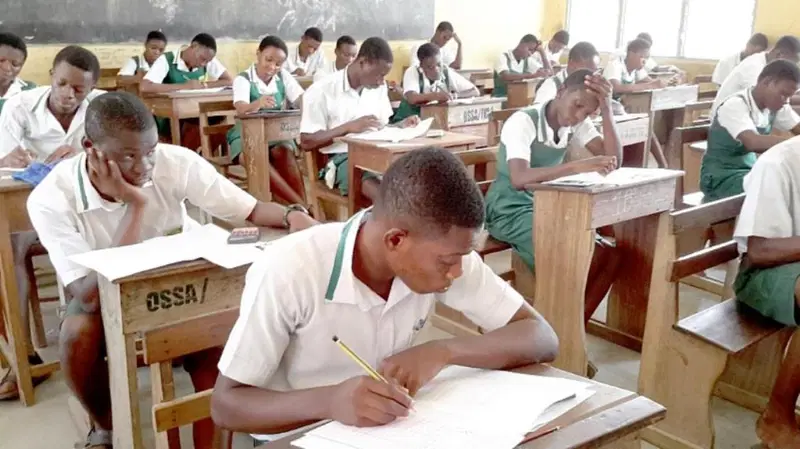
A wave of criticism has followed the release of the 2025 WASSCE results, as parents, teachers, and education stakeholders express deep concern over the poor performance of candidates, especially in English Language and Mathematics.
Sponsored Ads
The outrage has intensified across the country, with growing calls for the cancellation of the English paper due to the troubling conditions under which it was reportedly written.
Sponsored Ads
The results, announced earlier this week by the West African Examinations Council, revealed that only 38.32 percent of candidates secured credits in five subjects including English and Mathematics. This is a sharp drop from last year’s 72.12 percent. These two subjects are core requirements for university admission in Nigeria, making the mass failure a serious setback for many students.
Many parents and education advocates blame the situation on WAEC’s exam schedule. In some states, students allegedly sat for their English paper as late as 10:30 pm, using torchlights and candles in mosquito-infested classrooms. Reports suggest that candidates were forced to write under rain and in poorly lit conditions. This unusual schedule, they argue, played a major role in the poor performance.
Voices from platforms such as the Concerned Parents and Educators Network have described the situation as a failure of the system and are urging WAEC to cancel the paper and investigate the late-night exams. Some teachers have also spoken out, insisting that no exams should be conducted at such hours and questioning who authorized such irregularities.
RELATED STORIES
Related Posts
School proprietors have also added their voices. The National Association of Proprietors of Private Schools condemned the exam conditions, saying that expecting good performance from students writing exams in darkness and under pressure is unrealistic. They warned that such practices are harmful and unacceptable, calling for better coordination between private and public stakeholders to fix what they describe as a broken system.
The association also pointed to wider issues like poor investment in teacher training, inadequate school infrastructure, and lack of access to digital resources in rural communities. They say these factors have created a large gap between classroom teaching and actual student understanding. They argue that while curbing exam malpractice is necessary, the solution should not compromise student welfare.
WAEC, for its part, reportedly introduced measures like serializing objective questions to reduce cheating. While this method helped prevent malpractice, it may have caught many students unprepared, especially those used to relying on shortcuts instead of studying.
Parent associations have added that the problem goes beyond exam conduct. Many schools are short-staffed due to government failure to employ new teachers, and a lot of families can no longer afford textbooks or school essentials due to rising costs. This combination of poor preparation, weak school support, and harsh exam conditions, they say, created the perfect storm for failure.
As public pressure mounts, the question remains whether WAEC will cancel the English paper or if the government will step in to investigate the widespread complaints. For now, thousands of students and parents are left in limbo, questioning the integrity of a system that seems to have failed them.

Comments are closed.