

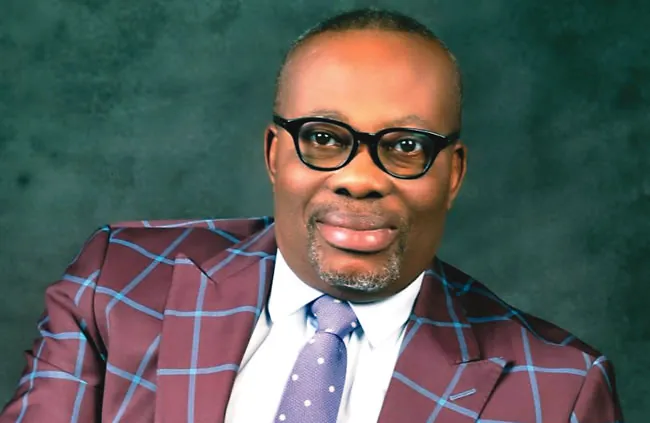
Senior Advocate of Nigeria and human rights lawyer Dr. Monday Ubani has raised concerns about Nigeria’s political future, warning that the country remains trapped in a cycle of recycled leadership that offers little value to national development.

Sponsored Ads
Ubani believes Nigeria’s struggle with underdevelopment stems from leadership failure, weak institutions, and a political culture driven by personal gain rather than public service. He said the country’s progress has been blocked by leaders who prioritize loyalty and patronage over merit and national interest, leaving essential sectors like education, healthcare, and infrastructure in poor shape.

LIST OF APPLICATIONS FOR REGULARISATION OF AREA COUNCIL LAND DOCUMENTS NULLIFIED/CANCELLED BY THE HONOURABLE MINISTER OF FCT
He argued that while the public shares some of the blame, especially the elite who enable corrupt practices, leaders must accept greater responsibility due to the power and resources they control. He pointed out that voters sometimes trade their votes for small rewards, civil servants assist in corrupt acts, and professionals often abandon standards, but ultimately it’s the political class that sets the tone.
LIST OF APPLICATIONS FOR REGULARISATION OF AREA COUNCIL LAND DOCUMENTS NULLIFIED/CANCELLED BY THE HONOURABLE MINISTER OF FCT
To rebuild itself, Ubani said Nigeria must start with moral reform. He suggested the country shift from relying on strong individuals to building strong institutions. He called for a merit-based system that rewards integrity and competence and urged investment in human capital and infrastructure. He gave examples of Rwanda and Singapore, countries that moved from troubled pasts to prosperity through visionary leadership.
Despite the return of democracy in 1999, Ubani said the promise of freedom and development has not been fulfilled for most Nigerians. He explained that democracy without justice, accountability, and inclusiveness cannot deliver real benefits. Elections in Nigeria, he said, are often used to gain access to public wealth rather than to serve the people.
RELATED STORIES
Related Posts
Ubani noted that while a few state governors have shown signs of good leadership, the majority of Nigeria’s political class lacks vision and competence. He praised leaders like Dr. Alex Otti of Abia, Peter Mbah of Enugu, and a few others as examples of what focused governance can achieve. But he warned that many leaders still hold onto power despite adding little or nothing to the country’s development.
He also linked Nigeria’s challenges to flaws in its constitution. He said weak laws have created weak institutions, and these in turn allow poor leadership to thrive. He called for constitutional reforms that promote accountability, reduce the powers of public office holders, and strengthen bodies like INEC, EFCC, and the judiciary.
When asked if President Tinubu’s administration has treated all regions fairly, Ubani pointed out growing concerns about imbalance in appointments, particularly the dominance of the South-West in key federal positions. He warned that any perceived or real marginalization fuels distrust and division and called on the president to reflect national unity through his actions.
Reacting to recent claims by northern leaders that the Tinubu government has neglected the region, Ubani advised that such concerns should be looked at in context. He reminded Nigerians that the North held power for eight years under former President Buhari, during which time many Southern groups felt left out. He said what Nigeria needs now is fairness and inclusivity, not another round of regional rivalry.
On the question of power rotation, Ubani maintained that the South should be allowed to complete its turn in the presidency before any shift to the North. He described power rotation as a necessary political arrangement to manage Nigeria’s diversity and maintain peace. He urged leaders from the North to wait until 2031 and to focus instead on internal development and nation-building.
Looking ahead to the 2027 election, Ubani cast doubt on the ability of the new coalition under the African Democratic Congress to unseat President Tinubu. He said while alliances can work, they often collapse if not united by shared goals. He noted that unless the opposition presents a credible plan and connects with voters across age and class, Tinubu remains the likely front-runner. But he added that anything could still change, depending on future developments.

Comments are closed.