

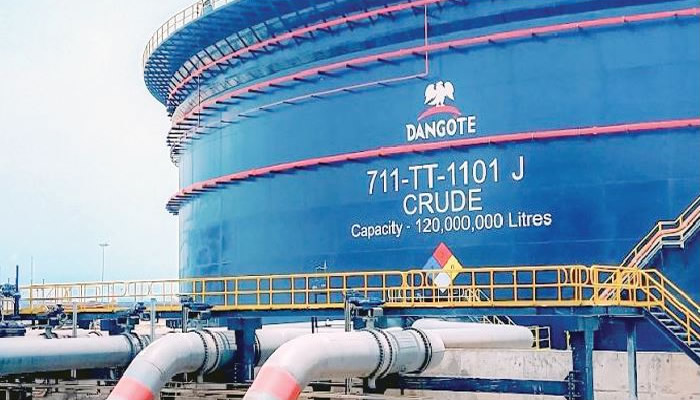
The Dangote Petroleum Refinery and Petrochemicals has appointed David Bird as its new Chief Executive Officer as it looks to boost production and extend its footprint across Africa.
Sponsored Ads
Bird, who previously led Oman’s Duqm Refinery and once served with Shell, officially assumed the role in July 2025.
Sponsored Ads
His appointment follows growing efforts by the company to overcome technical delays and scale operations at the Lagos-based facility, which is currently Africa’s biggest and the world’s largest single-train refinery. Bird now heads Dangote’s fuels and petrochemicals business, taking over at a time when the refinery is preparing for a new phase of growth.
He was spotted participating in the recent Dangote Leadership Development Program graduation, signaling the start of his leadership involvement. His role includes driving efficiency, expanding capacity, and helping the refinery reach new markets beyond Nigeria.
The company is banking on Bird’s deep experience in refining and international project expansion. He was previously credited with advancing the Duqm Refinery and bringing flexibility to its crude sourcing. At Dangote, his focus is to push the company beyond local dominance and establish it as a strong player across Africa’s energy sector.
Aliko Dangote remains chairman of the refinery and will still lead the broader Dangote Group, which is active in cement, sugar, and fertilizers. While Dangote still oversees the wider conglomerate, Bird is now responsible for fixing operational issues that have affected refinery output in recent months.
RELATED STORIES
Related Posts
The refinery has faced repeated disruptions this year, including setbacks involving its gasoline production unit. While test runs began on the catalytic cracker unit in 2024, ongoing technical issues have forced the company to rely on other units with lower output capacity. Reports suggest the unit is currently operating at 85 percent, but no maintenance shutdown is expected for December.
Since its commissioning in January 2024, the refinery has rapidly claimed a large share of the Nigerian fuel market and reduced dependence on imports. But it has also faced challenges from market conditions and fuel import quality, prompting sharp responses from Dangote.
Bird’s strategy appears focused on trade flexibility, high operational efficiency, and processing various crude types—an approach already visible in Dangote’s shift to new crude sources due to limited local supply. At the same time, the company is still bound to supply fixed volumes to the local market under a naira-based deal with the Nigerian National Petroleum Company, which owns a 7.2 percent stake in the business.
Looking ahead, the refinery aims to increase its daily refining capacity to 700,000 barrels and expand its port infrastructure. The company also plans to establish international storage facilities starting with Namibia and will launch its own distribution arm in August using 4,000 CNG-powered trucks.
The Dangote Group is preparing to list the refinery on both the Lagos and London stock exchanges. Despite earlier budget struggles, the refinery’s ramp-up in 2024 surprised many observers and even began influencing global fuel prices as it started exports.
Recent data shows Nigeria exported 220,000 barrels per day of petroleum products in July 2025, with Dangote as the country’s only active refiner that month. Most of the company’s exports came from jet fuel and diesel, while it also shipped residual fuel that would normally be refined further if its main unit were fully operational.

Comments are closed.