
Amaechi Tells Supporters to Back ADC for 2027 as Discontent Grows Over Tinubu’s Leadership

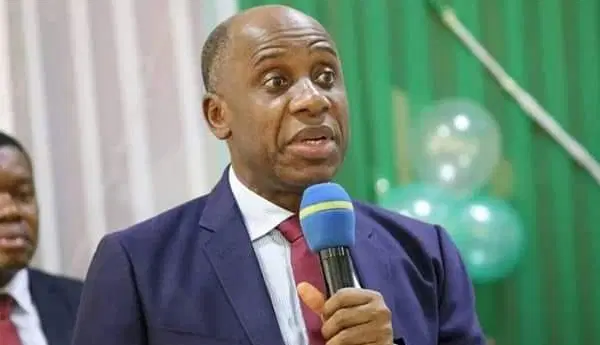
Former Minister of Transportation, Rotimi Amaechi, has called on Nigerians, especially in Rivers State, to support the African Democratic Congress (ADC) ahead of the 2027 presidential election.
Sponsored Ads
Speaking in Port Harcourt, Amaechi said he and other opposition figures are united in backing whoever emerges as the party’s flagbearer, as long as the process is free and transparent.
Sponsored Ads
His appeal comes amid growing dissatisfaction with President Bola Tinubu’s administration. The ADC has openly criticized the government’s economic policies, saying they have worsened the lives of ordinary Nigerians. During a gathering with his supporters, Amaechi said the country was sinking deeper into hardship and hunger, urging citizens to register with the ADC to bring about change at the ballot.

LIST OF APPLICATIONS FOR REGULARISATION OF AREA COUNCIL LAND DOCUMENTS NULLIFIED/CANCELLED BY THE HONOURABLE MINISTER OF FCT
Amaechi also made a symbolic walk through Port Harcourt, covering nearly three kilometers to his home. The move was widely seen as a show of strength in the political rivalry between him and Nyesom Wike, current Minister of the Federal Capital Territory.
Support is also building beyond the state level. The Non-Indigenes Alliance Movement (NIAM), a group based in Port Harcourt, pledged to support whichever candidate the ADC selects. According to the group, the ruling All Progressives Congress (APC) has failed the country, and the ADC offers a better path forward.
At the federal level, the presidency has dismissed the growing criticism from the opposition. While no official statement was made, sources within the government insisted that the president’s policies are beginning to yield positive results. But that claim is being challenged by leaders within the ADC.
RELATED STORIES
Related Posts
Speaking on a TV program, ADC spokesperson Bolaji Abdullahi said government officials are living lavishly while ordinary citizens are suffering. He pointed out that while the government defends its tough policies, there is no clear explanation about how long the hardship will last or what benefits will eventually come. He questioned how funds saved from the removal of fuel subsidies are being spent, noting that many Nigerians are paying high prices for petrol without seeing improvements in public services.
Abdullahi argued that if citizens must pay more for fuel, they should at least see direct benefits such as access to cheaper healthcare. Instead, he said, the lives of the poor continue to worsen while the political elite enjoy more privileges.
Meanwhile, former Jigawa State governor and PDP stalwart Sule Lamido has declared he is open to working with any political arrangement that can help rescue Nigeria in 2027, but ruled out joining the ADC or any coalition it leads. Speaking in Kano, Lamido said the current government is abusing state institutions to intimidate opposition leaders and undermine democracy.
He accused the Tinubu administration of using law enforcement agencies as tools for political pressure, citing the case of former Delta governor Ifeanyi Okowa, who was facing corruption charges before joining the APC — after which the case reportedly faded.
According to Lamido, Nigeria’s democracy is being weakened through manipulation and fear. He warned that the ruling party is exploiting regional divisions to maintain power, damaging national unity in the process.
He recalled how the 2014 opposition merger that brought the APC to power was driven by structured political organs with leaders who commanded grassroots influence. In contrast, he described today’s efforts at coalition-building as being driven by individuals, not institutions — making them less effective.
As political activity heats up ahead of 2027, opposition parties and civil society groups appear increasingly united in challenging the APC’s grip on power, though disagreements remain over how best to organize. For many, the next election will be a crucial moment to reshape Nigeria’s political future.

Comments are closed.