
Sowore Blasts Tinubu Over Top Appointments and Extended Service Of Security Chiefs

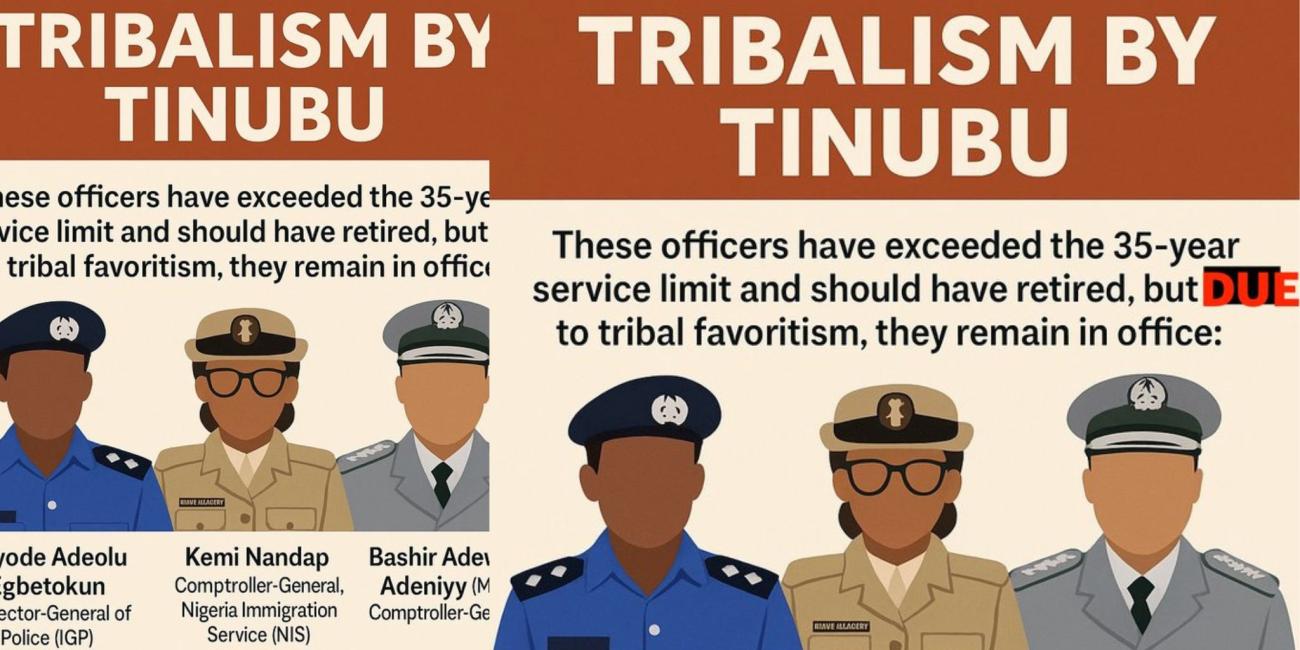
Omoyele Sowore has launched a fresh wave of criticism at President Bola Ahmed Tinubu, accusing him of running the country with a tribal mindset and extending the tenure of certain federal officials beyond the legal service limit.
Sponsored Ads
Sowore made the remarks on Sunday through a post on his social media account, where he described Tinubu as the most sectional leader in the country’s recent history.
Sponsored Ads
The human rights activist and former presidential candidate said Tinubu’s appointments have consistently favoured individuals from his ethnic group, even when they have reached the mandatory retirement threshold of 35 years in service. He named three top security figures—Inspector-General of Police Kayode Egbetokun, Immigration Comptroller-General Kemi Nandap, and Customs Comptroller-General Bashir Adewale Adeniyi—as examples of this alleged practice.
Sowore raised concern that these officials have remained in office despite hitting retirement age, which he claims undermines national unity and violates existing service rules. He described the situation as a betrayal of merit and professionalism, with national institutions now allegedly shaped by ethnic considerations rather than qualifications or rule of law.
The presidency, however, has acted to give legal backing to some of these appointments. In July 2024, the National Assembly passed an amendment to the Police Act, allowing the Inspector-General of Police to remain in office based on the terms in his appointment letter rather than the standard retirement rule. This move was initiated by Tinubu and passed swiftly through both legislative chambers. Egbetokun, who turned 60 in September 2024, was granted a new term to remain in office until October 2027.
RELATED STORIES
Related Posts
The amendment has not gone unchallenged. Legal experts and civil society groups, including the Association of Legislative Drafting and Advocacy Practitioners (ALDRAP), said it contradicts sections of the 1999 Constitution that govern police tenure. Some insist that only a constitutional amendment can change such service rules. Sowore himself was arrested and charged after referring to Egbetokun as an “illegal IGP,” sparking wider debates over freedom of expression in Nigeria.
Beyond the police, Sowore also criticised the extension of Kemi Nandap’s tenure as the head of the Nigeria Immigration Service. Appointed in March 2024, her term was originally set to end in August 2025 but has now been extended until the end of 2026. Nandap joined the service in 1989, and activists argue that she should have stepped down based on the standard 35-year rule.
For the Nigeria Customs Service, Bashir Adewale Adeniyi’s continued stay as Comptroller-General has also come under fire. Appointed in June 2023, he has reportedly exceeded the service time limit. Civil groups have accused the Customs leadership of poor performance and corruption and have called on the National Assembly to block any further tenure extension. In response, the Nigeria Customs Service issued a public denial, saying no directive for an extension had been received and that only the president holds such authority.
The repeated backlash from rights groups and political activists points to a broader concern over Tinubu’s handling of federal appointments. Many fear that bypassing long-standing service rules could damage institutional integrity and deepen ethnic divisions in a country already struggling with unity.
Sowore’s latest comments form part of his broader campaign against the current administration, under his #RevolutionNow banner. He maintains that the Tinubu government lacks transparency and fairness, and continues to call for sweeping reforms to restore public confidence in governance.

Comments are closed.