

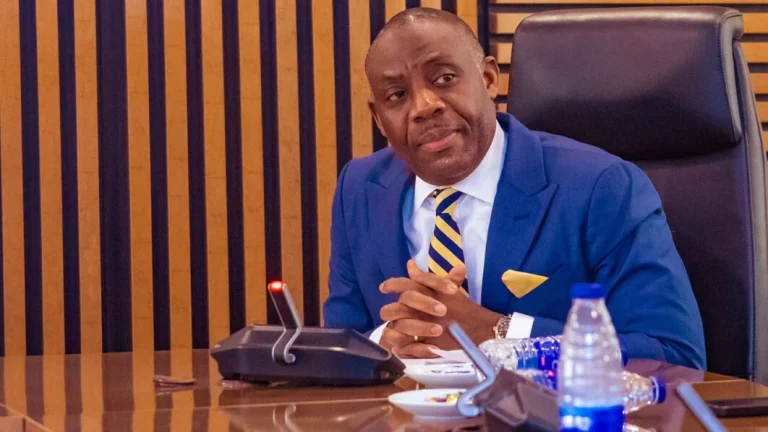
The Federal Government has pledged to honour its agreements with staff unions in tertiary institutions, with Education Minister Tunji Alausa insisting that four-year degree programmes must be completed within the stipulated period.
Sponsored Ads
Alausa made the declaration on Tuesday in Abuja while unveiling the 2026 agreements between the government and academic and non-academic staff unions in universities, polytechnics and colleges of education.
Sponsored Ads
He said the agreements were intended to rebuild trust between the government and education workers, prevent recurring industrial disputes and ensure that students no longer lose valuable academic time because of strikes arising from unmet commitments.
The minister said the administration of President Bola Tinubu was determined to end the longstanding cycle of broken agreements and disruptions to academic calendars. He added that the new arrangements reflected the President’s campaign promise that students should complete four-year courses within four years.
The agreements cover the Consolidated Academic Tools Allowance (CATA) for the Academic Staff Union of Polytechnics (ASUP) and the Colleges of Education Academic Staff Union (COEASU). They also provide for the Consolidated Non-Teaching Tools Allowance (CONTTA) for non-academic staff unions across the three categories of tertiary institutions.
The allowances are scheduled to take effect from January 1, 2026, subject to the applicable implementation guidelines.
Alausa acknowledged that signing the agreements was only the first step, saying the government’s credibility would depend on its commitment to implementing the provisions as agreed. He assured the unions that the Federal Government would fulfil its obligations.
To prevent disagreements over implementation from escalating into strikes, the minister announced plans to expand the existing Implementation and Monitoring Committee established for the agreement with the Academic Staff Union of Universities (ASUU).
The expanded committee will monitor agreements with academic and non-academic unions across tertiary institutions. Its responsibilities will include tracking progress, identifying outstanding obligations, addressing implementation challenges and producing periodic reports to ensure accountability.
According to Alausa, the committee will help identify problems early and resolve them before they disrupt teaching and other academic activities. He urged government agencies to fulfil their responsibilities, while university and college governing councils and management teams were directed to maintain proper records and comply with the implementation guidelines.
Union leaders were also encouraged to keep their members informed and use established channels to resolve emerging concerns rather than allow disagreements to develop into industrial action.
RELATED STORIES
Related Posts
The minister recalled that delayed or incomplete implementation of agreements had repeatedly triggered disputes between successive governments and education unions. He said the resulting strikes had affected students, placed additional financial pressure on families and disrupted teaching and research.
He maintained that stable academic calendars were necessary for institutions to plan effectively, strengthen research and enable students to complete their programmes on time. He also called for regular consultations, constructive dialogue and mutual respect between the government and union representatives.
Alausa said the new allowances recognised the professional and operational needs of academic and non-academic workers, adding that staff welfare should extend beyond financial benefits to include fair treatment, transparent promotion procedures, occupational safety and career development opportunities.
He commended ASUP, COEASU and the non-teaching staff unions for participating in the negotiations. He also praised the Federal Government Tertiary Institutions Expanded Negotiation Committee, chaired by Malam Yayale Ahmed, for helping to conclude the process.
Signed copies of the agreements were presented to representatives of several unions, including ASUP, COEASU, the Senior Staff Association of Nigerian Universities (SSANU), the Non-Academic Staff Union of Educational and Associated Institutions (NASU) and the National Association of Academic Technologists (NAAT).
Speaking at the event, Ahmed said the success of the negotiations depended on cooperation and compromise between the government and labour representatives. He commended both sides for working towards an agreement despite their different interests and the financial and administrative challenges involved.
However, he stressed that implementation would determine whether the negotiations achieved their intended purpose. He also disclosed that discrepancies had been identified in some parts of the agreement and said they would be addressed in collaboration with the Ministry of Education and the National Salaries, Incomes and Wages Commission.
ASUP National President, Shammah Kpanja, described the negotiations as the fastest in the union’s history, noting that discussions began in December 2025 and resulted in the signing of an agreement in April 2026.
Kpanja said implementation had commenced, with members receiving outstanding arrears between July and September. He nevertheless urged the government to fulfil the remaining provisions and welcomed the proposed joint monitoring committee.
COEASU President, Lawal Bazza, said more than 70 per cent of the agreement for the colleges of education subsector had been implemented. He expressed hope that the expanded committee would help resolve outstanding issues.
The agreements also provide for a review every three years, allowing the government and unions to discuss emerging concerns and mutually agreed adjustments.
Despite the assurances, the effectiveness of the new arrangement will depend on the timely payment of the agreed allowances and the committee’s ability to resolve disputes before they lead to further strikes and disruptions to students’ academic programmes.

Comments are closed.