

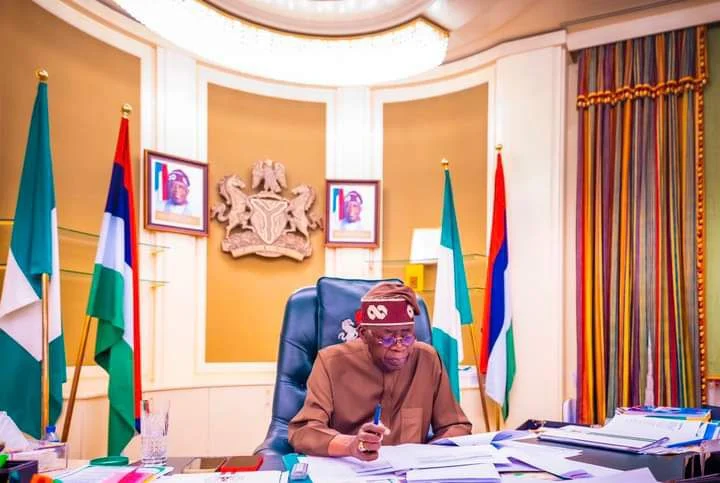
President Bola Tinubu has requested an additional $347 million loan from the National Assembly to cover rising costs in key infrastructure projects under the 2025–2026 borrowing plan.
Sponsored Ads
The request, read by House Speaker Tajudeen Abbas during plenary on Wednesday, includes an extra $47 million for the Lagos-Calabar Coastal Highway and $300 million for a new telecoms initiative. The loan would push the president’s initial borrowing request from $21.54 billion to $21.89 billion.
Sponsored Ads
Tinubu said the Lagos-Calabar project initially had only $700 million in confirmed funding from lenders. To align with financing agreements and cover a shortfall, he asked for a $47 million top-up, which will be sourced through export credit agencies.
He also revealed that the Nigerian Universal Communications Access Project was mistakenly left out of the original plan. That project will cost $300 million and is expected to deploy 7,000 telecom towers to unserved and underserved communities nationwide.
Back in May, Tinubu submitted the broader borrowing plan to the National Assembly, which included a request for $21.54 billion, €2.19 billion, ¥15 billion, and a €65 million grant.
RELATED STORIES
Related Posts
National Assembly Gives Approval
The House approved the additional borrowing after reviewing a report by Abubakar Nalaraba, chairman of the Committee on Aids, Loans, and Debt Management. The Senate had already approved the request on Tuesday.
Despite the rising loan figures, lawmakers said Nigeria’s debt remains manageable. They cited a debt-to-GDP ratio of about 50%, which is below the international threshold of 56%.
Parliament also noted a drop in the debt service-to-revenue ratio—from over 90% to below 70%—under the current administration. Lawmakers believe new revenue streams from the Nigerian Tax Act 2025, expected to grow over 18% annually starting in 2026, will help Nigeria meet its debt obligations.
They added that the anticipated revenue boost would cushion future debt servicing and minimize the risk of a debt crisis.

Comments are closed.