
How Suspected Herdsmen Sacked 14 Communities Killed, Raped, Maimed In Oyo State

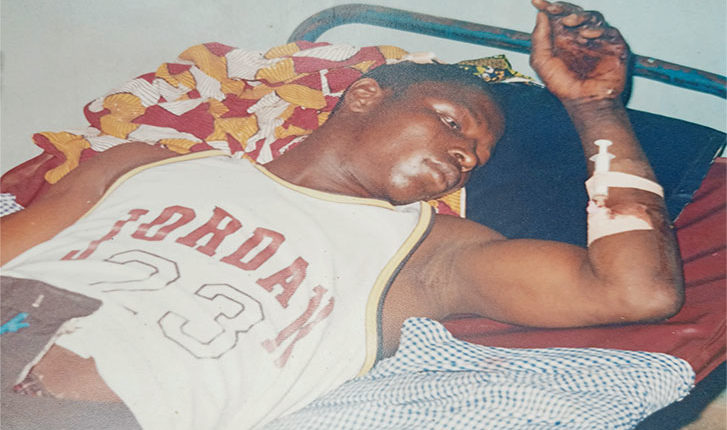
In some backwater communities in Ikoyi Ile, Oyo State, it has been tales of sorrow, tears and blood as herdsmen brazenly terrorise residents. With no hope from either government or its own traditional ruler, no less than 14 communities may be on the verge of being forced off their ancestral lands, adding to the list of human disasters brought about by marauding Fulani herdsmen in the country, writes NICHOLAS UWERUNONYE

Sponsored Ads
The sleepy, agrarian community of Kedo Salami, tucked away from the mainstream town of Ikoyi-Ile, Orire, a local government authority in Oyo, woke up to the wailings of Ruth Gboyega, an elderly widow. She was just back from her farms estimated at a little over three acres where she grows cassava and maize. She came back much too early and she had a bitter story to tell. Not less than two acres of her cassava farm had been laid waste. Another acre of maize farm was all gone. “It’s Abdullahi Tarfa,” she pointedly accused, telling anyone who cared to listen that early Thursday morning as she wailed.

LIST OF APPLICATIONS FOR REGULARISATION OF AREA COUNCIL LAND DOCUMENTS NULLIFIED/CANCELLED BY THE HONOURABLE MINISTER OF FCT
When she finally narrated her plight to other farmers, she explained that Tarfa, the leading herdsman and Fulani man with large ownership of cattle has been on rampage in the vicinity of her farms. “Tafa ordered that my crops be eaten by his herds. They came into my farm, uprooted my cassava and fed them to the cattle. They have ruined me. I have no husband, I am a widow. This farm is all I have to feed my children and myself. My entire livelihood has been destroyed by Tafa,” she wailed.
LIST OF APPLICATIONS FOR REGULARISATION OF AREA COUNCIL LAND DOCUMENTS NULLIFIED/CANCELLED BY THE HONOURABLE MINISTER OF FCT
But Gboyega is not the only farmer that had a sad story to tell that morning. Olajide Akani, of Olode Elelu, also in the vicinity, came to his farm a few days earlier and nearly had a heart attack. “My entire crop was almost gone,” he recalled to the newspaper. The cattle herds had grazed on his farm eating his crops of maize, yam and cassava. “They have been doing so in installments. But that day, they took time to finish everything,” he lamented.
A few miles from Kedo Salami and Olode Elelu situate Daudu, which serves as a central hub for more than 15 farming communities. There, Usman Ganiyu was gnashing his teeth all day and was also reeling from the pain of losses inflicted on him by the cattle herders. Not less than 20 acres of yam, cassava, and maize had been thoroughly ravaged by the cattle at the instigation of (Abdullahi) Tarfa, as he alleges. “No. These Fulani herdsmen have gone too far, this time. The herdsmen must leave our community,” he said with finality, punctuating his comment with a swing of his machete. His anger is not just about the losses on his farm.
Rather, Ganiyu, like Gboyega and many farmers in nearly 14 communities in Ikoyi Ile believe that more sinister portents are on the way in the days ahead if nothing is done soon.
The belief stems from their experiences of the last six years. According to Oyekola Joseph, aka ‘Alabi Yellow,’ secretary, Idera Ilu Farmers Association, the umbrella union of local farmers in most of the affected communities, the farmers like every other residents in the communities have been waging a losing battle with a new onslaught of herdsmen who not only destroy their crops and sack their farm land, they also kill and maim people bold enough to challenge them.
“Apart from killing people, our women are not safe. Wives and daughters are raped after chasing off the husbands and fathers,” explained Joseph. He further added that the communities are at the mercies of the herdsmen because they appear to enjoy the support from law enforcement agents and even the traditional ruler in place. Before the renewed onslaught, conflict with farmers by herdsmen had been fewer in the past. But with a strange influx of herdsmen from the Federal government forest reserve straddling Ogun, Oyo, cutting deeply into Ikoyi Ile’s agrarian communities and extending to Kwara and up north of the country, the ferocity with which the herdsmen destroy the farmlands and even attack farmers took a turn for worse.
Apparently, going by the newspaper’s investigation, the spark that ignited the conflict appears to stem from the botched farm market, which was originally conceived by the traditional ruler, Oba Abdulyekeen Oladipo IV, but didn’t quite enjoy the support of critical stakeholders in the far-flung agrarian communities. Though under Orire, the local government, Ikoyi Ile’s remote communities is home to farmers from many parts of the country like from Benue, where Tivs and Igedes come from, to farm in the area.
There are also foreigners like Togolese who come to farm in the area, too. Also included in the ethnic mix are the Fulani pastoralists. As gathered, the monarch had sought to create the open market by fiat. Having secured the support of the local Myetti Allah to start the market, Oba Oladipo had assumed that Idera Ilu farmers would be easy to bring around to join in. That was not to be as it then appeared that the Oba presumed too much on the extent of cooperation he hoped to get.
“When the Oba summoned us, we hadn’t an inkling of the planned market,” explained Alabi Yellow who was part of the delegation that went to see the king. At the meeting, the monarch presented the plan before the farmers and the herdsmen. While the herdsmen had their decision making body, the Myetti Allah, present, it was not so for the farmers because such decisions had to be taken by a congress, and not even by the executive body, only a few of whom were at the meeting.
“We respectfully told our Oba that our delegation could not unilaterally take decision for Idera Ilu; that we had to report back to the chairman of the union upon which a congress would be summoned on the matter,” said the farmer’s union secretary. As learnt, the Myetti Allah had taken umbrage at the response. As a result, fight broke out at the meeting. “When we left, we told the Oba that we would return with a decision on the matter,” the secretary added. But to the farmers’ utter chagrin, the market began barely few days later without as much as allowing for the farmers to get on board.
“Which farm market can be viable without crop farmers bringing their produce to the place,” asked Alabi Yellow, rhetorically on why the market could not be sustained. The market going under had its consequences on the farmers, though. It left the monarch miffed with them, and apparently cashing on the disaffection between the farmers and the traditional ruler, the herdsmen began what later turned out to be steady harassment, attack often with fatal consequences on farmers and their crops.
RELATED STORIES
Related Posts
Rather than help, allegedly, the traditional ruler, according to the farmers, stoked embers of the conflicts in the communities, which left many, wounded and properties destroyed. At the height of one of the conflicts, Issa Bolorunduro, a Togolese and was so called because he farmed at Bolorunduro, one of the communities, had accosted one of the herdsmen who had led the cattle to graze on his crops. To his eternal regret, one of the herdsmen attacked him with a machete.
“The assailant had aimed for Issa’s head but the victim instinctively raised his arm to protect himself,” explained the farmers’ Secretary. Issah’s hand was chopped off from his body, just below the bicep. “The victim didn’t survive the attack because he died few months later from the fatal wound,” the newspaper was told. Compared to Issa, Dominic Gbegi, a Tiv, farming in Alasapa Okedudu, was lucky. Thin and wiry looking, Gbegi’s left hand, some inches below the elbow, dangles awkwardly. The hand carries a deep scar from a cutlass wound that could have taken his life.
Gbegi, like many Tivs, had traveled down from his village near Makurdi to the Ikoyi Ile community to escape herdsmen militia killing that sacked communities in his state. But one fine morning, the farmer was stupefied to find herdsmen grazing on his yams. Angrily, he had accosted the herdsmen, two of them, overpowered them and seized some of their properties, promising not to release them until herdsmen compensated him for the damage on his farm.
“Three days later, the Fulani men came. Six of them including their master called Ibrahim,” he narrated to the newspaper. According to him, he believed that they had come to negotiate terms. Even though they came with cutlass, he wasn’t put on guard because they claimed to have come in peace.
“They told me that they can only pay me N40, 000 for the enormous damage they did to my farm,” he said. But according to the farmer, the crops were worth more than N300, 000. “I disagreed with them and this led to a fight right in my house. Before I knew what was happening, they hit me with a cutlass in my arm and I fell down. I couldn’t defend myself and I could have been killed if not for my wife,” he narrated. As one of them was poised to deliver the killer blow, my wife came in from the kitchen with a pestle and slammed it on his back. They all ran away after that,” Gbegi narrated.
Onyen Adoso, also a Tiv, like Gbegi, and also from Makurdi, came to the community in Oyo to do some farming. In his case, the herdsmen who destroyed his farmland agreed to pay. Between the police and Alhaji Shehu, as they know the Fulani herdsman whose herd destroyed his farm, they agreed on N30, 000 which was paid. “But later in the night, four people came to my house. Three of them, Sidi, Mamah, Sander and one other I couldn’t recognise, children of Alhaji Shehu, told me that they have come to collect the money their father gave me as compensation.
“I refused and they cut me with machete on the head,” He narrated, showing the newspaper a healed scar at the back of his head. The herdsmen left him for dead. His wife was also attacked but she ran away. Similar stories of sorrow, tears and blood abound in other communities in Orire like Budo Afa, Laomi Alagogo, Animahun, Kango Elesin, Awaye, Jagun Ita Eleyewa, Ilu Onikoko, Alapete, Alawowo, Igbo Ayin and many others.
However, the traditional ruler, Oba Oladipo IV, gives a slightly different picture on the matter. He saw both farmers under the auspices of Idera Ilu and the Fulani herdsmen as both aggressors and victims. According to him, both of them are locked in a struggle for land. “It’s a fight over same stretch of open land. The herdsmen graze the land and water their cattle in it. Same applies to our farmers. They need the land to plant their maize, yam and cassava. So conflict between those two groups is inevitable,” the Oba said.
He admitted too that he was disappointed that the farmers did not give him maximum support for his farm market project. But he denied stoking the conflicts. “I wanted to start an open market here in Ikoyi Ile. The farmers went ahead to organise to frustrate my plans. They organised and waylaid the herdsmen who were bringing their cattle products to sell at the market. They started sending them back to their homes. That was how they killed that market initiative,” the monarch narrated his own side of the story.
He further explained the side of the herdsmen on the allegation that they graze on the farmlands. According to the Oba, it is the farmers who instigate stampede among the cattle leading them to rush into farmlands without control. The monarch narrated what appear to be strange happenstances on why cattle graze on farmlands. “What happens is that, according to them, while grazing cattle, farmers from their farms start making hooting and other noises that distressed the cattle. Such din makes the livestock uncontrollable. They stampede into the farms and start eating the crops. When that happens and farmers get hold of the grazers, it becomes a fight,” Oba Oladipo added.
The Oba further blamed other ethnic groups in his domain for the conflict. He said that most of the farmers are not from his kingdom and so cause disaffection. “You need to also realise that here in Ikoyi Ile, there are four different ethnic units. The three other units are always at loggerheads with us the aborigines of the land. The Ogbomoso indigenes don’t want my people to develop. They don’t want any of us to emerge as local government chairman. I have done the best to help my people grow. But the Ogbomoso people are everywhere. They won’t give us opportunity to rise. That same bitterness is what they habour against the herdsmen,” he said.
As measures to curb the conflict, he claimed to have constituted a committee made up of eight people each from both side of the divide. “We drafted a memorandum of understanding and handed it over to the police. But it is one thing to reach an agreement and it as another thing for both sides to abide by them,” he said.
Currently, Oyo State has drafted an anti-grazing bill, but yet to pass it into law. The law intends to halt open grazing in the state like it is in Benue, Plateau and other states in the South. Also, the state, like others in the South West embraced the regional security plan known as ‘Amotekun.’ But the question is, would there still be any agrarian community in Ikoyi Ile when government gets around to giving bite to this law and launching the security outfit?
Independent
