

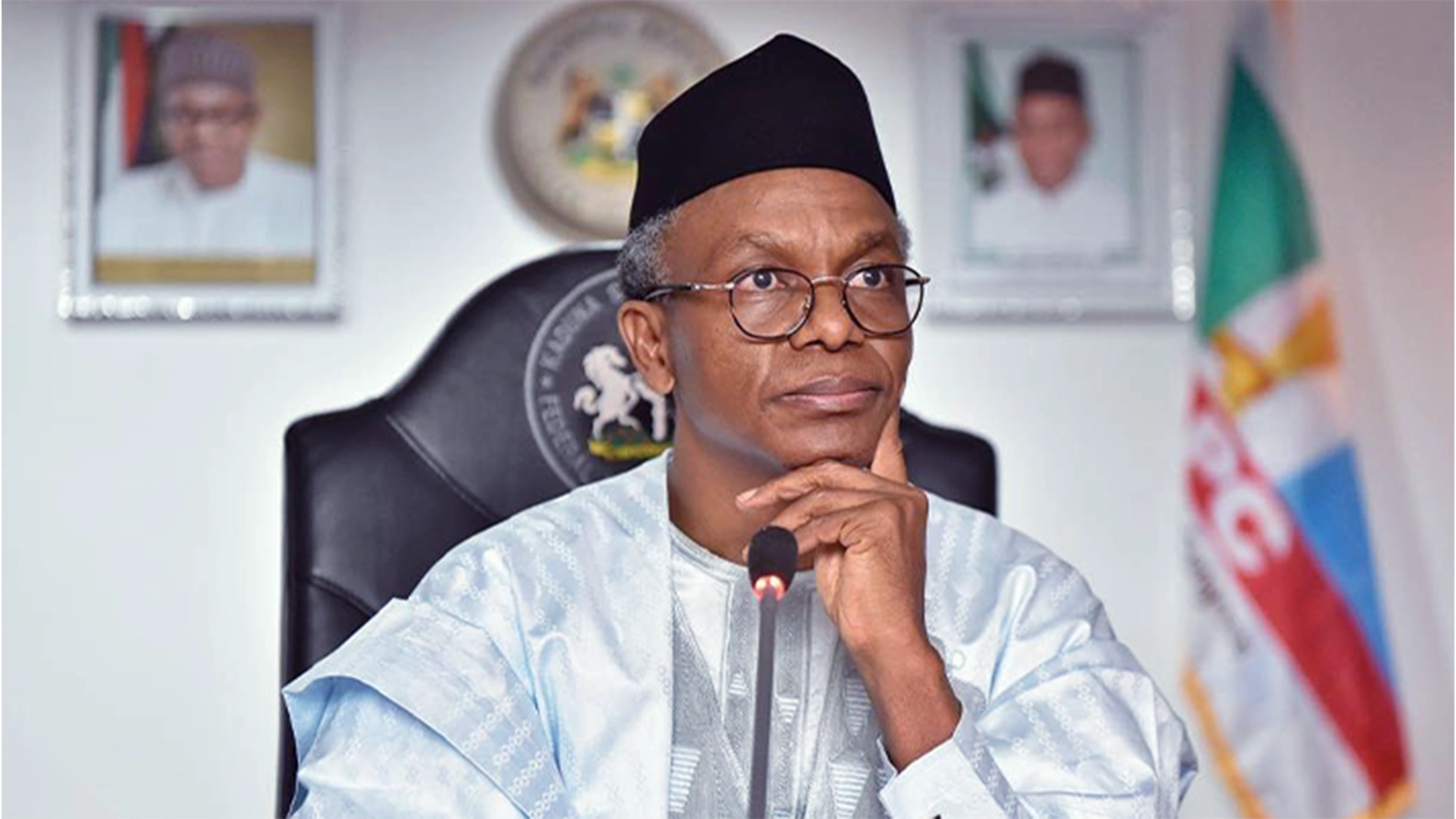
Former Kaduna State Governor Nasir El-Rufai has admitted that his claim about intercepting the telephone conversations of National Security Adviser Nuhu Ribadu was not factual, saying he made the statement to unsettle the government.
Sponsored Ads
El-Rufai made the clarification on Wednesday while testifying as the first defence witness in his ongoing prosecution by the Department of State Services (DSS) before the Federal High Court in Abuja.
Sponsored Ads
The former governor said his earlier remarks were political rhetoric rather than an admission that he or anyone acting on his behalf had tapped Ribadu’s telephone.
His lawyer, Paul Erokoro, SAN, played part of an interview El-Rufai granted Arise TV on February 13, during which he claimed that someone had intercepted the NSA’s phone conversations and shared them with opposition figures.
Asked to explain the statement, El-Rufai said he used the word ‘tap’ figuratively to suggest that the government was monitoring opposition politicians and other prominent Nigerians. He said he wanted to create the impression that those in the opposition were also aware of activities within government.
He maintained that neither he nor other opposition figures had intercepted Ribadu’s calls. Rather, he alleged that the government was conducting surveillance on opposition figures without obtaining the necessary court authorisation.
El-Rufai said the reference to ‘we’ in his earlier statement meant himself and other prominent opposition figures.
He further claimed that a mutual acquaintance had informed him of an alleged plan to abduct him and have him detained. However, he declined to disclose the person’s identity, citing the need to protect his source.
According to him, the acquaintance later visited him after the television interview and clarified that he had not tapped Ribadu’s telephone. El-Rufai said he already knew this but had made the earlier claim to make government officials uncomfortable.
The former governor told the court that he had known Ribadu since 2003, when he headed the Bureau of Public Enterprises and assisted in providing office space and funding for the establishment of the Economic and Financial Crimes Commission (EFCC).
RELATED STORIES
Related Posts
He attributed the deterioration in their relationship to the 2011 presidential election, when Ribadu contested for the presidency and he supported Muhammadu Buhari.
El-Rufai also alleged that Ribadu was opposed to him because of his position against President Bola Tinubu’s re-election bid.
During cross-examination by the prosecution counsel, Oluwole Aladedoye, SAN, El-Rufai maintained that he had neither the technical knowledge nor the equipment required to intercept telephone conversations.
He refused to identify the individuals he had referred to as ‘we’ in the television interview. He also declined to name the person who allegedly told him that Ribadu, Kaduna State Governor Uba Sani and ICPC Chairman Musa Aliyu had met to arrange his arrest.
El-Rufai said he learnt of the alleged plan before returning from Cairo on February 12. He claimed he resisted DSS operatives who attempted to arrest him at the airport because they did not present what he considered a valid arrest warrant.
He further maintained that his other statements during the television interview, including his denial of stealing public funds and knowledge of the disappearance of activist Dadiyatta while he was governor, were true.
The former governor acknowledged that his fundamental rights cases challenging the search of his residence, which he said was conducted with a defective warrant, had been dismissed by the FCT High Court and the Federal High Court.
During proceedings, the prosecution counsel also told the court that Erokoro had approached him about the defence’s intention to invite Ribadu and the ICPC chairman as witnesses. Aladedoye said he could not facilitate the request because the matter was outside his control.
Erokoro said the defence would file the necessary applications to secure their appearance.
Justice Joyce Abdulmalik subsequently adjourned the case until February 15 and 16 for El-Rufai to continue presenting his defence.

Comments are closed.