

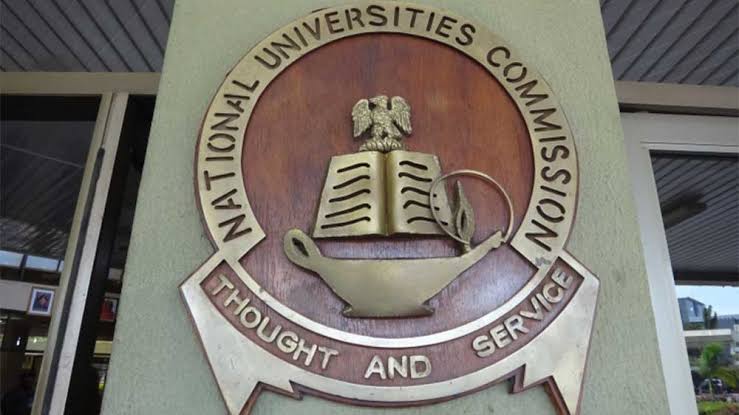
The National Universities Commission (NUC) is considering adjusting academic calendars across Nigerian universities by three to four weeks to allow lecturers and other academics to participate in the conduct of the 2027 general elections.
Sponsored Ads
The proposal forms part of efforts to mobilise vice-chancellors and university authorities to provide qualified, non-partisan academics for electoral duties, particularly as collation and returning officers.
Sponsored Ads
NUC Executive Secretary, Professor Abdullahi Yusufu Ribadu, disclosed this in Abuja on Monday when the Chairman of the Independent National Electoral Commission (INEC), Professor Joash Amupitan, led a delegation of national commissioners and senior officials on a courtesy visit to the commission.
Ribadu said the NUC would engage vice-chancellors to nominate suitable academics for election assignments. He added that an online meeting would be organised to coordinate the process.
He also promised to issue a formal circular to universities once INEC submitted an official request.
According to him, the proposed adjustment would give academics enough time to perform their electoral responsibilities without disrupting students’ academic programmes. He said the NUC would consult university administrators to ensure the arrangement did not interfere with either academic activities or INEC’s election timetable.
Ribadu stressed that credible elections required personnel who could carry out their duties with integrity. He also proposed that academics and other temporary election officials take an oath of neutrality before deployment to reinforce their impartiality.
Beyond supplying election personnel, the NUC executive secretary proposed a wider partnership between universities and INEC. The proposed areas of cooperation include student internship opportunities at the electoral commission, joint research projects and possible academic programmes in electoral studies.
RELATED STORIES
Related Posts
Earlier, Amupitan said his visit was intended to strengthen cooperation between INEC and Nigerian universities ahead of the 2027 elections.
He acknowledged the contributions of universities to previous electoral exercises, particularly through the deployment of vice-chancellors and other senior academics as collation and returning officers.
The INEC chairman also outlined technological, operational and security measures being introduced to improve the electoral process and protect personnel.
He disclosed that results recorded at polling units on Form EC8A would undergo automated arithmetic consistency and over-voting checks before transmission to the INEC Result Viewing Portal (IReV).
Amupitan further announced that the commission had procured an additional 57,000 Bimodal Voter Accreditation System (BVAS) machines. He said the acquisition would reduce the voter-to-device ratio to 850 voters per machine.
On security, he said the Inter-Agency Consultative Committee on Election Security (ICCES) had been decentralised to local government areas and registration areas to improve coordination at the grassroots.
He added that dedicated security cordons and escort arrangements would be provided around collation centres to protect electoral officials against intimidation and attacks.
Amupitan also referred to provisions of the Electoral Act 2026 criminalising violence, abusive language and threats against election personnel, noting that INEC had the authority to prosecute offenders.
He assured academics and other officials participating in the elections that measures would be put in place to protect them while carrying out their duties.

Comments are closed.