

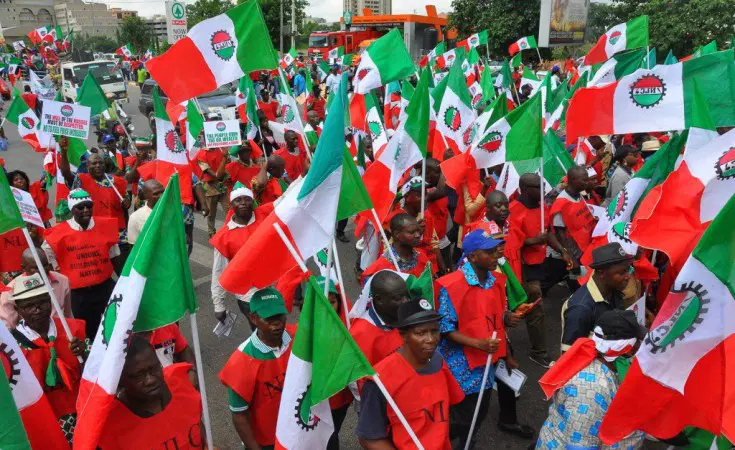
Federal, state and local government workers across Nigeria have commenced a three-day warning strike following the failure of the government to address demands by public sector unions over the rising cost of living.
Sponsored Ads
The industrial action, directed by the Joint National Public Service Negotiating Council (JNPSNC), began at midnight on October 2 and is scheduled to run until October 4, 2026.
Sponsored Ads
The council instructed workers across federal, state and local government services, including employees of ministries, departments and agencies, to participate in the strike.
The action followed a September 21 letter sent by the JNPSNC leadership to President Bola Tinubu, outlining measures it wanted the Federal Government to take to ease the economic pressure on workers and other Nigerians.
Among the major demands is a reduction in the pump price of petrol to N500 per litre. The unions also called for an immediate wage award to cushion the effects of rising living costs and the establishment of a tripartite committee to begin negotiations for a new national minimum wage ahead of 2027.
The council had given the Federal Government a deadline of September 30 to address the demands. It subsequently directed its members to proceed with the warning strike after the issues were not addressed in the President’s Independence Day address.
The JNPSNC said the current economic conditions had placed growing pressure on workers, their dependants and other vulnerable Nigerians. It argued that the cost of petrol had contributed to higher transportation expenses and increased the prices of food and other essential goods and services.
The council also proposed the use of intervention funding to reduce the landing cost of petrol and support oil and gas operators. It called on the Federal Government to ensure that crude oil is made available to the Dangote Refinery and modular refineries on appropriate terms to support domestic refining.
The unions said the new minimum wage negotiations should begin early enough to avoid delays when the existing wage arrangement becomes due for review in 2027.
The warning strike is being implemented by affiliates of the JNPSNC, including the Nigerian Civil Service Union, Medical and Health Workers Union, Association of Senior Civil Servants of Nigeria and National Association of Nigerian Nurses and Midwives.
RELATED STORIES
Related Posts
Other participating unions include the Amalgamated Union of Public Corporations, Civil Service Technical and Recreational Employees, Nigeria Union of Public Service, Reportorial, Secretarial, Data Processors and Allied Workers, National Union of Printing, Publishing and Paper Products Workers, and National Union of Agriculture and Allied Employees.
The Nigeria Labour Congress (NLC) has also expressed support for the workers’ demands.
In its Independence Day statement, NLC President Joe Ajaero said rising petrol prices, inflation, unemployment, stagnant wages and insecurity were placing additional pressure on Nigerian workers.
The labour centre said the purchasing power of workers had declined as the prices of transportation, food, school fees, rent and other basic necessities increased.
The NLC called for measures to reduce petrol prices and demanded the immediate implementation of a nationwide wage award for federal, state and local government workers.
It also called for the implementation of tax relief measures contained in an earlier agreement between the government and labour and urged the government to begin negotiations for a new national minimum wage ahead of 2027.
The union further called for a reduction in the cost of governance, greater transparency in the management of public funds and more economic opportunities for young Nigerians.
On insecurity, the NLC said violence had worsened economic conditions and exposed workers such as farmers, teachers and healthcare personnel to danger in some parts of the country.
The labour centre also called on political actors to avoid electoral manipulation, voter intimidation and the use of ethnic or religious divisions during the 2027 election period.
The three-day action is intended by the unions as a warning to the Federal Government, with the workers demanding responses to their concerns over fuel prices, wages and the broader cost-of-living crisis.

Comments are closed.