

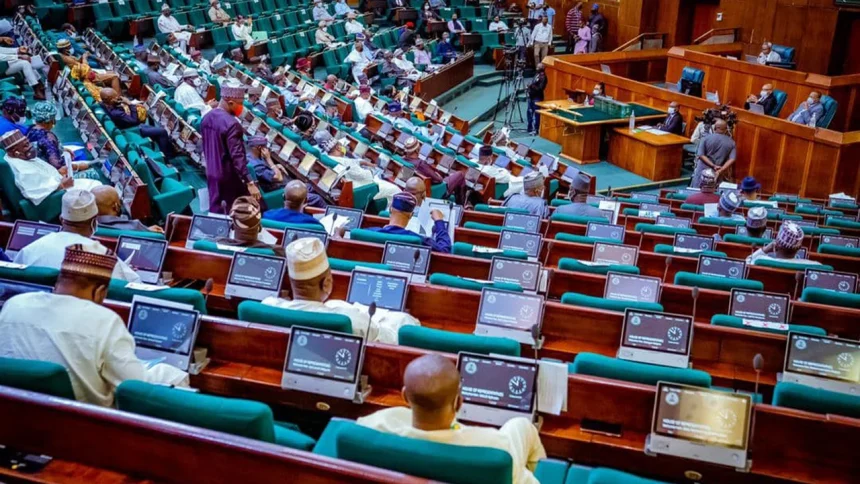
The Director-General of the Budget Office of the Federation, Tanimu Yakubu, has told the House of Representatives that no part of the N1.32 billion appropriated for the Presidential Foreign Investment Promotion Council (PFIPC) was released or spent, despite its inclusion in the 2026 Appropriation Act.
Sponsored Ads
Yakubu made the clarification on Friday while appearing before the House Ad-Hoc Committee investigating the alleged unlawful establishment and funding of the council. He insisted that although funds were allocated in the budget, the legal conditions required before any payment could be made were never met.
Sponsored Ads
The Budget Office boss also stated that his agency neither established the council nor approved its creation, recruitment process or payment of salaries. According to him, the office only carried out its statutory responsibility by assessing the financial implications of approvals issued by other government agencies.
He explained that the Budget Office did not assign the council a budget code or authorise its establishment. Instead, it worked with official documents submitted by relevant authorities and calculated the likely financial impact in line with existing procedures.
Yakubu disclosed that the council initially requested N3.8 billion as personnel cost. However, the Budget Office rejected that proposal after carrying out its own assessment.
According to him, the office independently calculated a personnel cost of N802.98 million using the approved staff structure and salary scale applicable within the public service. He said the figure reflected the Budget Office’s own fiscal assessment and was not based on the amount requested by the council.
Despite the provision made in the budget, Yakubu explained that no recruitment was authorised because the mandatory financial clearance was never issued.
He said financial clearance is the final legal requirement before any government agency can begin recruitment, enrol staff on the payroll or pay salaries.
As a result, he maintained that no recruitment took place, no employee was placed on the government payroll and no salary payment was made to anyone under the council.
He further disclosed that although personnel costs accounted for more than 60 per cent of the council’s total appropriation, no money was drawn from the allocation since none of the legal conditions for expenditure had been fulfilled.
Yakubu also informed the lawmakers that the N200 million overhead allocation remained untouched because treasury warrants and cash backing were never issued.
Similarly, he said the N300 million capital allocation never progressed beyond the budget stage because the procurement procedures required under the law were not completed.
RELATED STORIES
Related Posts
According to him, no project received approval from the Ministerial Tenders Board, no Certificate of No Objection was issued and no treasury warrant or cash backing followed.
He added that the country’s financial control system functioned as intended by preventing any expenditure before funds could be released.
During the hearing, members of the committee questioned the legal basis upon which the Budget Office made provisions for the council after examining what they described as a questionable law said to have established the agency.
Committee member, Rep. Abubakar Fulata, argued that the document presented lacked essential features of a valid Act of Parliament, including a gazette number, the signature of the Clerk of the National Assembly and evidence of presidential assent.
He said the document could not be regarded as a genuine law and questioned why government agencies failed to verify its authenticity before acting on it.
Responding to the concerns, Yakubu maintained that the Budget Office relied solely on official establishment approvals, recruitment waivers and salary directives issued by the appropriate statutory authorities.
He explained that although the council submitted a request for personnel funding, the Budget Office based its calculations only on approved establishment documents and directives from the National Salaries, Incomes and Wages Commission.
Chairman of the committee, Rep. Yusuf Gagdi, defended the actions of the Budget Office, saying the evidence presented before the lawmakers showed that the agency acted on official approvals provided by relevant government institutions.
According to him, the committee’s investigation has already established that the documents submitted to those agencies were later discovered to be forged.
Gagdi said the focus of the investigation had shifted from the Budget Office to identifying how the alleged forged documents entered official government channels and were accepted by public institutions.
He added that, based on the documents examined so far, the Budget Office did not allocate funds to the council without receiving the required approvals.
The committee chairman also announced that the Accountant-General of the Federation would appear before the panel on Monday to explain how the council obtained its budget code.
He added that other government agencies would also be invited as the investigation enters its final stage, with the committee expecting to conclude its work next week.

Comments are closed.