

The Socio-Economic Rights and Accountability Project (SERAP) has asked the leadership of the National Assembly to explain how more than ₦1.3 billion was allocated in the 2026 Appropriation Act to the Presidential Foreign Intervention Promotion Council (PFIPC), an agency the Presidency has described as non-existent.
Sponsored Ads
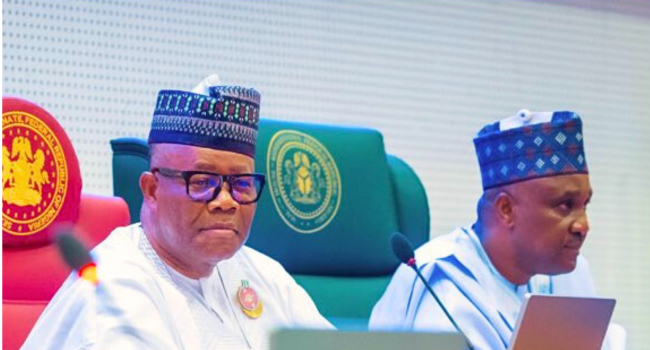
In a Freedom of Information request dated July 4, 2026, SERAP called on Senate President Godswill Akpabio and Speaker of the House of Representatives Tajudeen Abbas to release certified copies of all documents relating to the approval of the ₦1,302,978,784 allocation made to the PFIPC, also referred to as the Presidential Economic Advisory Council.
Sponsored Ads
The organisation also urged both leaders to use the National Assembly’s constitutional powers to investigate how the allocation was approved and determine whether any irregularities occurred during the budget process.
SERAP further requested records identifying the members of the National Assembly committees that handled the budget proposal. It also asked for the names and official positions of all government officials or representatives who appeared before the committees to defend the allocation.
The rights group wants lawmakers to clarify whether the allocation was contained in the Executive’s original 2026 Appropriation Bill or whether it was introduced or amended during the legislative process. It also requested information on whether any lawmaker questioned the legal status or operational mandate of the council before the budget was passed.
According to SERAP, the Presidency has already stated publicly that the PFIPC was never created by the Federal Government, despite the allocation contained in the approved budget. The organisation said the conflicting positions have raised serious concerns about the credibility of Nigeria’s budget process, legislative oversight and public financial management.
RELATED STORIES
Related Posts
SERAP argued that lawmakers have a constitutional responsibility not only to approve budgets but also to properly examine and verify all proposed expenditures before granting approval.
The organisation maintained that Nigerians deserve to know whether public funds were appropriated for an institution that was not legally established and how such an allocation found its way into the national budget.
It stated that making the requested documents public would allow citizens to determine whether the National Assembly fulfilled its constitutional duties during the appropriation process and whether proper scrutiny was carried out.
SERAP gave the leadership of the National Assembly seven days to respond to its request, warning that it would pursue legal action if the requested information is not released within the stipulated period.
The organisation added that greater transparency would improve public confidence in the National Assembly and strengthen accountability in the management of public funds.
It also noted that access to the requested records is in line with the Freedom of Information Act, the Nigerian Constitution and Nigeria’s obligations under international human rights agreements that guarantee citizens the right to obtain information held by public institutions.
SERAP maintained that public access to information relating to government spending, alleged misuse of public funds and legislative oversight is essential for promoting accountability, strengthening democratic governance and combating corruption.

Comments are closed.