

Tension is rising within the Peoples Democratic Party as members clash over micro-zoning of top positions ahead of the party’s November convention and the 2027 general elections.
Sponsored Ads
The disagreements have deepened uncertainty, with some state chapters openly rejecting the leadership formula.
Sponsored Ads
The zoning rift has already sparked rebellion in Lagos and Osun where stakeholders threw their weight behind business leader Gbenga Olawepo-Hashim as their preferred presidential candidate. The rejection signals growing resistance to the party’s plan to allocate key positions along geo-political lines.
While PDP struggles to resolve its internal battles, the African Democratic Congress has gained a major boost after the Independent National Electoral Commission formally recognised former Senate President David Mark as its national chairman. The recognition ends weeks of leadership disputes that stalled the party and positions it for stronger participation in opposition coalition talks.
The uncertainty in PDP centres on who takes the national chairmanship, a role seen as critical to shaping the party’s presidential campaign. Former Kano governor Ibrahim Shekarau, former Benue governor Samuel Ortom and Olawepo-Hashim are among those being considered, with each backed by different factions. Party leaders admit that no decision has been reached, and the matter is expected to dominate the PDP’s October 15 National Executive Committee meeting.
RELATED STORIES
Related Posts
The lack of clarity has opened the field for intense lobbying, with aspirants and their allies travelling across states to build alliances. Some members warn that prolonged indecision could trigger defections and weaken the opposition party, recalling how similar disputes before the 2015 elections contributed to PDP’s collapse in power.
Resistance to zoning is spreading beyond Lagos and Osun. Stakeholders in Oyo, Ondo, Plateau, Kano and the Federal Capital Territory have also rejected the formula, raising concerns that the standoff could reshape the party’s internal structure ahead of 2027.
Meanwhile, David Mark’s confirmation as ADC leader is expected to strengthen coalition efforts among opposition heavyweights. His team, which includes former Interior Minister Rauf Aregbesola and other experienced politicians, has been tasked with stabilising the party and positioning it for alliance talks.
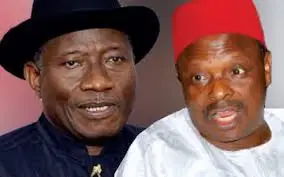
Former President Goodluck Jonathan and former NNPP candidate Rabiu Musa Kwankwaso have also intensified negotiations, with discussions on possible joint structures. Kwankwaso’s camp is pushing for the vice-presidential slot, while Jonathan weighs options between PDP and ADC as his political vehicle.
Jonathan’s indecision reflects the challenges of aligning with a stable platform, given factional disputes in both parties. Although many of his loyalists are in the ADC, some in his camp believe he may eventually settle for the PDP, where he still enjoys strong roots despite internal resistance.
As the opposition maneuvers ahead of 2027, PDP’s internal wrangling over zoning and the ADC’s revived leadership under David Mark are shaping the early political landscape. The choices made in the coming weeks will determine whether the opposition can unite strongly enough to challenge the ruling APC in the next presidential race.

Comments are closed.