

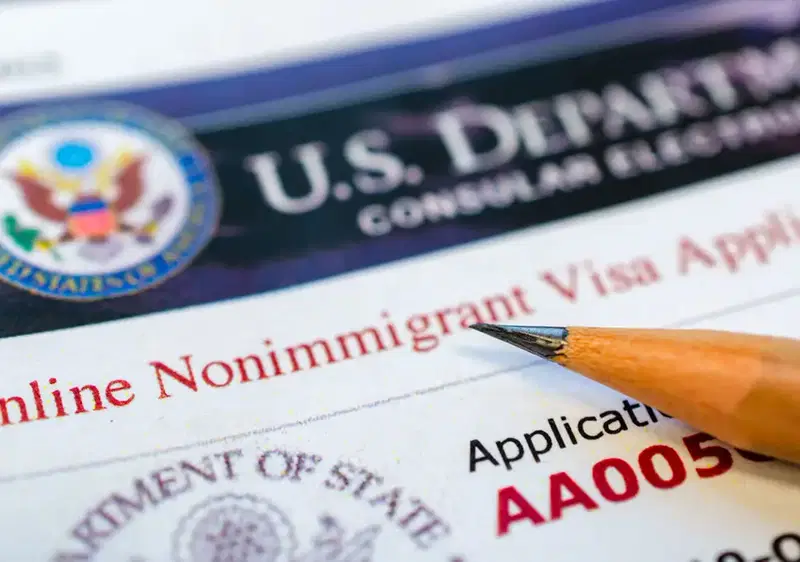
The United States has introduced a new visa policy that requires Nigerians applying for entry to submit their social media history covering the last five years.
The policy, announced by the US Mission in Nigeria, warns that failure to comply could result in rejection of applications and restriction from future travel to America.
The move is part of Washington’s broader immigration measures under President Donald Trump’s administration. Applicants are now expected to provide usernames, handles, email addresses, and telephone numbers used across all platforms during the stated period. Those with multiple accounts or changing usernames are also expected to include every detail in their forms.
The policy extends beyond students, who were previously asked to provide similar information, and now applies to nearly all visa applicants. It is intended to give US authorities deeper access to the online lives of foreign nationals before granting entry. The requirement aligns with the administration’s wider effort to tighten borders and limit both legal and illegal migration.
Reactions in Nigeria have been swift. The Ministry of Foreign Affairs confirmed that the Federal Government will respond with equal measures, meaning US citizens seeking visas for Nigeria will face similar scrutiny of their social media records. Officials said the decision is based on the principle of reciprocity that guides visa policies between nations.
RELATED STORIES
Related Posts
The Nigerian government plans to convene an inter-agency meeting involving the Ministry of Foreign Affairs, the Ministry of Interior, and the National Intelligence Agency. The meeting will decide the exact framework for enforcing the reciprocal rule and ensure that Nigeria’s response is coordinated across security and immigration agencies.
The announcement adds to recent visa restrictions Nigerians have faced. The US earlier reduced most non-immigrant visas for Nigerians to single-entry with a three-month validity period, citing overstay concerns. Authorities in Washington also warned that overstaying visas or failing to meet application requirements could lead to permanent bans on re-entry.
In addition to the new visa rule, the US has tightened its citizenship process by introducing a “Good Moral Character” standard. Immigration officers are now directed to assess applicants beyond criminal records, evaluating their daily conduct, community involvement, education, employment, and tax records before granting naturalisation.
The US State Department revealed that over 6,000 student visas have been revoked since Secretary of State Marco Rubio took office seven months ago. While no breakdown of affected nationalities was provided, officials admitted that many cases involved legal violations, including overstays and criminal activities. The administration has also been accused of targeting foreign students who protest against US foreign policies.
Nigeria’s stance makes it clear that any restriction placed on its citizens abroad will be matched with the same treatment for foreign nationals seeking entry into the country. The government’s planned reciprocal action signals a determination to defend the rights of its citizens and maintain balance in international relations.

Comments are closed.