

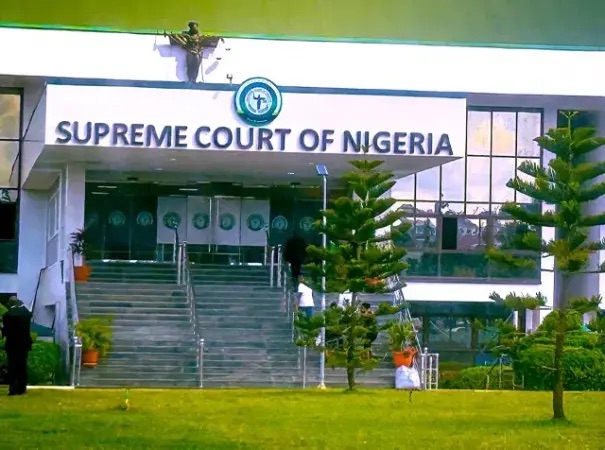
Niger State has dragged the Federal Government and the Attorney-General of the Federation to the Supreme Court, demanding inclusion in the 13 percent derivation fund typically reserved for oil and gas-producing states.
Sponsored Ads
In the suit, filed by Senior Advocate of Nigeria Mohammed Ndarani, the state seeks a constitutional interpretation that would recognise it as a natural resource-producing state, based on its contribution to Nigeria’s power supply through hydroelectric dams.
Sponsored Ads
Ndarani argued that Niger hosts four major dams—Kainji, Jebba, Shiroro, and Zungeru—which generate significant electricity for the national grid and even for neighbouring countries like Benin, Togo, and Niger. Yet, the state has never been compensated with derivation funds since the inception of power generation in 1968.
The legal action hinges on Sections 162(2) and 232 of the 1999 Constitution. It challenges what Niger State describes as decades of exclusion from revenue derived from resources extracted within its territory.
The state also accuses the Federal Government of neglecting the environmental and socio-economic toll caused by the dams. Thousands of hectares of farmland have been submerged, causing loss of livelihoods, flooding, and displacements. Many residents, who are mainly farmers, have been unable to access their land for decades.
RELATED STORIES
Related Posts
The state cited environmental degradation backed by a recent impact assessment report and criticised federal agencies, including the National Environmental Standards and Regulations Enforcement Agency (NESREA), for failing to intervene.
According to data from the National Bureau of Statistics, the dams generated over 10 million megawatts between 2020 and 2023, yet the revenue has been shared across the federation without special allocation to the host state.
The suit also pointed out that there is no comprehensive public data on the total electricity generated since 1968, a gap the state argues reflects poor accountability.
Ndarani said the federal government has continuously profited from Niger’s resources without fair compensation, leaving the state in poverty despite its contribution to national development.
The Supreme Court is expected to determine whether the state should now be recognised for derivation benefits tied to its natural resource—hydropower.

Comments are closed.