

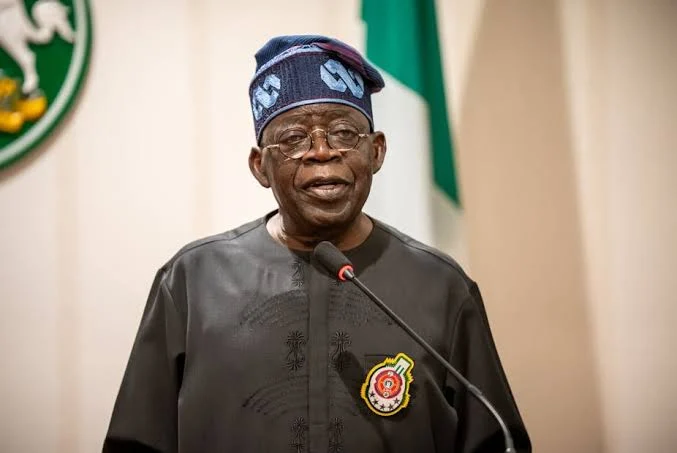
President Bola Tinubu’s administration has come under criticism following the discovery of organisations allegedly operating as federal government agencies without proper legal authorisation.
Sponsored Ads
The controversy followed investigations by the Independent Corrupt Practices and Other Related Offences Commission (ICPC), which uncovered the Presidential Foreign Intervention Promotion Council (PFIPC), described as a fictitious agency that had gained access to government facilities and financial systems.
Sponsored Ads
The PFIPC reportedly operated from an office within the Federal Secretariat in Abuja and presented itself as an organisation established to attract foreign investment into Nigeria. Career civil servants were allegedly assigned to the office, while the organisation also operated a website using the official .gov.ng domain.
Despite a federal government freeze on public-sector recruitment, the agency reportedly secured approval to employ more than 300 workers. Its website has since been taken down, although its Instagram account remained active at the time of the report.
The organisation’s self-acclaimed Director-General, Adeniyi Adeyemi, was also reported to have interacted with government ministers, financial regulators, anti-corruption officials and foreign diplomats.
Further concerns emerged after the agency was included in the 2026 national budget, with about N1.3 billion allocated to it.
Adeyemi had made allegations against Femi Gbajabiamila, the President’s Chief of Staff, accusing him of receiving money through intermediaries and demanding additional funds to facilitate his appointment. The Presidency rejected the allegations and said Gbajabiamila had no knowledge of the appointment letter being circulated.
The government also dismissed the PFIPC as a fictitious organisation and described Adeyemi as a con artist who was attempting to divert attention from criminal allegations against him.
Following an investigation ordered by President Tinubu, a Federal High Court issued an arrest warrant for Adeyemi. He was later arrested by the police and taken before the court for proceedings.
RELATED STORIES
Related Posts
The ICPC subsequently uncovered another organisation operating under the name National Brands Development and Made in Nigeria Special Project Office. The office was reportedly operating within the Office of the Secretary to the Government of the Federation and was promoted by Prince George Buchi Nwabueze.
The discovery led President Tinubu to suspend three permanent secretaries linked to the unauthorised establishment of the office. They were M.S. Danjuma, Engineer Nadungu Gagare and Richard Pheelangwah.
The emergence of the two cases has raised questions about the level of supervision and internal controls within the Federal Civil Service. Some Nigerians have questioned how organisations without proper government mandates could allegedly secure offices, interact with senior officials and gain access to public resources without being detected earlier.
Divine Akor described the situation as a serious failure of administrative oversight, arguing that government institutions should have legal backing, approved structures, supervising authorities and verifiable records before they can operate as federal agencies.
Isaac Adeyemo acknowledged the President’s decision to order investigations but said the response should go beyond the arrest of individuals accused of creating the organisations. He called for scrutiny of the government departments and officials responsible for ensuring that only authorised institutions operate within the federal bureaucracy.
Blessing Ede also called for greater transparency over the activities of the alleged fake agencies. She said authorities should determine whether public money, government property, official documents, contracts or other privileges were obtained through the organisations.
She further called for a complete register of recognised federal agencies, including the laws that established them, and verification of organisations operating from government facilities.
Paul Ogbole urged the authorities to investigate possible failures by officials responsible for supervising the affected institutions. He argued that those who created the alleged fake agencies should face prosecution if found guilty, while government officials who knowingly facilitated their operations should also be held responsible.
The controversy has therefore shifted attention beyond the alleged perpetrators to the systems that allowed the organisations to operate. The cases have raised broader concerns about accountability, financial controls and the ability of the Federal Civil Service to detect unauthorised bodies before they gain access to government facilities and resources.

Comments are closed.