

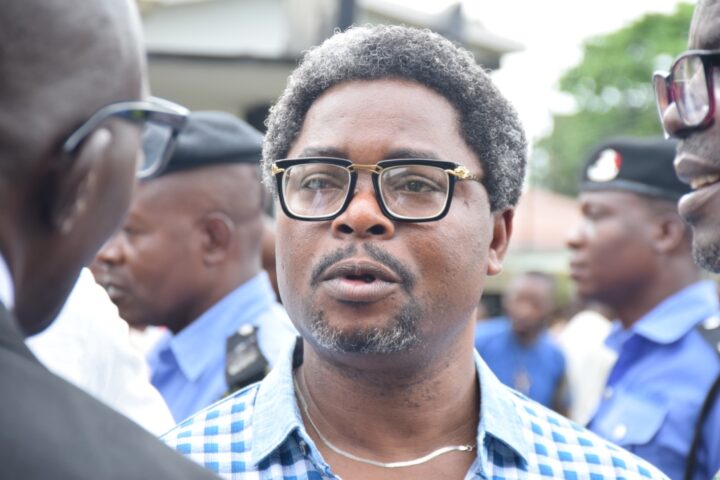
Spokesperson to the Minister of the Federal Capital Territory, Nyesom Wike, Lere Olayinka, has said some politicians seeking the presidency in the 2027 election are not seriously aiming to win but are mainly interested in making their presence known.
Sponsored Ads
Olayinka made the claim during an interview on Arise News while discussing the political situation ahead of the 2027 general election.
Sponsored Ads
He argued that the number of presidential candidates on the ballot should not be taken as an indication that all of them have a realistic plan to win the election. According to him, some candidates enter presidential contests to gain visibility, strengthen their political profile or attract attention to their parties.
Olayinka pointed to the 2023 presidential election as an example, citing the performance of the African Action Congress candidate, Omoyele Sowore. Sowore received about 14,600 votes in that election, and Olayinka questioned how a candidate with such a previous result could realistically defeat stronger contenders in 2027.
He also questioned the chances of the party of former Anambra State governor and 2023 presidential candidate Peter Obi. Olayinka argued that a presidential candidate needs more than public campaigns and media attention to compete effectively across the country.
RELATED STORIES
Related Posts
He said the strength of a political party at the grassroots level would be crucial during the election, particularly its ability to field candidates and deploy officials across states and polling units.
Olayinka noted that the party associated with Obi does not have governorship candidates in all the states, claiming that it has candidates in only 13 states. He also referred to recent governorship elections in Ekiti and Osun, arguing that the party’s absence from such contests could affect its grassroots structure.
According to him, a party seeking to win the presidency must have enough people on the ground to mobilise voters, monitor voting and protect its interests during the collation of results.
He said Nigeria has 176,846 polling units and argued that political parties need several representatives at each polling unit to effectively manage their operations on election day.
Olayinka maintained that presidential elections require strong organisation beyond campaign rallies, public statements and political publicity. He said parties must build structures capable of reaching voters and monitoring the electoral process across the country.
He therefore dismissed what he described as political noise without corresponding grassroots organisation, saying a party’s ability to win would ultimately depend on its presence and capacity at the polling units.

Comments are closed.