

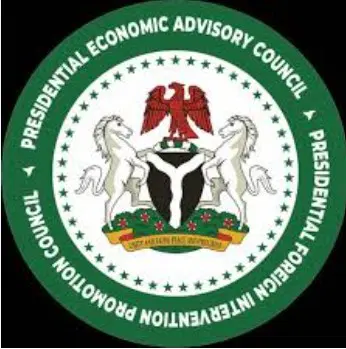
The discovery of another alleged unauthorised organisation operating from within Nigeria’s federal government structure has raised fresh concerns about weaknesses in public sector oversight and accountability.
Sponsored Ads
The latest controversy centres on the National Brands Development and Made-in-Nigeria Special Project Office, which the Independent Corrupt Practices and Other Related Offences Commission (ICPC) identified as an organisation allegedly operating without proper government approval from a building in Abuja.
Sponsored Ads
The development came shortly after the ICPC began investigating the disputed Presidential Foreign Intervention Promotion Council (PFIPC), another organisation that had reportedly operated from the Federal Secretariat for about two years before the Presidency declared it fraudulent.
ICPC Chairman, Dr Musa Adamu Aliyu, said investigations into the PFIPC case led the commission to the second organisation. He identified George Buchi Nwabueze as the person allegedly behind the Made-in-Nigeria project and said the promoter was believed to have used different versions of his name.
Following the ICPC briefing, President Bola Tinubu ordered Nwabueze’s arrest and directed the suspension of three permanent secretaries in the Office of the Secretary to the Government of the Federation.
The emergence of the second case has widened concerns over how organisations with questionable government status can gain access to official buildings, interact with public officials and present themselves as legitimate arms of government.
Governance expert and public commentator, Dr Joe Abah, said the problem may extend beyond the two organisations currently under investigation.
Abah raised concerns about the presence of various bodies operating from government offices and suggested that some may exploit official addresses and government-style identities to gain public confidence or raise money.
He also recalled an experience from his time in government involving an organisation that repeatedly offered him and his staff foreign trips through what was presented as a mentorship programme. According to him, doubts arose after the organisation’s promoter could not provide clear information about its founders, source of funding or authority to operate.
He said the situation showed how difficult it could be for officials to distinguish between legitimate organisations and groups attempting to take advantage of government structures.
Professor Murtala Muhammad, Vice-President of the Nigerian Political Science Association, said the issue should be treated as a broader governance problem rather than only a case of alleged wrongdoing by individuals.
Muhammad said weaknesses in verification systems, enforcement and oversight could allow private individuals to assume the identity and authority of government institutions.
He said the PFIPC controversy had exposed gaps in the processes used to verify government offices, appointments and official documents.
The political science expert also linked the problem to poor coordination between government agencies, corruption and weak accountability within the public service.
Of particular concern, according to Muhammad, was the reported attempt by the PFIPC to obtain a budgetary allocation of about N1.3 billion. He said such a development raised questions about whether weaknesses in the administrative system could also affect the management of public funds.
Muhammad called for stronger procedures for confirming government agencies and appointments, improved information sharing among public institutions and tighter checks on budgetary requests.
RELATED STORIES
Related Posts
He warned that fake or unauthorised organisations could continue to emerge if administrative gaps remain unaddressed.
The controversy could also become a political issue ahead of the 2027 general elections. Muhammad said opposition parties could use the development to question the effectiveness of the Tinubu administration and its ability to monitor government institutions.
He, however, said the situation could be managed if the Federal Government responds through open investigations, accountability and reforms aimed at preventing similar incidents.
The Executive Director of the Centre for Information Technology and Development, Y. Z. Ya’u, also expressed concern over the development, describing it as a sign of deeper weaknesses within the Nigerian state.
Ya’u warned that failure to strengthen government verification and monitoring systems could eventually create more serious cases involving fictitious political structures.
He raised the possibility that, if such weaknesses continued unchecked, fake states, governors and state assemblies could theoretically emerge and even seek access to funds from the federation account.
Former Minister of Youth and Sports, Solomon Dalung, called for a wider investigation into the activities of the organisation under scrutiny.
His concerns followed reports that the group had coordinators in about 20 states and representatives in countries including China and the United States.
Dalung questioned how such representatives were appointed and whether government officials had interacted with them in their claimed official capacities.
He said the investigation should determine the people responsible for appointing the coordinators, how their appointments were communicated and the extent to which they had acted on behalf of the organisation.
However, Nwabueze has rejected the claim that the Made-in-Nigeria project is a fake or unauthorised government agency.
His management maintained that the initiative was an approved public-private project established within the framework of Executive Orders 003 of 2017 and 005 of 2018.
The management also said the project had never presented itself as a statutory civil service agency.
The competing claims have now placed the organisation at the centre of an investigation that could lead to further scrutiny of government offices, agencies and projects operating within federal government facilities.
The case has also renewed calls for the government to strengthen the process for registering, approving and monitoring organisations that operate from official premises or use government-related names and symbols.
As investigations continue, attention is expected to remain on how the alleged organisations were able to establish offices, build networks and gain access to government structures without being detected earlier.

Comments are closed.