

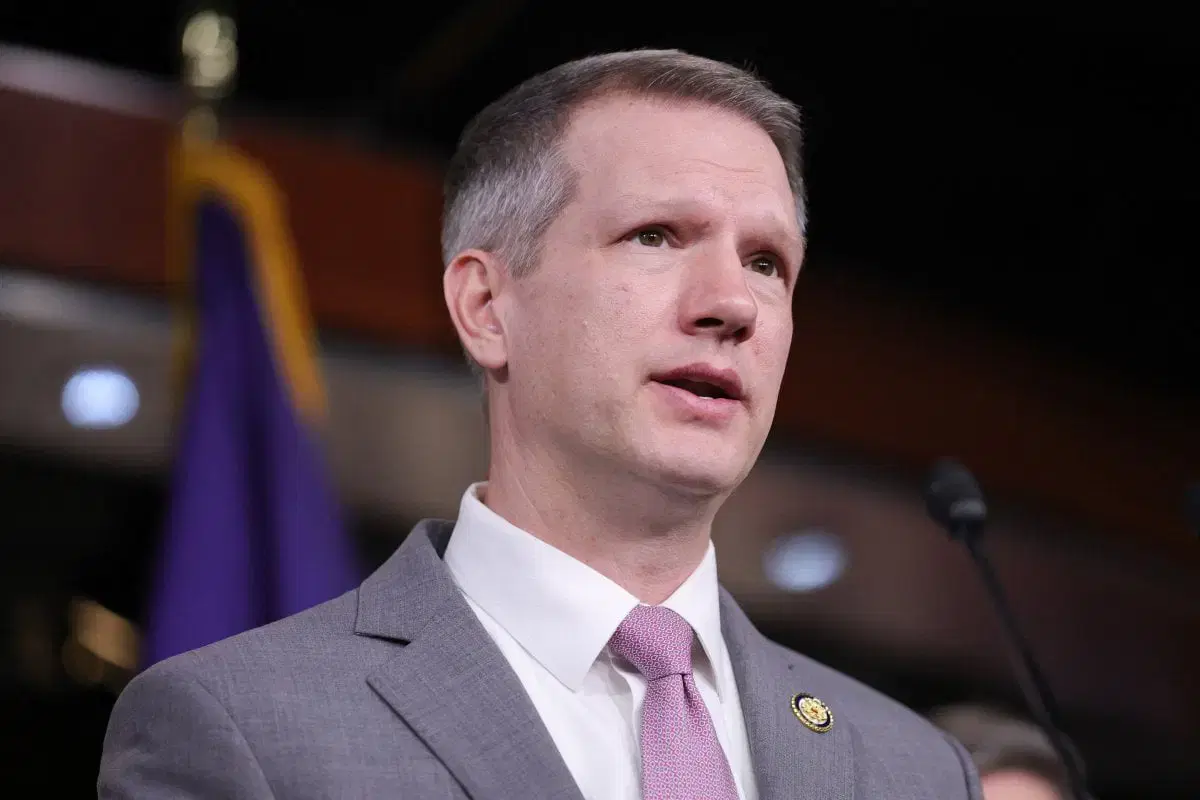
A member of the United States Congress, Riley Moore, has opposed any move to remove Nigeria from the US list of Countries of Particular Concern over alleged violations of religious freedom, citing continued attacks on Christian communities in parts of the country.

Sponsored Ads
Moore said the United States should maintain the designation as long as attacks against Christians continue, particularly in communities across the Middle Belt.
Sponsored Ads
The US lawmaker made the position known on Wednesday while reacting to concerns raised by the US State Department over a recent attack in Plateau State.

LIST OF APPLICATIONS FOR REGULARISATION OF AREA COUNCIL LAND DOCUMENTS NULLIFIED/CANCELLED BY THE HONOURABLE MINISTER OF FCT
He said the Nigerian government had a responsibility to protect Christian communities and ensure that those responsible for violent attacks were brought to justice.
The US Bureau of African Affairs had earlier condemned the Plateau attack, in which more than 24 people were reportedly killed while several others remained missing.
Residents in the affected communities said the attackers arrived during the night and opened fire on people in their homes. The assault reportedly resulted in deaths, injuries and the displacement of residents.
The US government said the latest incident was particularly worrying because it occurred shortly after a meeting of the CPC Working Group, which reviews Nigeria’s progress in addressing concerns surrounding religious freedom and attacks on religious communities.
The renewed US concern could increase pressure on the Nigerian government ahead of the next review of the country’s CPC status.
Nigeria was first placed on the US CPC list in 2020 under the International Religious Freedom Act. The classification applies to countries where authorities are considered to have engaged in or tolerated serious and persistent violations of religious freedom.
Nigeria was removed from the list in 2021 but continued to receive attention from US authorities over religious freedom and security concerns.
The administration of US President Donald Trump subsequently returned Nigeria to the CPC list, leading to increased engagement between both countries on the issue.
The US-Nigeria Joint Working Group has since held meetings to assess the security situation and examine steps being taken by the Nigerian government to address the concerns raised by Washington.
The CPC status is reviewed annually by the US State Department, with the next review expected in November.
RELATED STORIES
Related Posts
The Nigerian government has, however, consistently rejected claims that the country’s security crisis is primarily driven by religious persecution.
Authorities have often described the violence in areas such as Plateau, Benue and other parts of the Middle Belt as a combination of factors involving disputes over land and resources, communal tensions, terrorism, banditry and criminal activity.
Meanwhile, the Christian Elders and Professionals Consultative Council of Nigeria has backed concerns raised by the United States about attacks on Christian communities and the wider security situation.
The group said the government must take stronger measures to protect citizens and deal with those responsible for killings, kidnappings and displacement.
The council also made clear that its position was not based on the belief that only Christians deserved protection. It said every Nigerian, regardless of religion, ethnicity or community, should be protected by the state.
The organisation called for greater attention to attacks targeting Christians, churches, clergy and families, particularly in areas affected by terrorism, kidnapping, banditry and communal violence.
It urged security agencies to conduct detailed investigations into attacks and ensure that suspects identified as responsible were prosecuted.
The group also called for improvements in intelligence gathering, early-warning systems and the rapid deployment of security personnel when communities come under threat.
It said religious identity should never determine the value placed on a Nigerian life and that citizens should not be killed, kidnapped, displaced or intimidated because of their faith or identity.
The Christian elders further urged the Federal Government to work with international partners to address the country’s security challenges rather than reject external concerns outright.
According to the group, cooperation with credible foreign partners could provide additional support for intelligence, security operations and efforts to protect vulnerable communities.
It also called for a broader approach to Nigeria’s security crisis, noting that the country is dealing with terrorism, banditry, kidnapping, organised crime and communal conflicts at the same time.
The council therefore urged the government to pursue measures that protect Christians, Muslims, traditional worshippers and other vulnerable Nigerians while ensuring that perpetrators of violence face justice.

Comments are closed.