

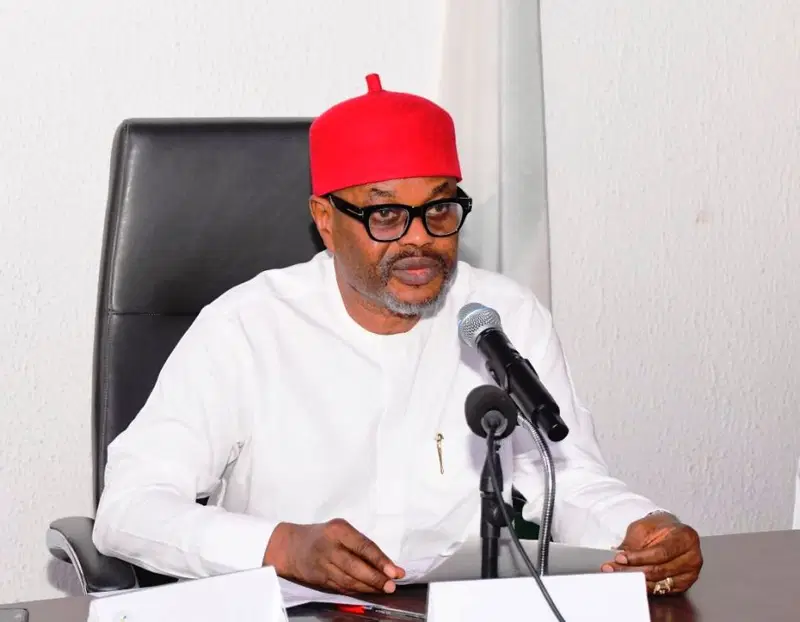
The resignation of Uche Geoffrey Nnaji, Nigeria’s Minister of Innovation, Science and Technology, has sparked fresh debate over how public officials are screened and cleared for appointment.
Sponsored Ads
His exit followed revelations that both the University of Nigeria, Nsukka, and the National Youth Service Corps disowned the certificates he submitted during his ministerial vetting.
Sponsored Ads
The scandal has deepened public frustration over Nigeria’s weak verification system. Many citizens see Nnaji’s case as another reminder of how questionable credentials often slip through layers of supposed scrutiny by security agencies, the Senate, and the presidency. For critics, it reflects a national crisis of integrity and accountability.
Questions about Nnaji’s credentials began circulating after investigators found discrepancies in his academic and NYSC records. The alleged forgery has been described by anti-corruption advocates as a serious criminal offence, not just an ethical lapse. They argue that resignation alone is not enough and that those involved should face legal action to restore public confidence in the system.
Observers have also faulted key agencies, including the Department of State Services, the Secretary to the Government of the Federation, and the Senate, for failing to detect the irregularities during screening. Analysts say this oversight raises doubts about the competence and independence of Nigeria’s vetting process.
RELATED STORIES
Related Posts
For forensic experts, the Nnaji episode exposes how deeply political influence has corrupted due diligence in government appointments. They argue that political loyalty has replaced merit, turning the screening process into a formality rather than a safeguard. The country’s security and intelligence institutions, once trusted to prevent such scandals, are now viewed as compromised and under political pressure.
Legal experts describe the situation as a conspiracy of silence within the nation’s leadership. They say both the former minister and those who cleared his documents should face investigation. According to them, letting the matter end with resignation would only reinforce public belief that corruption in high places carries no real consequences.
The controversy adds to a growing list of Nigerian politicians accused of falsifying credentials to hold public office. From former House Speaker Salisu Buhari in 1999 to ex-Finance Minister Kemi Adeosun in 2018, and more recently, governors and lawmakers across states, certificate forgery has remained a recurring stain on Nigeria’s political class.
Despite repeated scandals, few prosecutions ever follow. Most cases end quietly with resignations or political settlements, leaving citizens disillusioned. Critics say this persistent lack of accountability shows that the country’s institutions are more interested in protecting elites than defending integrity.
Nnaji’s resignation has now become another test of the government’s resolve to tackle corruption beyond rhetoric. Civil society groups are calling for an independent review of the credentials of all political appointees to prevent future embarrassment.
Whether authorities will act decisively or allow the matter to fade, as many before it have, remains uncertain. For now, Nigerians are left questioning how many other public officials may be sitting in power with forged papers, protected by a system that seems more comfortable with deceit than with discipline.

Comments are closed.