
Lecturers Go On Strike Over Unpaid Salaries Across Nigerian Universities

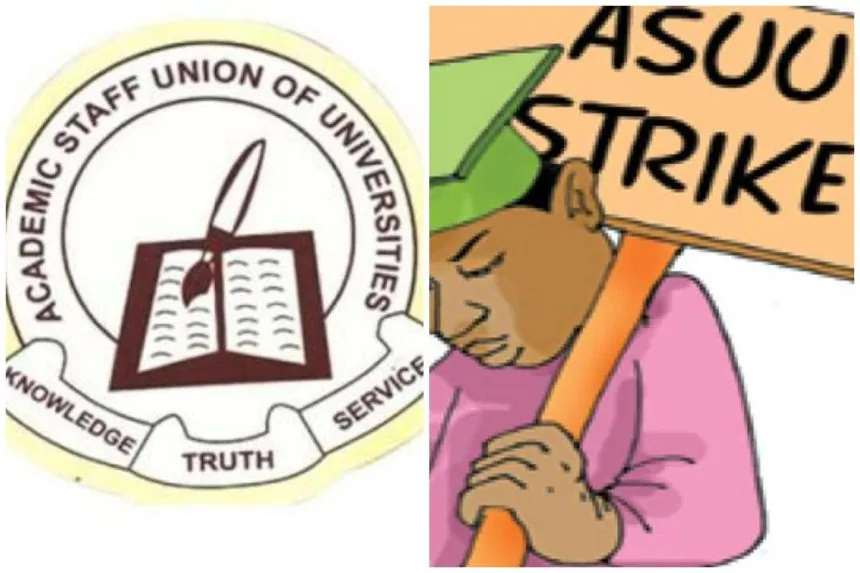
University lecturers across Nigeria have begun a fresh nationwide strike, demanding the immediate payment of their June 2025 salaries.
Sponsored Ads
The action, triggered by delayed wages, is being enforced in line with a resolution by the Academic Staff Union of Universities (ASUU), directing members to stop work whenever salaries are not paid within three days of the new month.
Sponsored Ads
ASUU President, Professor Chris Piwuna, confirmed the strike action in Abuja, explaining that the decision was not a negotiation tactic but a direct enforcement of the union’s standing policy—“No Pay, No Work.” Already, lecturers at the University of Jos and University of Abuja have withdrawn their services, and other campuses are expected to join as long as the salary delays persist.
According to Piwuna, the situation became worse after the government moved university payroll from the Integrated Personnel Payroll and Information System (IPPIS) to the Government Integrated Financial Management Information System (GIFMIS). Although the payment platform itself is functioning properly, the ASUU president said there have been frequent delays, which he attributes to deliberate actions by officials in the Office of the Accountant General of the Federation.
Piwuna said union leaders have tried to resolve the issue through meetings with the Minister of Education and the Accountant General, but nothing has changed. The union maintains that there is no technical reason for the delays, as staff have consistently received full payment whenever the money eventually arrives at the universities.
RELATED STORIES
Related Posts
The current strike is only the latest in a string of frustrations facing lecturers, who say they are already underpaid and overworked. They argue that the constant salary delays make it impossible to plan their lives, support their families, or perform their duties effectively.
Beyond the salary crisis, ASUU is also warning about the government’s failure to fully release Earned Academic Allowances (EAA) owed to lecturers. The Federal Government had pledged ₦50 billion, but only ₦40 billion has so far been paid, leaving a ₦10 billion shortfall. The union says it expects the outstanding amount to be settled soon to avoid another wave of unrest.
ASUU insists that the strike is not an act of sabotage but a necessary response to a government that has failed to honour basic obligations. As long as salaries remain unpaid, the union says its members will not return to classrooms.
The strike has once again disrupted academic calendars across Nigeria, leaving thousands of students uncertain about the future of their education. Many worry that continued standoffs between ASUU and the government could lead to more prolonged closures, with long-term consequences for learning and graduation timelines.
As it stands, the ball is in the government’s court. Unless urgent steps are taken to release salaries and settle outstanding allowances, ASUU’s nationwide strike will likely continue, deepening tensions in the education sector.

Comments are closed.