

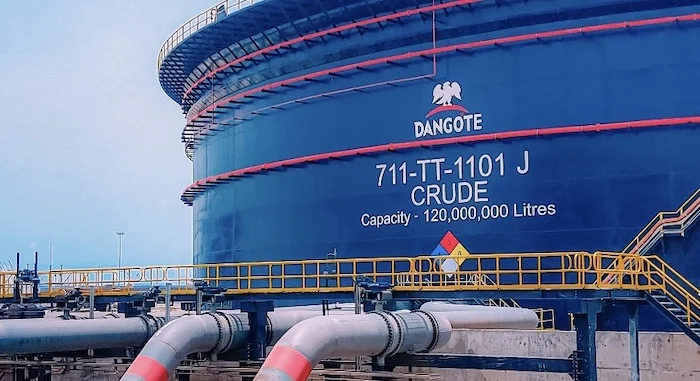
Dangote Petroleum Refinery has resumed the loading of Premium Motor Spirit (PMS), commonly known as petrol, in naira after suspending the exercise for about one week. The development brings an end to uncertainty in Nigeria’s downstream petroleum sector following the refinery’s temporary switch to dollar-denominated sales.
Sponsored Ads
The refinery has now fixed its new ex-depot, or gantry, price at N1,215 per litre. The latest price represents an increase of N140 per litre, or about 13 per cent, compared to the previous rate of N1,075 per litre.
Sponsored Ads
The upward review is linked to the recent rise in global crude oil prices, which has increased the cost of refining petroleum products such as petrol, diesel and aviation fuel. The development has also renewed concerns over another round of fuel price increases in Nigeria and other countries that rely on imported petroleum products.
Latest market figures showed that Brent crude, which serves as the benchmark for Nigeria’s crude oil, rose by 3.18 per cent to $93.90 per barrel. West Texas Intermediate (WTI) also recorded a 2.74 per cent increase to $86.65 per barrel.
The new pricing comes at a time when domestic petrol prices have already been climbing due to earlier increases in ex-depot prices by major fuel suppliers. This has raised fears that filling stations may soon adjust their pump prices again.
Industry operators expect the return of naira-denominated truck loading to improve fuel availability after the temporary suspension disrupted supplies in parts of the country.
Sources within the petroleum sector disclosed that fuel marketers have already been informed about the resumption of gantry loading, with operations expected to continue immediately under the revised naira pricing arrangement.
The refinery’s decision to resume naira transactions follows several days of uncertainty in the downstream market, during which many independent marketers turned to private depots to obtain fuel supplies.
Before suspending petrol loading, Dangote Refinery had explained that it faced difficulties in obtaining sufficient crude oil under the Federal Government’s naira-for-crude arrangement, leading to its temporary decision to sell products in dollars.
RELATED STORIES
Related Posts
With naira transactions now restored, industry players believe the move could reduce supply shortages in the inland market and improve the nationwide distribution of petroleum products.
Meanwhile, depot prices for petrol continued to rise across the country on Wednesday, while diesel prices also recorded sharp increases in several locations. The development is expected to place additional pressure on fuel marketers and transport operators.
Market data for July 22, 2026, showed increases in petrol depot prices across major supply centres, including Lagos, Port Harcourt, Warri and Calabar. Some depots raised prices by as much as N87 per litre.
Bulk Strategic Reserve in Lagos recorded the highest increase, with its ex-depot petrol price climbing from N1,263 per litre to N1,350 per litre after an increase of N87.
The latest adjustment places the depot among the most expensive suppliers in the country and could influence retail pump prices if the trend continues.
Other depots in Lagos also reviewed their prices upward. Liquid Bulk, Masters Energy, Matrix and Sigmund increased their petrol prices by between N15 and N17 per litre to N1,280, while TSL did not announce a new price.
Retail pump prices have also moved higher across Lagos and surrounding areas, rising from an average of N1,260 per litre to about N1,350 per litre at many filling stations.
The latest increases have renewed concerns about the rising cost of living, as higher fuel prices are expected to push up transportation costs, food prices and operating expenses for businesses.
Several filling stations have already adjusted their pump prices to between N1,300 and N1,400 per litre following the latest increases in depot prices, taking fuel costs to some of their highest levels in recent months.

Comments are closed.