

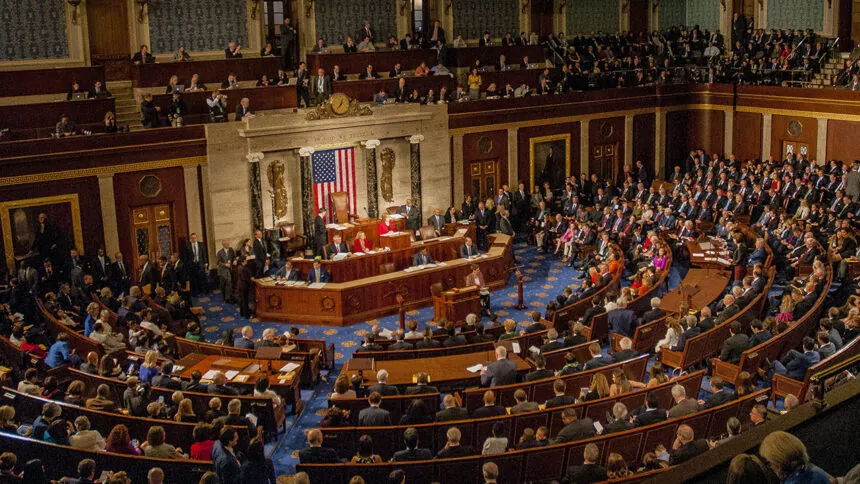
A new bill introduced in the United States Congress is seeking tough sanctions against individuals and organisations accused of promoting or engaging in religious violence in Nigeria.
Sponsored Ads
The proposal, known as House Resolution 860, urges the U.S. government to take stronger action against those involved in religious persecution, including visa bans, asset freezes, and other financial restrictions.
Sponsored Ads
The resolution, introduced by Representative Chris Smith of New Jersey and co-sponsored by Representative Bill Huizenga, builds on previous U.S. actions under former President Donald Trump, who had listed Nigeria as a “Country of Particular Concern” for religious freedom violations. Lawmakers say the country continues to witness widespread attacks targeting Christians and moderate Muslims, especially in the Middle Belt region.

LIST OF APPLICATIONS FOR REGULARISATION OF AREA COUNCIL LAND DOCUMENTS NULLIFIED/CANCELLED BY THE HONOURABLE MINISTER OF FCT
The bill specifically names the Miyetti Allah Cattle Breeders Association of Nigeria (MACBAN) and Miyetti Allah Kautal Hore as organisations responsible for aiding or carrying out such violence. It also recommends that Fulani-ethnic militias operating in Benue and Plateau States be designated as “Entities of Particular Concern,” a status that could expose them to further sanctions under U.S. law.
According to the resolution, extremist and ethnic militias have been behind several deadly attacks, kidnappings, and the destruction of worship centres. Reports cited from groups like Open Doors and the Vatican claim that Nigeria accounted for nearly 89 percent of Christians killed for their faith worldwide in 2023, and that more than 18,000 churches have been destroyed since 2009.
RELATED STORIES
Related Posts
The document also criticises the Nigerian government for failing to adequately investigate or prosecute those behind religiously motivated violence, accusing it of allowing impunity to thrive despite receiving large sums of U.S. aid. It further denounces the use of blasphemy laws and the enforcement of Sharia law in 12 northern states, which it says discriminate against religious minorities and dissenters.
The resolution directs the U.S. Departments of State and Treasury to impose sanctions under the Global Magnitsky Act on anyone found to be complicit in human rights abuses tied to religious persecution. It also calls for U.S. humanitarian aid to be channelled directly to faith-based organisations assisting displaced persons in areas affected by religious violence.
In addition, the bill proposes that future American foreign assistance to Nigeria be linked to measurable progress in protecting religious freedom, ensuring justice for victims, and upholding constitutional rights.
The same day the resolution was introduced, U.S. Senator Ted Cruz announced plans to hold Nigerian officials accountable for alleged religious persecution. Cruz had earlier sponsored the Nigeria Religious Freedom Accountability Act of 2025, which also sought sanctions on officials enforcing the country’s blasphemy laws.
Nigeria’s government, however, has repeatedly denied allegations of religious persecution, maintaining that insecurity in the country stems from economic and social factors rather than religion.
If passed, House Resolution 860 would represent one of the strongest U.S. congressional actions against Nigeria’s human rights record in recent years, potentially straining relations between both nations under President Bola Tinubu’s administration.

Comments are closed.