

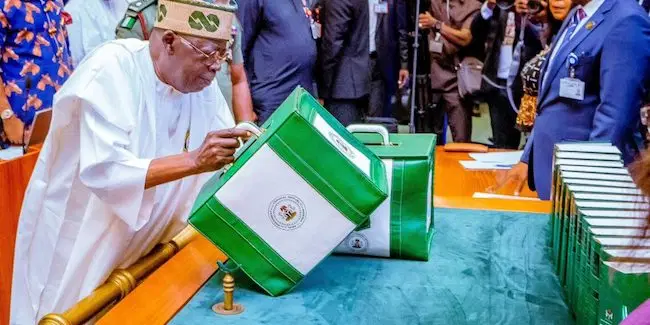
The 2025 federal budget has left a major funding gap in Nigeria’s education sector, raising concerns about the quality of teaching and learning.
Sponsored Ads
Out of a total budget of ₦54.99 trillion, the government allocated ₦3.5 trillion to education, which is about seven percent of national spending.
Sponsored Ads
From this allocation, ₦1.64 trillion was set aside for personnel costs, including salaries for teachers. However, the actual amount required to pay teachers is ₦1.93 trillion, creating a shortfall of about ₦290 billion. A report by the UK-based research group Column described this funding gap as a threat to teacher welfare and the future of millions of students.
Nigeria currently has more than 32 million students in both public and private schools, with most enrolled in public institutions. The Teachers Registration Council of Nigeria estimated in 2024 that there were about 2.3 million teachers in the country, yet shortages persist, especially in rural areas and in subjects such as mathematics and sciences. With the new minimum wage set at ₦70,000, the pressure on the salary bill has grown even higher.
RELATED STORIES
Related Posts
The report pointed out that this problem is not new. In 2024, the government allocated ₦1.59 trillion for education, with ₦1.04 trillion for teacher pay. The funds still fell short of what was needed, leaving teachers underpaid and many classrooms without enough qualified staff. The repeated gaps make it difficult for schools to attract and retain skilled teachers.
For students, the effect is damaging. Poor salaries reduce teacher motivation, weaken training opportunities, and limit the ability of educators to deliver lessons effectively. Nigeria’s literacy rate, currently between 69 and 77 percent, reflects these challenges and falls behind that of neighboring Ghana, which stands at 80 percent.
The consequences extend beyond academics. With up to 62 million Nigerians still unable to read or write, civic participation and democratic development suffer. A poorly educated population is more vulnerable to misinformation, manipulation, and weak governance. Illiteracy also threatens security, as young people without access to proper education can be drawn into extremism and violent movements.
The report urged the government to act quickly by raising the education budget, improving teacher welfare, and investing in learning resources. It suggested that funds recovered from corruption cases could help close the gap. The message is clear — without strong investment in education, Nigeria risks a future of poor learning outcomes, weak governance, and social instability.

Comments are closed.