

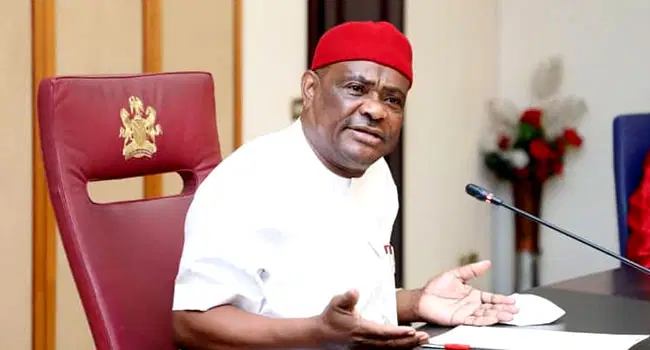
The Peoples Democratic Party is struggling with deep internal rifts as it prepares for the 2027 presidential election, with Nyesom Wike, former Rivers State governor and current Minister of the Federal Capital Territory, still shaping its direction from the shadows.
Sponsored Ads
Wike once stood as the backbone of the PDP in the South, using his position as governor to rally allies, fund campaigns, and secure the party’s control across his region. His influence extended beyond Rivers, making him one of the most powerful figures within the party.
Sponsored Ads
That influence became a source of conflict in 2022, when Atiku Abubakar emerged as the PDP presidential candidate from the North. Wike demanded that the national chairman should come from the South in line with party tradition. When this was ignored, he joined forces with four other governors under the G-5 banner, a rebellion that many observers say damaged the PDP’s chances at the polls.
The fallout from the 2023 defeat left the party in disarray. Its ticket failed to unite members, the leadership fell into crisis, and mistrust grew deeper. Wike’s later appointment by President Bola Tinubu as FCT Minister added more confusion, as he continued to sit on the PDP’s top decision-making body while openly aligning himself with the ruling APC.
RELATED STORIES
Related Posts
The recent decision by the PDP to zone its 2027 presidential ticket to the South was meant to heal old wounds but has instead opened new ones. Southern blocs, particularly in the South-West under Governor Seyi Makinde, have gained ground, while Wike’s allies in the South-South feel sidelined. In the North, some blocs believe the zoning decision has weakened their chances, leaving the party more polarised than before.
Despite the friction, Wike still commands attention. He insists that his loyalist, Chief Dan Orbih, remains the rightful South-South vice chairman, pointing to legal backing for his position. Party insiders say keeping Wike close is seen as a way to prevent defections and maintain control in regions where the PDP cannot afford to lose more ground.
The battle for control will soon shift to the party’s national convention in Ibadan, where new officers will be elected. Wike’s role in backing or opposing candidates for key positions could decide the future direction of the PDP. His support could strengthen alliances, while his resistance could deepen the cracks.
The PDP now stands at a delicate point. Its southern base is stronger with the zoning decision, but it risks alienating the North if reconciliation is not pursued quickly. Wike remains both an asset and a threat—capable of helping the party regain ground or driving it closer to collapse.
As 2027 approaches, the party faces the task of moving beyond personality battles to build a united front. Whether it can overcome internal divisions will determine if it can mount a serious challenge to the ruling APC or repeat the setbacks of the last election.

Comments are closed.