

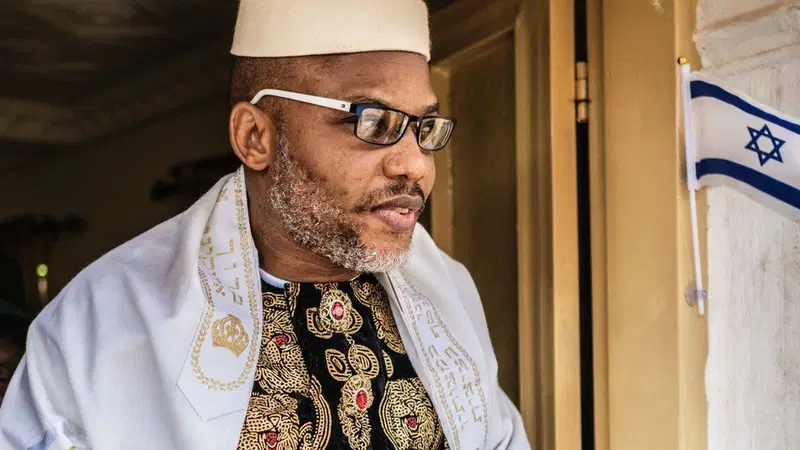
A human rights lawyer has said that the continued detention of Nnamdi Kanu, the leader of the Indigenous People of Biafra (IPOB), is more about silencing a vocal critic than upholding the law.
Sponsored Ads
Barrister Christopher Chidera made the claim during a media briefing in Abuja, stating that Kanu’s incarceration lacks solid legal grounding. He described the detention as punishment for confronting the government with uncomfortable truths rather than any proven criminal offense.
Sponsored Ads
According to Chidera, the government has not pressed clear charges against Kanu for some of his more controversial statements, including claims about the late President Muhammadu Buhari. He questioned why, if those statements were considered dangerous propaganda, the authorities have yet to take legal action specifically addressing them. He suggested that the silence speaks volumes about the actual motive behind the detention.
The lawyer also pointed to what he sees as a political motive to reduce Kanu’s influence in the southeast. He argued that efforts to discredit Kanu through detention and media attacks have only increased his popularity among supporters who view him as a symbol of resistance and sacrifice.
RELATED STORIES
Related Posts
Chidera stressed that Kanu’s hold on his followers doesn’t come from spin or media manipulation but from a consistent message and the personal cost he has borne in the fight for self-determination. He said attempts to tarnish his reputation have not worked because people connect with his message on a deeper level.
He also used the opportunity to reflect on wider issues affecting the African continent, urging citizens to question leadership more critically. He said the greatest obstacle to progress is not outside interference, but the reluctance of many Africans to challenge authority, think independently, and demand accountability.
During the briefing, he condemned a recent article published by a major online platform that mocked Kanu’s statements, calling it a smear campaign. He said such publications are meant to weaken public trust in opposition voices and discourage free expression.
Chidera urged journalists and the public to protect the right to speak out, warning that democracy suffers when dissent is crushed. He said defending freedom of expression is not about agreeing with someone’s views, but about making sure every voice has the space to be heard.

Comments are closed.