

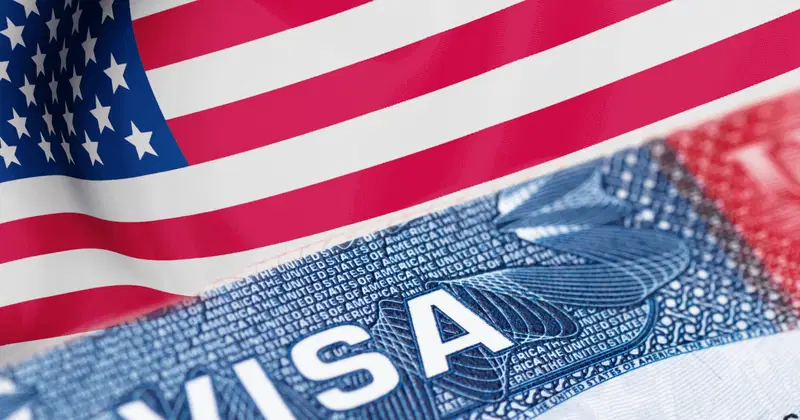
The Nigerian government has dismissed claims by the United States that it triggered recent visa restrictions by ending a five-year multiple-entry visa policy for US citizens.
Sponsored Ads
This comes amid growing tensions over tighter immigration policies targeting Nigerian travelers.
Sponsored Ads
The Federal Government says it has not stopped issuing five-year non-immigrant visas to US citizens, contrary to what American authorities are claiming. A statement released by President Tinubu’s Special Adviser on Information and Strategy, Bayo Onanuga, said Nigeria continues to uphold all bilateral agreements and honors visa reciprocity.
The latest restriction by the US, which now limits non-immigrant visas for Nigerians to just three months and single-entry, has stirred concern. Washington says its decision was based on reciprocity, but Nigerian officials argue that the US is misrepresenting the situation.
Nigeria explained that the only change it made was the introduction of e-visas, which are short-term and processed online within 48 hours. These new e-visas, designed to replace the former visa-on-arrival option, are valid for 90 days and are aimed at easing travel for business and tourism purposes. The government says the new system boosts efficiency, improves transparency, and supports President Tinubu’s broader push to attract investment and promote tourism.
Nigeria insists US citizens are still eligible for the traditional five-year visa through regular embassy processes. The government also pointed out that while Nigeria allows e-visas for Americans, the US has not done the same for Nigerian travelers.
Despite the disagreement, the Tinubu administration says it is committed to working with Washington to resolve the matter diplomatically. Officials said both nations have a long-standing relationship, and Nigeria will continue dialogue with US authorities to ensure fair treatment for its citizens.
RELATED STORIES
Related Posts
Meanwhile, the US has introduced a new Visa Integrity Fee of $250 for non-immigrant applicants, including tourists, students, and workers. This fee, scheduled to take effect in 2026, comes in addition to existing visa charges. It forms part of the One Big Beautiful Bill Act signed into law by President Donald Trump on July 4 and represents a larger effort by the US to tighten its immigration rules and boost compliance.
Other surcharges have also been introduced. These include a $24 I-94 fee, a $13 ESTA fee for visa waiver travelers, and a $30 EVUS fee for Chinese nationals with 10-year B-1/B-2 visas. Only diplomatic applicants in categories A and G will be exempt. The Visa Integrity Fee will rise annually based on the US Consumer Price Index.
The new policy affects several visa categories such as B-1/B-2 (for tourists and business), F and M (for students), H-1B (for skilled workers), and J (for exchange programs). The fee is non-refundable and cannot be waived or reduced under any circumstances.
The tougher stance from Washington follows a global pattern. In recent months, countries like the UK, Canada, and the UAE have rolled out stricter entry rules for Nigerians, citing concerns ranging from national security to public health and economic stability.
While the new US measures have drawn criticism in some quarters, others see them as an opportunity for reflection. Former Delta State gubernatorial aspirant, Sunny Onuesoke, believes the visa crackdown is a wake-up call for Nigerian leaders. In a phone interview, he urged the government to fix local infrastructure and healthcare systems, arguing that people would be less eager to emigrate if the country worked better for its citizens.
He said Nigerians are fleeing poor conditions, not just chasing dreams abroad. He called for renewed investment in hospitals, education, and business environments to slow the mass exodus known as the japa syndrome.
As diplomatic tensions unfold, many Nigerians are watching closely to see how both governments navigate this latest immigration row—and whether it sparks overdue reforms at home.

Comments are closed.