

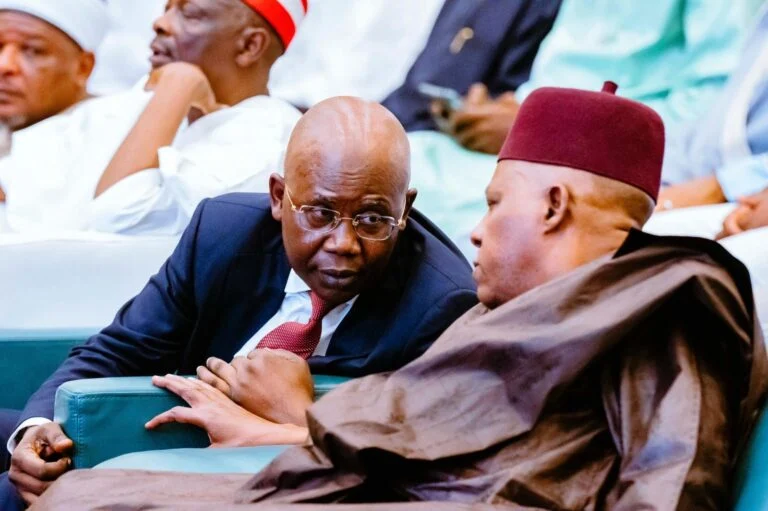
Former Attorney-General of the Federation, Mohammed Adoke, has revealed that Vice President Kashim Shettima played a key role in persuading him to return to Nigeria after his legal ordeal surrounding the controversial OPL 245 oil deal.

Sponsored Ads
Speaking in Abuja during the public launch of his memoir, OPL 245: The Inside Story of the $1.3 Billion Nigerian Oil Block, Adoke shared how Shettima urged him to come back home and face the situation, following years of intense legal battles and time spent in self-imposed exile.
Sponsored Ads
Adoke served as Nigeria’s chief law officer from 2010 to 2015 during the administration of former President Goodluck Jonathan. He became a central figure in one of Nigeria’s most controversial oil deals, which involved the sale of Oil Prospecting Lease 245 (OPL 245) to Shell and Eni for $1.1 billion in 2011. The block had originally been awarded to Malabu Oil and Gas in 1998 during the Sani Abacha regime.

LIST OF APPLICATIONS FOR REGULARISATION OF AREA COUNCIL LAND DOCUMENTS NULLIFIED/CANCELLED BY THE HONOURABLE MINISTER OF FCT
After a change in government in 2015, the Buhari administration, through the Economic and Financial Crimes Commission (EFCC), filed multiple criminal charges against Adoke, including bribery, fraud, and conspiracy related to the oil deal. The case drew global attention, triggering investigations and legal actions in several jurisdictions.
RELATED STORIES
Related Posts
During much of the prosecution, Adoke remained outside Nigeria, citing safety concerns and alleged political persecution. He returned eventually to stand trial and was later acquitted of all charges after years of courtroom proceedings.
At the book presentation, Adoke recalled how he had planned to leave the country again even after his acquittal. However, he said Vice President Shettima intervened, urging him to stay and bring finality to the long-running legal episode.
His decision to return marked the end of what he described as one of the most challenging chapters of his life. Adoke also used the occasion to declare that he had moved on from the pain of the trial and forgiven those he believes were behind his prolonged ordeal.
The memoir aims to provide Adoke’s personal account of the events surrounding the OPL 245 transaction, the legal storm that followed, and the personal cost of being at the centre of such a high-profile controversy. The book also serves as a reflection on the political and institutional dynamics that shaped the case over the years.

Comments are closed.