

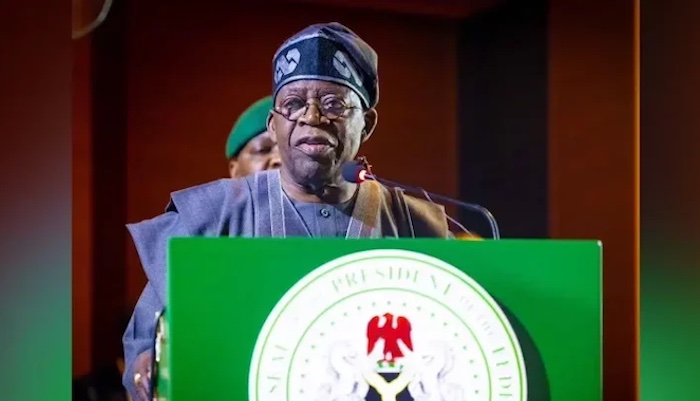
President Bola Tinubu has assured Nigerians that the country’s refineries will soon resume operations as his administration continues efforts to rebuild the petroleum sector and make the facilities economically viable.
Sponsored Ads
Tinubu gave the assurance on Thursday when he received the leadership of the Nigeria Union of Petroleum and Natural Gas Workers, NUPENG, at the Presidential Villa in Abuja.
Sponsored Ads
The President also expressed concern that the benefits expected from the introduction of Compressed Natural Gas, CNG, were not reaching ordinary Nigerians as quickly as intended. He said much of the gains from the cheaper fuel option appeared to be going to truck owners instead of being passed on to commuters through lower transport costs.
Tinubu described NUPENG as an important partner in the management of the Nigerian economy, noting that petroleum workers occupy a key position in the country’s economic activities.
He recalled the difficult period surrounding the removal of fuel subsidy, saying his administration had remained committed to the policy despite the possibility of industrial action from workers in the oil sector.
According to him, the removal of the subsidy has created room for the government to redirect funds towards salaries, infrastructure and other areas of national development.
The President said the administration would soon provide details of how the funds saved from subsidy removal had been used. He also pointed to major road projects across the country as examples of infrastructure being supported by the government’s financial reforms.
Among the projects he mentioned were the Lagos-Ibadan, Abuja-Kaduna, Abuja-Kano and Sokoto-Badagry highways, which he said would improve transportation and support economic activity.
On CNG, Tinubu urged stakeholders in the transport sector to ensure that the reduction in fuel costs translates into benefits for passengers. He said the government would continue to support the programme but expected transport operators to ensure that commuters also felt its impact.
The President also addressed concerns about the country’s refineries, saying the facilities would return to operation after the necessary technical and economic restructuring had been completed.
He explained that seeing smoke or flames coming from a refinery should not automatically be taken as proof that the facility is operating successfully. In his view, the real test was whether a refinery could operate reliably, make a profit and deliver the value for which it was established.
RELATED STORIES
Related Posts
Tinubu said he had accepted responsibility for both the successes and problems inherited from previous administrations and would continue working to resolve the challenges facing the petroleum industry.
He acknowledged that governing a country as large and diverse as Nigeria came with difficulties but expressed confidence that sustained reforms and determination would eventually bring better conditions for citizens.
Earlier, NUPENG President, Salimon Akanni Oladiti, appealed to Tinubu to intervene in the growing practice of employing workers on casual terms in the oil industry.
Oladiti said the union was particularly concerned about the situation in the upstream sector, where some oil companies allegedly continue to engage workers under conditions that do not provide the stability and protection expected of permanent employees.
He said NUPENG and the Petroleum and Natural Gas Senior Staff Association of Nigeria, PENGASSAN, had raised the issue with some companies but had not achieved the desired result.
The union leader asked the President to use his office to ensure that the practice was addressed, while also assuring the government that the unions remained willing to work with the administration.
Oladiti also praised the government’s efforts to rehabilitate and expand federal highways, saying improved roads would make it easier and safer for petroleum tanker drivers to move products across the country.
He, however, called for the rehabilitation of the Nigerian Pipelines and Storage Company depots, saying functional storage facilities would support the government’s efforts to revive domestic refining.
According to him, restoring the depots would help improve the distribution of petroleum products and reduce some of the pressure on the country’s transportation system.
He also welcomed the government’s efforts to revive the Warri and Port Harcourt refineries through partnerships with Chinese companies. The union urged the administration to apply a similar approach to the country’s ageing depots.
NUPENG proposed that some of the depots could be transferred to private investors under suitable equity arrangements to ensure proper management, investment and long-term operation.
The meeting therefore focused on several major issues affecting Nigeria’s petroleum industry, including the return of domestic refining, the impact of CNG on transport costs, workers’ conditions, petroleum storage and the state of infrastructure used to move fuel across the country.

Comments are closed.