

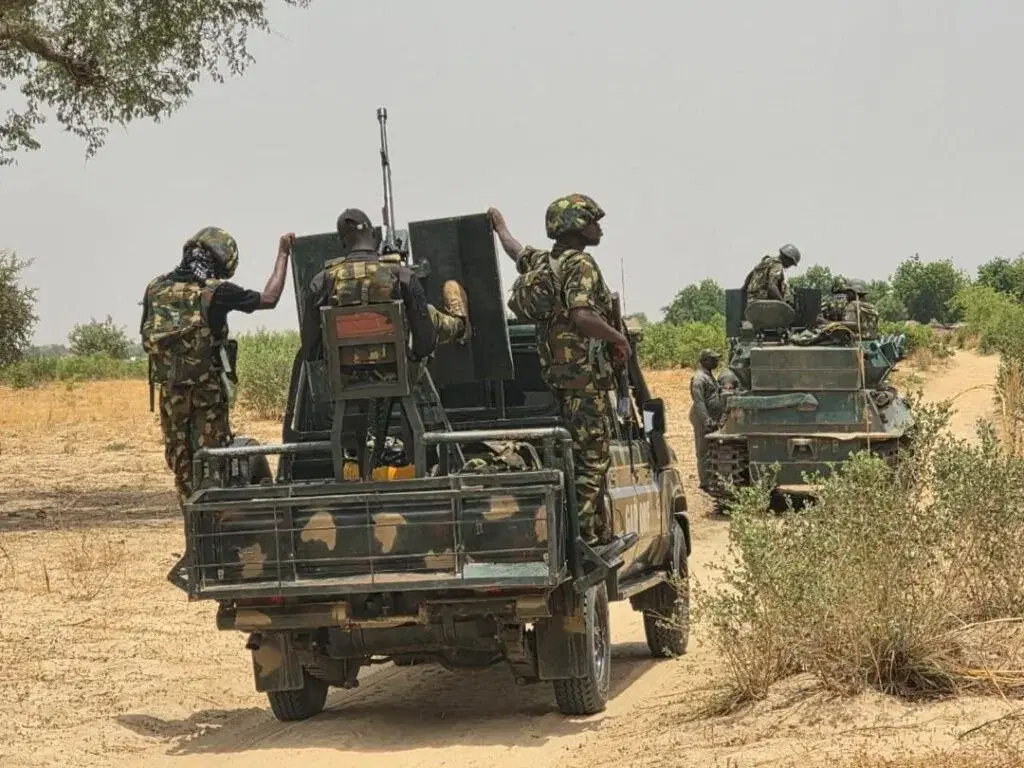
No fewer than 315 Nigerians who were abducted by terrorists and kidnappers have regained their freedom in separate security operations carried out across Kwara, Niger and Ogun states within 24 hours.
Sponsored Ads
The rescued victims include 308 people freed from terrorist camps in the forests covering parts of Kwara and Niger states, as well as seven students of Gateway ICT Polytechnic, Saapade, Ogun State, who were kidnapped last week.
Sponsored Ads
The 308 victims, made up of 163 residents from Kwara State and 145 from Niger State, were rescued during a special military operation in the Kainji Lake National Park. Many of those rescued are women and children, including a breastfeeding baby.
The victims were abducted during attacks on Woro village in Kaiama Local Government Area of Kwara State and neighbouring communities in Niger State on February 3 and 4, 2026.
Following their rescue, the victims were taken to Wawa Cantonment in Borgu Local Government Area of Niger State, where they are undergoing security screening and receiving medical attention. The Commander of the 22 Brigade is coordinating their welfare, including feeding, treatment and temporary accommodation before they are reunited with their families.
Authorities have concluded arrangements for the return of the victims to their respective communities. Buses have already been positioned at Sobi Cantonment in Ilorin to transport those from Kwara State, while both state governments are coordinating the evacuation process.
President Bola Tinubu welcomed the successful operation and commended the security personnel involved. He also directed relevant authorities to strengthen early warning systems, improve intelligence gathering at the community level and enhance rapid response capabilities to prevent future mass abductions.
Meanwhile, Ogun State Governor Dapo Abiodun confirmed the rescue of the seven students of Gateway ICT Polytechnic, Saapade, who were abducted on July 29. He disclosed that no ransom was paid to secure their release.
The governor said the rescue followed a coordinated operation involving security agencies, local hunters, vigilantes and other stakeholders. He added that he sought aerial surveillance support from the Inspector-General of Police, Kayode Egbetokun, who immediately approved the deployment of a police helicopter to support ground operations.
RELATED STORIES
Related Posts
According to Abiodun, five of the students were rescued during the first phase of the operation, while the remaining two regained their freedom during a follow-up operation involving both the police helicopter and security personnel on the ground. One of the victims sustained a gunshot wound but was evacuated for treatment and has since been stabilised.
The governor also disclosed that two suspected kidnappers had been arrested, while security agencies were continuing efforts to track down other members of the criminal gang.
He warned that kidnappers, armed robbers, cultists and other violent criminals would not find refuge in Ogun State, adding that everyone connected to criminal activities, including informants and sponsors, would be arrested and prosecuted.
Abiodun also commended President Tinubu for strengthening the capacity of security agencies, saying federal support had contributed to recent successes recorded against criminal groups.
Reacting to the rescue operations, UK-based Nigerian medical doctor and social affairs analyst, Dr. Chinwike Oke-Nwosu, described the development as an opportunity to improve Nigeria’s security architecture. He called for stronger intelligence gathering and better monitoring of criminal communications, while expressing concern that many Nigerians were gradually becoming accustomed to insecurity.
Retired Rear Admiral Dickson Olisemelogor described the rescue of the 308 victims as encouraging, saying it reflected improved cooperation between local communities and security agencies. He also noted that the refusal by governments to pay ransom may be reducing the financial attraction of kidnapping.
The Executive Director of the Rule of Law and Accountability Advocacy Centre (RULAAC), Okechukwu Nwagunma, also welcomed the rescue but urged the government to focus more on preventing kidnappings through intelligence-led policing, improved coordination among security agencies and better protection for vulnerable communities.
He added that rescued victims should receive adequate medical care, psychological support and assistance to help them recover from their ordeal.
Military personnel who spoke anonymously also said the operations demonstrated the effectiveness of sustained intelligence gathering, collaboration among security agencies and support from local communities in locating and rescuing victims held in difficult terrain.
They maintained that while preventing abductions remains the ultimate goal, the successful operations showed that coordinated security efforts could disrupt terrorist activities and secure the release of kidnapped victims.

Comments are closed.