

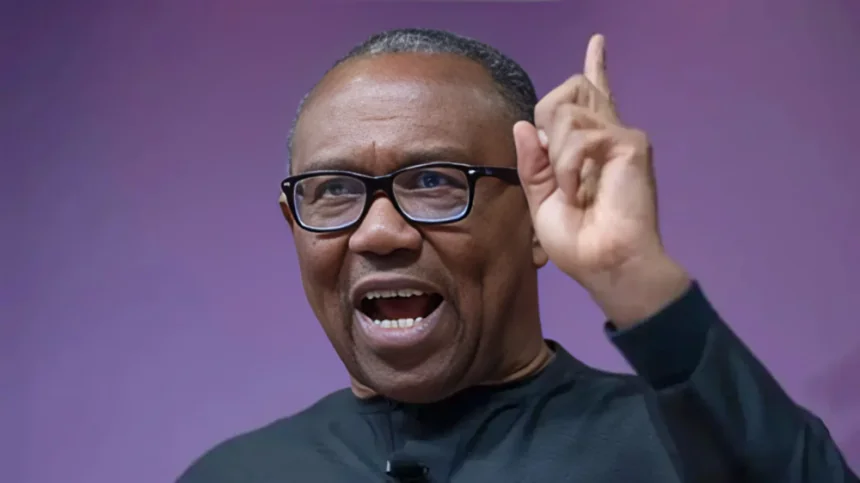
Peter Obi has warned that Nigeria’s public debt could climb above N200 trillion by the end of 2025.
Sponsored Ads
His warning comes shortly after the Senate gave the green light for new foreign and local borrowings.
Sponsored Ads
Obi raised the alarm in a post shared on his social media page. He reacted to the Senate’s recent approval of several new loans including $21 billion, €2.2 billion, and ¥15 billion in foreign loans, as well as N750.98 billion in domestic bonds. He also mentioned a €65 million grant. All of these, when added to Nigeria’s existing public debt, could push the country deeper into a debt crisis.
According to Obi, Nigeria’s public debt stood at N149.39 trillion in the first quarter of 2025. When the new loans are factored in—amounting to around N37.2 trillion—the total jumps to roughly N187 trillion. If more borrowing continues, he said the figure could pass N200 trillion before the year ends.
He questioned what the country has to show for this level of borrowing. He pointed out that basic services like education, electricity, healthcare, and public safety remain in poor condition. Despite large sums being borrowed, these sectors continue to struggle without clear improvements.
Obi expressed concern that the country’s debt is growing faster than the economy. He explained that based on Nigeria’s old GDP figure of N269.2 trillion, debt now makes up nearly 70 percent of the economy. Even with the updated GDP of N372.8 trillion, the debt still stands at more than half the size of the economy.
RELATED STORIES
Related Posts
He noted that insecurity in the country is worsening, even though the government has raised the security budget from N2.98 trillion in 2023 to N4.91 trillion in 2025. Despite the increase in spending, he pointed out that over 10,000 people have been killed and more than 600 villages destroyed in the last two years.
Basic infrastructure also remains weak. Only about 60,000 kilometres of Nigeria’s 195,000-kilometre road network is paved. Electricity supply continues to stay below 5,000 megawatts, leaving much of the population without steady power.
Obi also drew attention to rising poverty levels. He said more than 133 million Nigerians—around 63 percent of the population—are now considered multi-dimensionally poor. He referred to recent data from aid workers which showed that hundreds of children had died from malnutrition, especially in the northern region, with Katsina State badly affected.
He argued that Nigeria has enough resources to provide for its people and that no one should suffer from hunger. He blamed poor leadership over the years for the widespread poverty and growing hardship.
Obi admitted that borrowing in itself is not wrong. He said loans can help a country grow if they are used for the right projects. However, he criticised the current trend of taking loans without proper results, saying it is putting future generations at risk.
He urged the government to reduce waste, stop revenue loss, and spend more on things that will help the people. He called for change, saying the country needs responsible leadership and spending that delivers real results for Nigerians.

Comments are closed.