
Atiku and Kwankwaso Jostle for Northern Political Control After Buhari’s Death

The death of former President Muhammadu Buhari on July 13, 2025, in London, has left a deep void in the political fabric of Northern Nigeria.
Sponsored Ads
Following a long, undisclosed illness, Buhari’s remains were flown to Daura and buried according to Islamic rites. His burial drew thousands of mourners, from common citizens to political leaders and traditional rulers, all gathered to honour a man who had commanded immense loyalty and respect across the region.
Sponsored Ads
Buhari’s passing has sparked an urgent debate across the North about who will fill the political space he left behind. In cities like Kano, discussions around leadership succession have become more frequent and intense. The late president was seen by many as a symbol of integrity and simplicity, and finding a leader who can match his influence has proven to be a challenge.
One of the striking concerns is that Buhari never formally prepared anyone to take over his political role. He left no clear successor. His brand of politics was highly personal, drawing support through character and perception rather than structured grooming. Many northerners now worry that his unique style may not be replicated in the current political landscape, where trust and grassroots loyalty are harder to build.
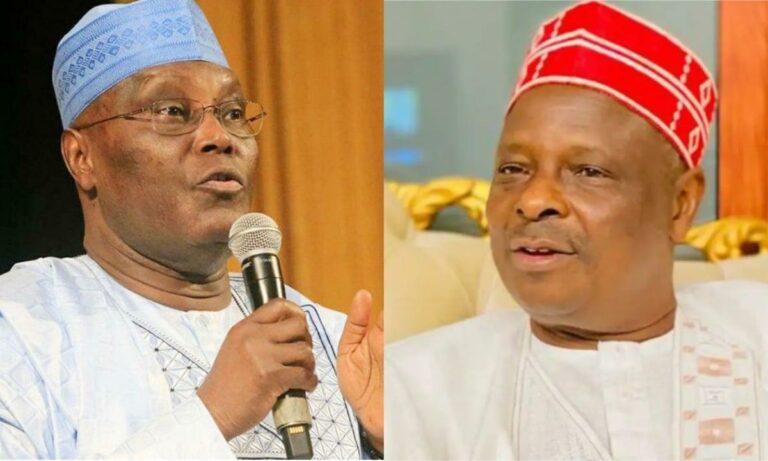
As the race for northern leadership unfolds, two names have emerged as possible successors to Buhari’s dominance — Atiku Abubakar, former Vice President, and Rabiu Musa Kwankwaso, former Kano governor and presidential candidate. Both men bring with them different strengths and challenges, and their supporters are making their case with growing urgency.
Atiku is seen by many as the more seasoned of the two. With decades of experience, vast political networks, and considerable resources, he is often viewed as the closest politician to occupying Buhari’s former space. Many of his allies argue that Atiku has always maintained an active structure across the North and remains a formidable presence in national politics. His political journey, though marked by multiple defeats, has given him deep exposure and reach across the country.
RELATED STORIES
Related Posts
Critics of Atiku, however, argue that he lacks the grassroots connection that endeared Buhari to the poor. They believe Atiku is perceived as an elite, whose political vision doesn’t always align with the daily struggles of the average northerner. Some also question his political ideology and view his moves as driven mostly by personal ambition.
Kwankwaso, on the other hand, has cultivated a loyal following through his Kwankwasiyya movement. His political base, especially in Kano, is passionate and resilient. He is known for speaking out on issues that affect the North, such as marginalisation in federal budgets and the poor state of infrastructure. His criticism of the Tinubu administration’s focus on the southern region has won him praise among northern groups who feel neglected.
Still, Kwankwaso’s appeal has limits. Despite his commanding presence in Kano, his influence in other northern states is relatively weak. His performance in the last presidential election was underwhelming in key northern states, casting doubt on his ability to build a nationwide coalition. Some also accuse him of being rigid and difficult to work with, which could hinder his chances of leading a united North.
The rivalry between the two men has now taken centre stage in the North’s political conversation. While Atiku is viewed as the more national figure with broader influence, Kwankwaso is regarded as the street-level politician with a direct emotional connection to his supporters. Each man’s camp sees the other as lacking in qualities essential for true leadership of the northern region.
There is also growing speculation about Kwankwaso’s next move. Some insiders suggest he may align with President Tinubu and the APC in future elections, a move that could significantly shift power dynamics in the region. Meetings between Kwankwaso and Tinubu have sparked rumours that he might become Tinubu’s new running mate or work with the APC to secure the northern vote in 2027. Though not confirmed, such a deal could strengthen Kwankwaso’s reach and give him a broader platform beyond Kano.
For now, the North finds itself at a crossroads. Buhari’s death has created both a leadership vacuum and an opportunity. The person who will step into his shoes must carry the trust of the masses, navigate elite politics, and offer a message that resonates across different segments of the North. Whether it will be Atiku with his national presence or Kwankwaso with his movement-driven model remains uncertain.
One thing is clear: Northern politics will never be the same again. The next few years will shape not only the region’s future but could also determine the direction of Nigerian politics as a whole. As both men make their moves, the North watches closely, waiting for the next leader who can unify and lead with purpose.

Comments are closed.