

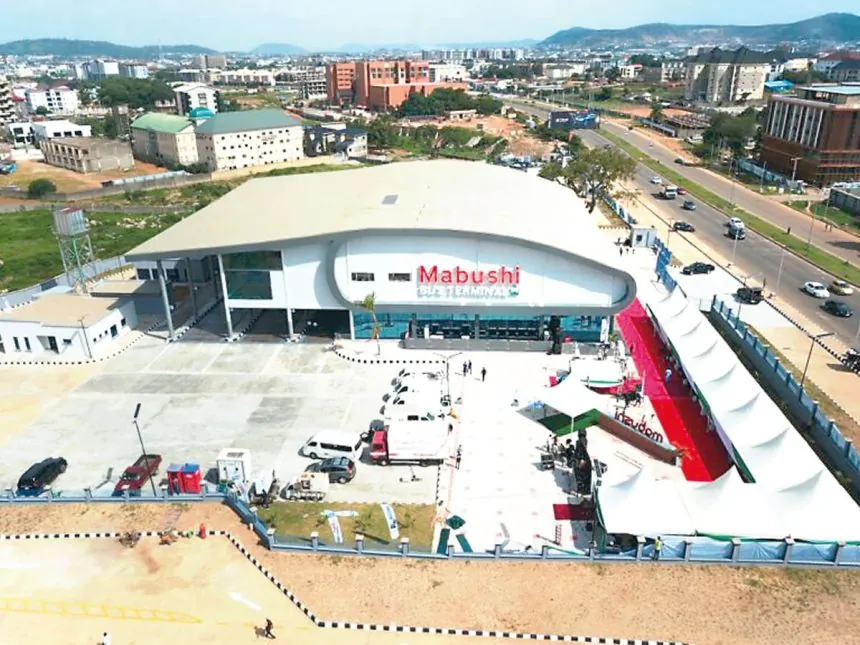
Abuja is stepping into a new phase of public transportation with the unveiling of two ultra-modern bus terminals, part of a broader plan by the Federal Capital Territory Administration (FCTA) under Minister Nyesom Wike to improve mobility and reduce insecurity in the city.
Sponsored Ads
In May 2024, the FCTA awarded contracts for the construction of three bus terminals in Mabushi, Kugbo, and the Central Business District. Construction began in July at the Mabushi and Kugbo sites, while work on the Central terminal followed two months later. These facilities were designed to support both intra-city and intercity travel, easing the pressure on commuters and addressing the chaotic transport system that has long plagued Abuja.
Sponsored Ads
Each of the completed terminals at Mabushi and Kugbo can process more than 10,000 passengers daily. They accommodate up to 120 buses and taxis per day. More than just transit points, the terminals also house cinemas, food courts, shops, and relaxation areas—creating an environment similar to an airport. The third terminal in the Central Area will focus solely on intra-city operations.
The terminals are part of Wike’s wider plan to make public transport safer and more organized in the capital. One of the key problems the minister aims to fix is the menace of “one chance”—a form of robbery involving unauthorized commercial vehicles. With clearly marked, secured terminals and 24-hour operations, the new setup is expected to curb such crimes.
Beyond public safety, the terminals are creating new jobs. The contractor in charge, Planet Projects, reported hiring over 3,000 workers during the construction phase, including artisans, cleaners, and security personnel. Indigenous workers were given priority in line with the FCTA’s focus on local empowerment. At least 100 permanent jobs will be created at each terminal for operations such as ticketing, facility management, and transport control.
RELATED STORIES
Related Posts
Some of the workers already benefiting from the initiative shared how the project changed their lives. A welder from Kubwa said the job gave him stability and allowed him to better provide for his family. A single mother working as a cleaner at Mabushi also said she found a fresh start after previously losing her domestic job.
Wike made it clear that the government would not directly manage these facilities. Instead, private operators with business expertise will handle operations to ensure sustainability and efficiency. He stressed that government-run systems often collapse quickly, so the concession model was necessary.
The terminals were formally commissioned by President Bola Tinubu as part of a lineup of projects marking his administration’s second anniversary. Tinubu praised the quality and speed of delivery and said the new terminals mark the start of a safer, more efficient era for public transport in Abuja. He also highlighted the potential of these projects to drive economic growth through job creation and private sector involvement.
The long-term plan doesn’t stop at three terminals. The FCTA intends to construct at least 12 across strategic locations such as Gwarinpa, Lugbe, Area 1, Garki, and Gwagwalada. According to the contractor, Abuja needs more hubs to ensure complete coverage and bring lasting order to public mobility.
President Tinubu reaffirmed his commitment to overhauling Nigeria’s public infrastructure. He described the terminals as key to building a smarter, safer, and more inclusive capital city. He urged citizens to fully embrace the new system and promised that his administration would continue to respond to the needs of the people.
With two terminals already operational and one more under construction, Abuja’s residents may finally be seeing the first steps toward a public transport system that matches the city’s status as Nigeria’s capital.

Comments are closed.