

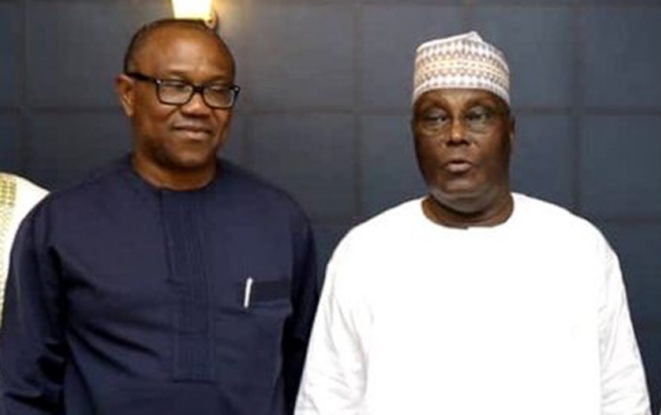
Nigeria’s political landscape took a dramatic turn as leading opposition figures—including former Vice President Atiku Abubakar, 2023 Labour Party presidential candidate Peter Obi, and ex-Senate President David Mark—officially launched the African Democratic Congress (ADC) as their new platform to challenge President Bola Tinubu in the 2027 elections.
Sponsored Ads
The formal unveiling took place at the Yar’Adua Centre in Abuja. David Mark was announced as the interim National Chairman of the restructured ADC, with former Osun State Governor Rauf Aregbesola serving as interim National Secretary. This development follows weeks of speculation about opposition realignment and sparked national conversations about the 2027 political contest.
Sponsored Ads
The coalition move aims to unite opposition voices under one umbrella, responding to what they describe as growing authoritarianism and deepening economic hardship under the current All Progressives Congress (APC)-led administration. The coalition leaders say they are not just focused on replacing Tinubu but on building a new vision for Nigeria.
However, the decision has stirred division within the ADC itself. The party’s 2023 presidential candidate, Dumebi Kachikwu, condemned the development, accusing the coalition leaders of hijacking the party. In his view, these politicians are part of the old establishment that contributed to Nigeria’s current crisis and cannot claim to be the solution. He described their alliance as a recycled gathering of self-serving figures, arguing that Nigerians deserve a genuinely new beginning.
A group of concerned ADC stakeholders also rejected Aregbesola’s appointment, saying it lacked democratic process and transparency. They described the coalition’s announcement as misleading and said the ADC remains a party of reform, not political opportunism.
RELATED STORIES
Related Posts
Despite this internal resistance, the new coalition continues to gather momentum. Former leaders from across political divides attended the unveiling, including ex-governors, lawmakers, and political heavyweights. They include former governors like Nasir El-Rufai, Rotimi Amaechi, Aminu Tambuwal, Gabriel Suswam, and several others who once held key roles in the APC and PDP.
Former Transport Minister Amaechi announced his resignation from the APC, citing Nigeria’s worsening inflation and food insecurity. He called for a broader people-driven movement, not just a party change, saying the country’s deep-rooted issues demand more than just changing faces at the top.
In response, the APC dismissed the coalition’s relevance. Party spokesperson Bala Ibrahim said the group is made up of politicians who previously held power and failed to deliver results. He described them as outdated and out of touch with modern politics, confident that APC will defeat them again in 2027.
The People’s Democratic Party (PDP) has also responded cautiously. While some PDP figures are involved in the coalition, the party leadership insists it remains united and is not officially part of the ADC-led alliance. Acting PDP Chairman Umar Damagum warned party members against actions that could weaken the party and promised disciplinary measures where needed.
Despite internal tensions, many key PDP members have publicly supported the coalition, stating that the country’s challenges require a united front. Atiku, Mark, and other senior figures continue to push for broader cooperation between political groups that want to present an alternative to Tinubu’s administration.
The emerging coalition is positioning itself as a rescue mission, promising to offer Nigerians a path to peace, prosperity, and inclusive governance. Yet, it faces two major challenges—internal unity and public trust. Whether this alliance will endure and transform into a credible force ahead of 2027 remains a critical question in Nigeria’s evolving political journey.

Comments are closed.