

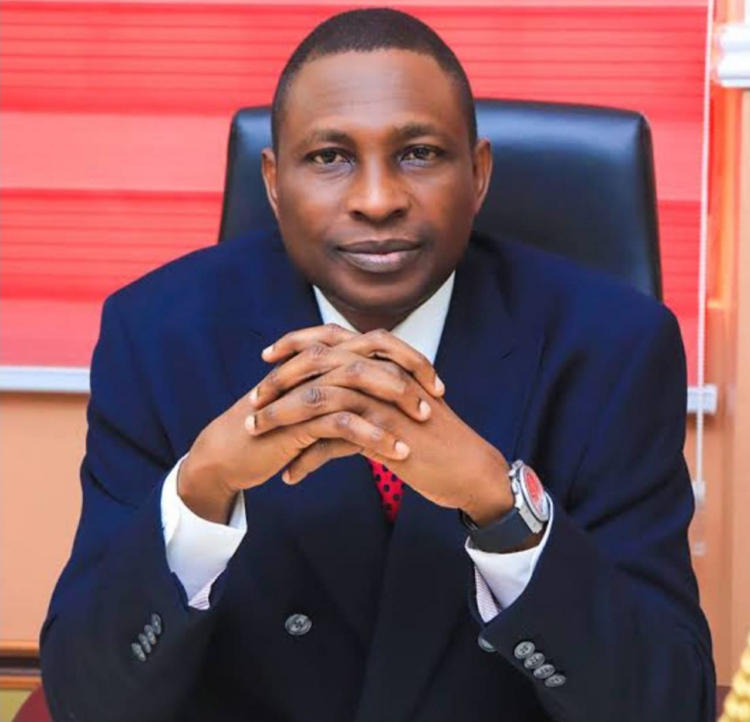
The Chairman of the Economic and Financial Crimes Commission (EFCC), Ola Olukoyede, has raised concerns over the involvement of some religious leaders in financial crimes in Nigeria.
Sponsored Ads
Olukoyede spoke on Wednesday at the 2026 second council meeting of the Nigeria Inter-Religious Council (NIREC) in Abuja, where he addressed the role of religious institutions in promoting integrity and preventing corruption.
Sponsored Ads
He said the EFCC had investigated cases involving individuals identified as pastors, imams, bishops, sheikhs and other religious figures. According to him, some of those investigated had been prosecuted and convicted, with some serving prison sentences.
The EFCC chairman said the presence of religious titles in case files was a reminder that religious status did not prevent individuals from being held accountable for alleged financial offences.
He also expressed concern that some convicted persons continued to be addressed by their religious titles even while serving prison sentences.
Olukoyede called for a review of the way religious titles are awarded and used, arguing that such titles should not be treated as protection from legal accountability.
He said Nigerians should pay more attention to the conduct and character of people who present themselves as religious leaders rather than relying mainly on their titles or public image.
The EFCC chairman recalled an incident involving a suspect who was brought before the commission for investigation and sought to meet him while introducing himself through several religious and academic titles.
Olukoyede said he was not influenced by the titles and instead focused on the allegations being investigated. He maintained that religious identity could not take precedence over the law when a person was suspected of committing a financial offence.
RELATED STORIES
Related Posts
He warned that the commission would continue to investigate and prosecute financial crimes regardless of the religious background or status of those involved.
Olukoyede also used the NIREC meeting to examine the relationship between religious commitment and public integrity in Nigeria. He noted that the country has a large population of Christians and Muslims who regularly attend churches and mosques, but questioned whether religious devotion was sufficiently reflected in the conduct of public and economic affairs.
He said financial crime should not be viewed through religious or ethnic divisions because the consequences of corruption affect Nigerians across different communities and faiths.
According to him, religious leaders have an important role in shaping attitudes towards honesty and responsible conduct because of their influence within communities.
The EFCC chairman also referred to findings from an investigation involving a pilgrimage board, saying a large portion of funds intended for pilgrims had allegedly been diverted. He used the case to argue that religious organisations and institutions must maintain strong standards of financial accountability.
Olukoyede said law enforcement agencies could investigate offences and prosecute suspects, but religious communities could help prevent financial crimes by promoting integrity and responsible behaviour.
He further criticised the practice of celebrating individuals who display wealth without questioning how the wealth was acquired. He warned that religious institutions could unintentionally give social or moral acceptance to questionable wealth when they publicly honour individuals without considering the sources of their money.
The EFCC chairman urged religious leaders and their followers to reject the use of faith, ethnicity or charitable activities as a basis for protecting anyone accused of corruption or financial misconduct.
He said religious communities should instead use their influence to encourage honesty, accountability and responsible use of public and private resources.

Comments are closed.