

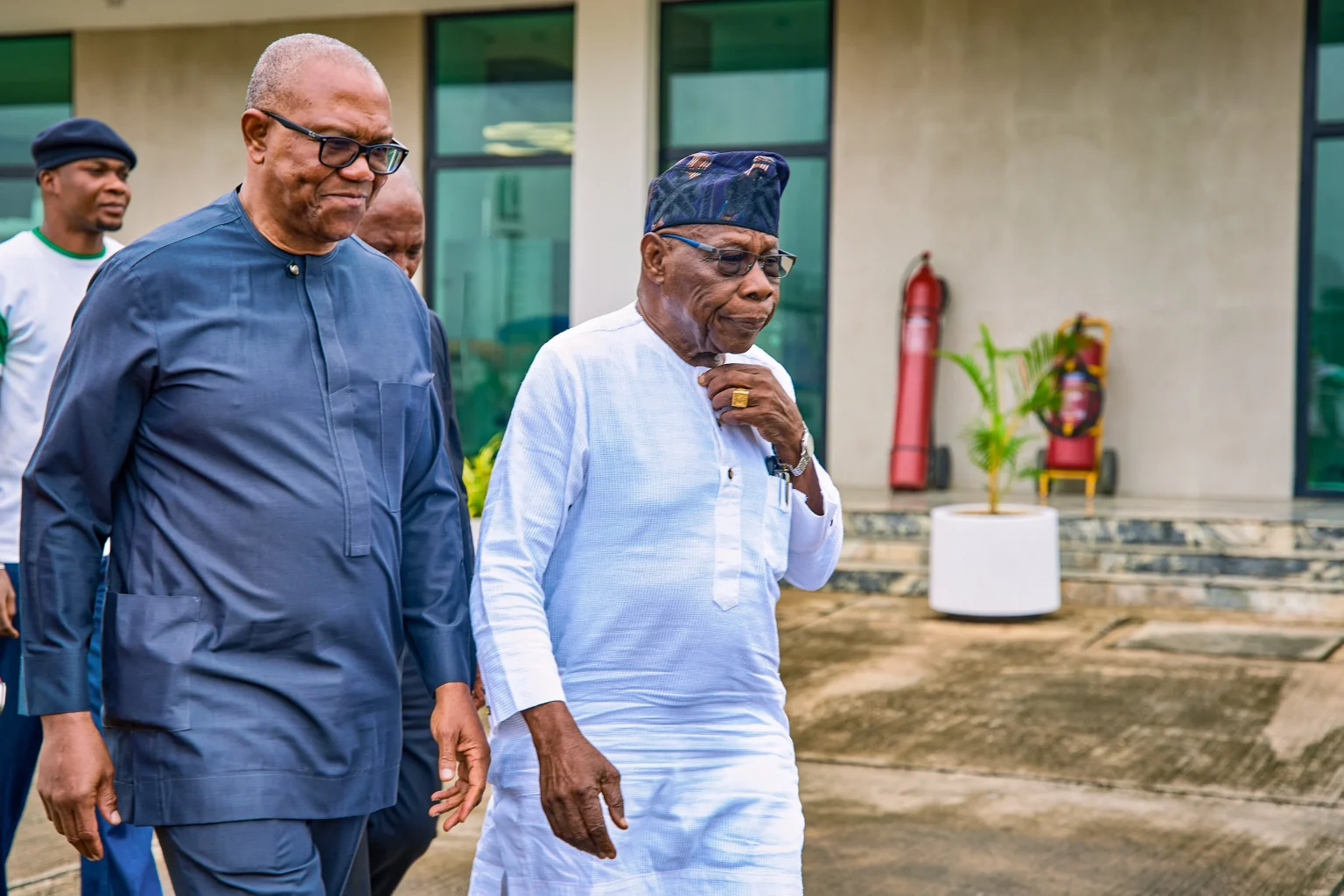
Former President Olusegun Obasanjo and 2027 presidential candidate Peter Obi have called for major reforms to Nigeria’s democratic institutions, saying the country’s current political system is struggling to meet the needs of its people.
Sponsored Ads
They made the remarks on Tuesday at the 2026 Goodluck Jonathan Foundation Democracy Dialogue held in Bauchi. The event, organised by the Goodluck Jonathan Foundation, focused on the theme, “Beyond Elections: Can Political Parties and the Judiciary Save African Democracy?”
Sponsored Ads
Obasanjo, who chaired the event, argued that the Western-style liberal democracy adopted by many African countries did not adequately reflect the continent’s history, culture and values.
He said the system had encouraged a winner-takes-all approach in which political opponents often regarded one another as enemies instead of working together for the development of the country.
The former President said Nigeria should consider developing a democratic system that takes its own historical and cultural realities into account.
According to him, the first-past-the-post electoral system gives the winner almost total control, even when the margin of victory is very small. He said this had contributed to the hostile relationship often seen between governing parties and opposition groups.
Obasanjo also warned that Nigeria’s diversity must remain central to the way the country is governed. He said the country’s different ethnic, cultural and religious groups form an important part of its identity and should be properly accommodated within the political system.
He further raised concerns over the growing influence of money in Nigerian politics, saying financial inducements had become increasingly common. He also criticised the poor representation of women in political leadership, noting that no woman had been elected governor in Nigeria since the beginning of the Fourth Republic.
Obasanjo said African countries should not be afraid to review the democratic system inherited from Western countries and develop a model that reflects their own circumstances.
Obi, in his contribution, accused several groups and institutions, including academics, lawmakers, lawyers, religious leaders and judicial officers, of contributing to the weakening of Nigeria’s democracy.
The former Anambra State governor recalled challenging an election result at the Court of Appeal, where a panel of five judges ruled in his favour despite having no prior relationship with him.
RELATED STORIES
Related Posts
He contrasted that experience with what he described as the present condition of Nigeria’s democratic institutions, alleging that some individuals who should protect democratic values were instead contributing to electoral malpractice and institutional decline.
Obi also criticised the National Assembly over changes to electoral laws, alleging that lawmakers had weakened provisions relating to forgery in electoral matters.
He further questioned the conduct of some senior lawyers, religious leaders and members of the judiciary, accusing them of actions that could undermine public confidence in democratic institutions.
Meanwhile, the National Chairman of the Labour Party, Nenadi Usman, urged politicians preparing for the 2027 elections to follow the example set by former President Goodluck Jonathan during the 2015 presidential election.
Usman said Jonathan’s decision to concede defeat to Muhammadu Buhari helped prevent the political tension surrounding the election from developing into a major crisis.
She said political leaders should understand that the pursuit of power should not come at the expense of the lives and unity of Nigerians.
Usman also challenged politicians seeking the presidency in 2027 to demonstrate the same willingness to put national interest ahead of personal ambition.
She described the Labour Party as the most structured opposition party in the country, pointing to its relationship with the Nigeria Labour Congress and the Trade Union Congress.
The dialogue attracted several political leaders and stakeholders, including former President Jonathan, former Vice-President Namadi Sambo, Bauchi State Governor Bala Mohammed, former Senate President Anyim Pius Anyim, former Plateau State Governor Jonah Jang and other political and traditional leaders.
The gathering provided a platform for political actors, constitutional experts and civil society representatives to discuss ways of strengthening democratic institutions, improving political cooperation and preventing democratic setbacks in Nigeria and other African countries.

Comments are closed.