

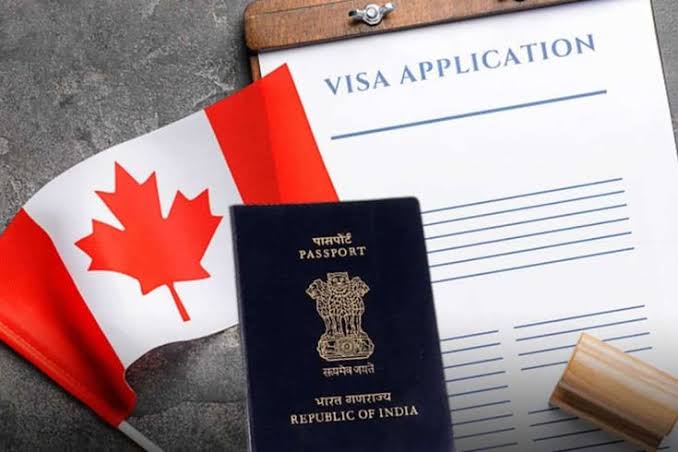
The Canadian government has introduced stricter financial assessment measures for international students applying for study permits, requiring immigration officers to conduct more detailed checks on both the amount of money applicants present and the origin of those funds.
Sponsored Ads
The new guidelines, issued by Immigration, Refugees and Citizenship Canada (IRCC) and shared by Canadavisa on its X account on Friday, direct immigration officers to determine whether applicants have genuine and dependable financial resources to support themselves throughout their studies.
Sponsored Ads
Under the revised instructions, officers must examine the source of an applicant’s funds in every case before approving a study permit. The updated policy allows officials to carry out more detailed reviews of applicants’ financial backgrounds where necessary.
The guidance also authorises immigration officers to request additional personal, family, financial and employment documents to verify that applicants have the financial capacity to complete their academic programmes without facing funding difficulties.
Unlike the previous policy, which suggested that extensive financial reviews were mainly necessary in high-risk cases, the revised instructions allow officers to request additional evidence based on the details of each individual application.
As part of the new requirements, applicants may now be required to submit up to six months of bank statements. The guidelines also specify that bank statements from either the month of application or the month immediately before submission may be requested during the assessment process.
Previously, applicants were generally required to provide four months of bank statements.
The updated policy also broadens the range of financial documents that can be used as proof of funds. Applicants are now permitted to present evidence of pension income and rental property earnings to demonstrate their ability to finance their education in Canada.
RELATED STORIES
Related Posts
However, one earlier option has been removed from the list of acceptable financial documents. A bank draft that can be converted into Canadian dollars is no longer listed as acceptable proof of financial support.
The new guidance also affects students applying to renew or extend their study permits. Immigration officers have been instructed to assess whether such applicants have sufficient financial resources to support themselves during the first year after their permit extension is approved.
Despite the stricter review process, Canada has not increased the minimum financial requirement for study permit applicants.
International students must still prove they can pay their tuition fees, travel expenses and living costs. For a single applicant studying outside Quebec through the standard study permit stream, the required amount for living expenses remains CAD $22,895.
The tighter financial screening forms part of Canada’s ongoing efforts to strengthen oversight of its international student programme following concerns raised during a government review.
The review identified issues involving the number of students flagged for possible non-compliance compared with the resources available to investigate those cases.
With the latest changes, applicants will be expected to provide more complete and consistent financial records while clearly demonstrating the source of their funds.
The revised process places greater attention on financial transparency as Canadian immigration authorities seek to ensure that only genuine students with adequate financial support are granted study permits.

Comments are closed.