

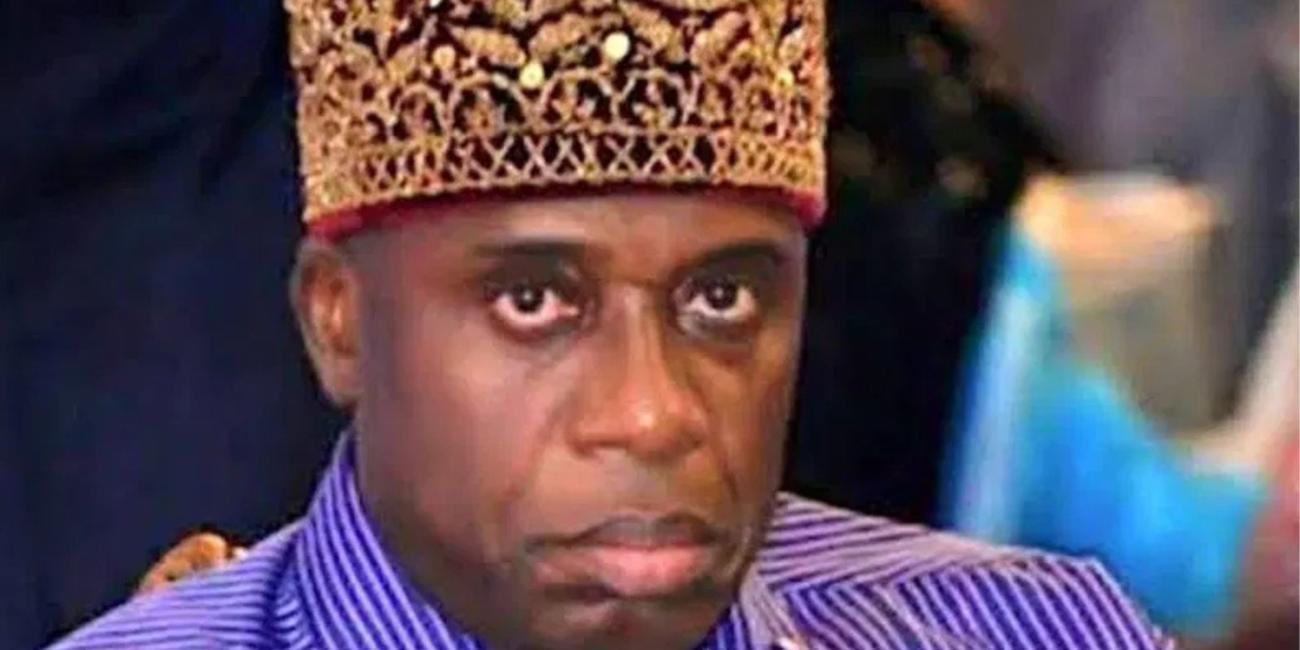
Rotimi Amaechi, former Minister of Transportation and ex-Governor of Rivers State, has said he is willing to serve only one term if elected President in 2027.
Sponsored Ads
He made the commitment during a televised interview on Channels TV, stating that putting Nigeria’s unity and fairness above personal ambition is the right path for the country.
Sponsored Ads
Amaechi’s declaration echoes a similar promise made by former Labour Party presidential candidate Peter Obi, who recently announced his intention to return to the ballot in 2027, also committing to a four-year term if elected. Both men are aligning themselves with the longstanding expectation of power rotation between Nigeria’s North and South—a political understanding that, while unwritten, has shaped presidential transitions in recent years.
Amaechi argued that Nigeria’s fragile unity makes the practice of zoning critical for stability. He explained that after the North held power for eight years under Muhammadu Buhari, the South should be allowed to complete its own eight-year cycle, which began with President Bola Tinubu’s election in 2023. For him, sticking to this balance is not just tradition—it’s necessary to avoid regional resentment and maintain trust in the democratic process.
RELATED STORIES
Related Posts
He said he was among those who fought hard for the North to regain the presidency in 2015, insisting at the time that fairness required a shift in power. Now, with a Southern president in office, he believes it would be unfair for the South to be denied its full term. If elected under the banner of the emerging African Democratic Congress (ADC) coalition, Amaechi affirmed that he would not exceed four years in office.
Although the ADC has yet to officially declare a zoning formula for its presidential ticket, Amaechi expressed confidence that the new coalition would honour the rotation principle. He believes that breaking from this understanding would undermine national cohesion and erode trust in political leadership.
Peter Obi, for his part, has also committed to a one-term presidency, stating during an X Space interaction that he would willingly leave office in 2031 if a coalition agreement limits him to four years. He promised that within two years in office, his administration would restore stability and begin real reforms. Obi urged Nigerians to stop looking abroad for solutions and instead work collectively to fix the country from within.
Both Amaechi and Obi now represent a growing category of presidential hopefuls trying to win public trust not just through promises of reform, but also by offering a time-limited mandate. Their separate pledges to serve a single term signal a strategic shift in Nigerian politics—an attempt to reassure voters wary of long-term leadership failures and power grabs.
As 2027 approaches, the conversation around zoning, credibility, and coalition-building is gaining traction. These developments suggest that the next general election may not just be about party lines, but also about trust, fairness, and who is willing to sacrifice political longevity for the sake of national unity.

Comments are closed.